Can a different spark plug really improve fuel efficiency and horsepower, or does it mostly change how long the plug lasts? I’m pretty skeptical of fuel-saving claims, so I put several designs through a series of tests to find out.
The plan was simple: inspect the sparks, compare combustion inside a see-through engine, and measure how long a fuel-injected generator could run on the same fuel supply. Then, for a little farm-style fun, the best-performing plug would go into the go-kart for a timed showdown with the Farmabago.
E3 and Pulstar delivered a small runtime advantage in this generator, even against an NGK iridium plug. The differences were not enormous, but they were enough to surprise me.
Key Takeaways
- E3 and Pulstar delivered the longest generator runtimes, narrowly beating NGK iridium in both test conditions.
- Autolite Racing ran slightly less time than the conventional NGK in both fuel tests.
- Pulstar appeared to produce more immediate combustion, but the visual assessment was subjective.
- The testing compared fuel runtime, not long-term durability or directly measured horsepower.
The Spark Plugs and Their Claims
I started with four plugs, then added an NGK iridium plug after the initial fuel-efficiency results:
- NGK copper-core: A conventional side-electrode spark plug used as the baseline.
- Autolite Racing: A racing plug with a different electrode arrangement and claims of improved ignition and durability.
- E3: A plug using the company’s DiamondFire ground-electrode design.
- Pulstar: A conventional-looking side-electrode plug with an internal capacitor.
- NGK iridium: An application-appropriate iridium plug added as a follow-up comparison.
Autolite Racing: Durability and Flame Growth
Autolite claimed its alloy could reduce side-wire temperature by up to 8 percent, improving durability and reducing pre-ignition. It also claimed the cutback ground-electrode design would improve ignitability and help the flame kernel grow faster.
The flame kernel is the small region of burning mixture that develops around the spark. Getting that initial burn established is the part these alternative designs aim to improve.
E3: A Different Ground-Electrode Shape
E3’s claim centered on where that early flame travels. The company described a conventional plug’s flame as spreading sideways from the electrode, while its diamond-shaped architecture was intended to encourage flame growth toward the air-fuel mixture.
According to E3’s explanation, that could produce higher combustion pressure and leave less unburned fuel in the gases released through the exhaust. Those are the manufacturer’s claims, not something a visual inspection alone can establish.
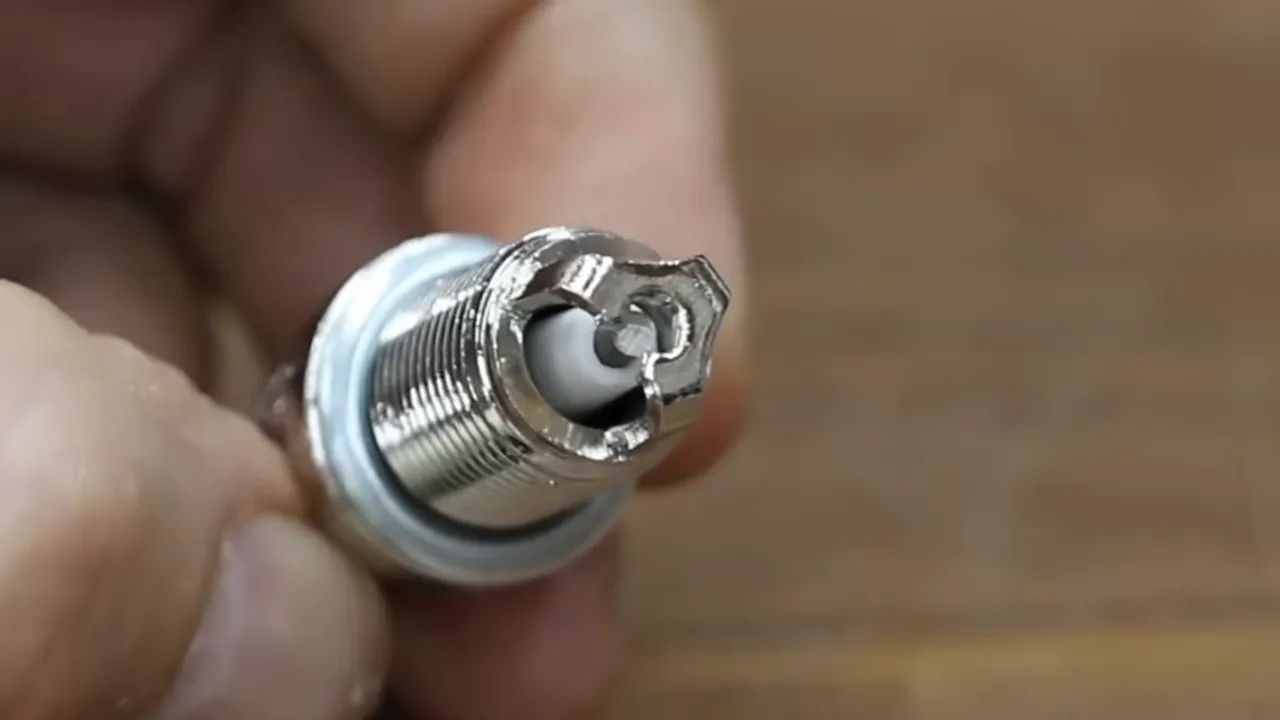
Pulstar: Energy Storage Inside the Plug
From the outside, the Pulstar looked much like an ordinary lawn mower spark plug. Its claimed difference was inside: a capacitor that stores energy and releases a high-intensity electrical pulse.
Pulstar described that pulse as creating combustion-enhancing plasma for more immediate ignition and a rapid burn. The company also claimed improvements in horsepower and fuel efficiency. A longer generator runtime would give us something more useful than appearance alone to judge.
First Test: Comparing the Sparks
To get a close look at each plug firing, I assembled a test jig with an electric motor that turned an engine at about 3,000 rpm. With access to the plug tips, it was possible to inspect the discharge from each design.
The ordinary NGK provided the reference spark. With the Autolite, the discharge appeared to alternate mainly between two of its four electrode positions. The E3 and Pulstar were also examined in the same setup.
This test made the different electrode arrangements easier to understand, but an exposed spark does not tell us how efficiently an engine will run. For that, the next step was to put the plugs into a working combustion chamber.
Inside the See-Through Engine
A transparent cylinder head made it possible to see the piston, intake valve, exhaust valve and combustion process. At normal speed, there was far too much happening to make a useful comparison, so I used a high-speed camera to slow things down.
With the NGK installed, the sequence showed just how quickly the burn develops:
- The intake stroke had already brought the mixture into the cylinder.
- The piston rose during compression with both valves closed.
- Ignition began while the piston was still rising.
- The flame kernel expanded rapidly, primarily over the piston, with some flame spreading toward the valves.
- Some gases were still visibly burning as the exhaust valve opened, before the chamber’s brightness faded.
That process happens thousands of times per minute. Small differences might matter, but separating a real design advantage from normal cycle-to-cycle variation was not easy.
How the Burn Patterns Compared
Autolite Racing appeared to produce quick, fairly complete combustion. Its flame-growth pattern varied between firing events. Beside the NGK, the two were difficult to distinguish, although the Autolite seemed slightly more immediate.
E3 also showed variation from one combustion event to the next. Compared with the Autolite, its flame pattern appeared a little more consistent and symmetrical.
Pulstar appeared to produce the most immediate and intense combustion of the group. Its conventional side electrode did not seem to cause an obvious disadvantage in this engine.
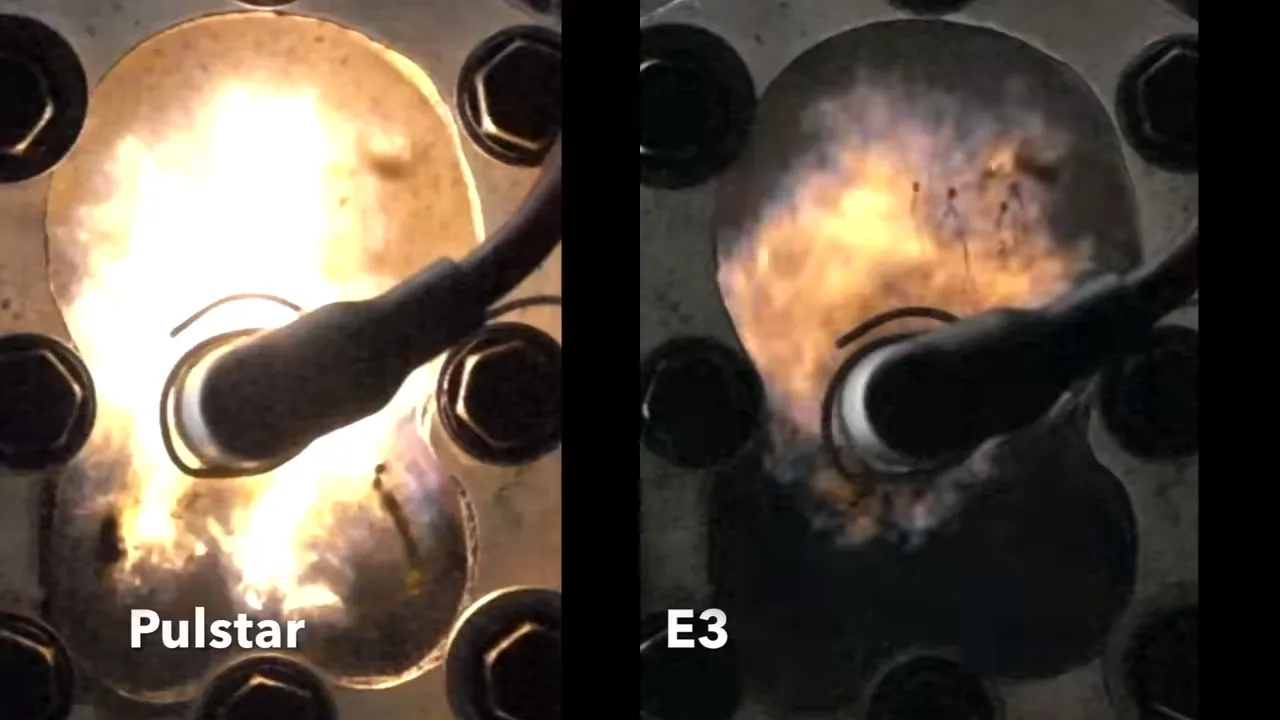
That last point matters: these were visual impressions, not measurements of cylinder pressure or horsepower. Pulstar looked impressive, but I wanted to see whether the fuel-use test would support that impression.
Fuel-Efficiency Test: Generator With No Electrical Load
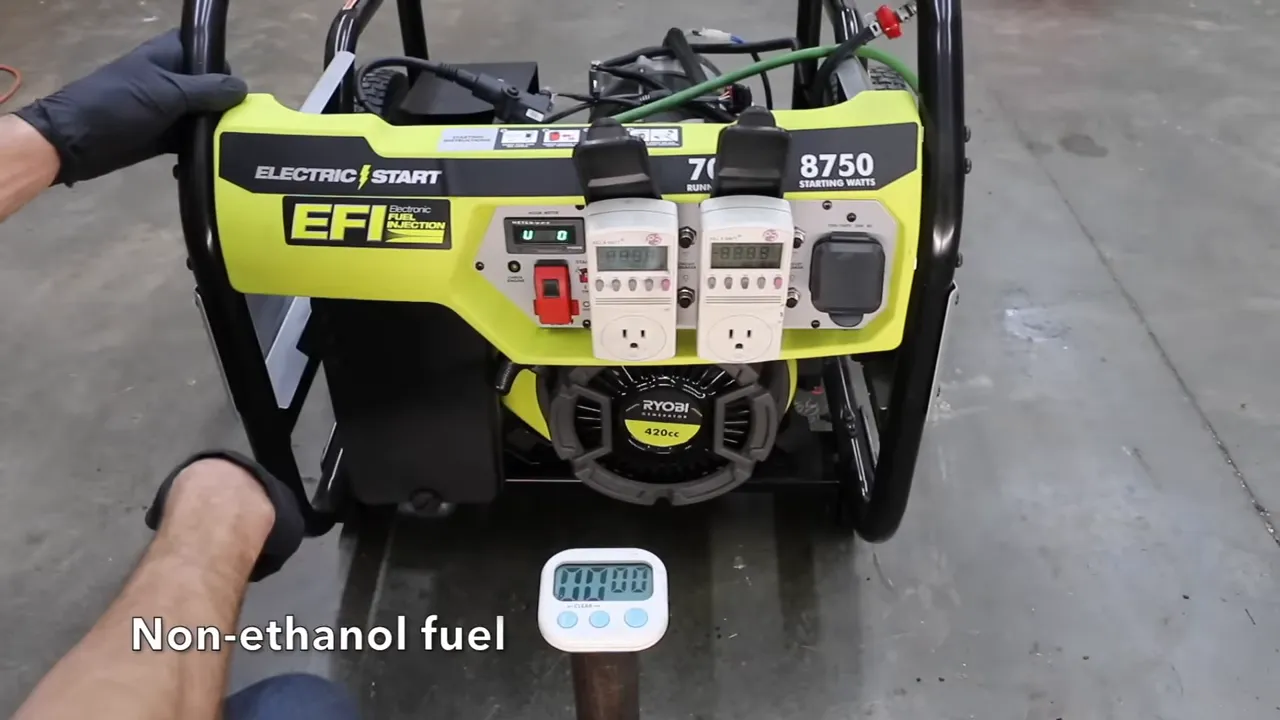
For the runtime comparison, I used a fuel-injected generator supplied by a small external fuel container. The first round measured how long the engine would run without an electrical load.
Before beginning, I ran the engine for about five minutes to warm it up, then filled the container to the top. Between plug changes, I added fuel and ran the engine for a few minutes to purge air from the fuel system before topping it off again.
The container’s cap had vent holes, and the testing used non-ethanol gasoline. Thermal images also showed broadly similar engine temperatures across the initial plugs.
No-Load Runtime Results
- NGK copper-core: 45 minutes, 16 seconds.
- Autolite Racing: 44 minutes, 7 seconds.
- E3: About 46 minutes, 27 seconds.
- Pulstar: About 46 minutes, 18 seconds.
The Autolite ran for about a minute less than the ordinary NGK. The E3 went roughly a minute and a quarter longer than the baseline, with Pulstar close behind.
I had expected the results to be much closer, perhaps separated by only a few seconds or a small difference in filling the container. Instead, both E3 and Pulstar cleared 46 minutes.
The short-run inspections did not reveal anything dramatic. The NGK and Autolite looked good, the E3 had a little fouling, and the Pulstar showed some bluing on the metal near its tip. These inspections were useful checks, but they were not long-term durability tests.
What Happened With an Electrical Load?
The next round added halogen lights drawing a little over 1,400 watts. I used a slightly different procedure because running a generator out of fuel while it is supplying a load could cause damage.
Each plug powered the lights for 30 minutes. I then disconnected the lights and let the generator run without a load until the fuel was exhausted. The results below are total runtimes, not continuous loaded runtimes.
- NGK copper-core: About 35 minutes, 35 seconds, including 30 minutes under load.
- Autolite Racing: About 35 minutes, again slightly shorter than the NGK.
- E3: About 36 minutes, 53 seconds.
- Pulstar: About 37 minutes, 1 second.
Pulstar narrowly edged E3 in this round. Both again ran longer than the copper-core NGK, while the Autolite finished behind it.
Across the initial tests, E3 and Pulstar showed a runtime advantage on the order of a few percent: roughly 2.5 percent without a load and around 3.5 percent in the mixed loaded-and-unloaded test. That is a small gain, but it was more than I expected from changing only the spark plug.
A Follow-Up Test With NGK Iridium
I still found the difference hard to believe. Rather than stop with the copper-core baseline, I bought an NGK iridium spark plug specified for this generator and repeated both fuel tests.
- No electrical load: About 46 minutes, 7 seconds.
- Thirty minutes under load, then unloaded: About 36 minutes, 31 seconds total.
The iridium plug improved on the original NGK’s runtime in both rounds. It also looked nearly new afterward.
Even so, it did not quite catch E3 or Pulstar. In the no-load test, E3 ran about 20 seconds longer and Pulstar about 11 seconds longer. In the mixed-load test, E3 lasted roughly 22 seconds longer and Pulstar roughly 30 seconds longer.
The gap became much smaller with NGK iridium, but the order stayed the same: E3 and Pulstar still finished ahead in this generator.
The Go-Kart Takes On the Farmabago
With the generator testing finished, it was time to take the experiment to the farm. Pulstar had performed well overall, including the longest runtime in the mixed-load test, so I installed it in the go-kart.
The Farmabago set the target with a run of about 21 seconds, reaching approximately 49 mph.
The go-kart completed its run in about 27 seconds and reached 31.2 mph. That was still no match for the Farmabago, but it was not a bad showing. I believed it was a new top speed for this go-kart on non-ethanol gasoline.
This was a fun finish rather than a controlled horsepower comparison. Without a same-session baseline run using another plug, the go-kart result does not tell us how much, if any, speed the Pulstar added.
Which Spark Plug Design Performed Best?
For fuel runtime in this setup, E3 and Pulstar were the strongest performers. E3 lasted slightly longer without an electrical load, while Pulstar had a narrow advantage in the mixed-load test. Both outlasted the copper-core NGK and the follow-up NGK iridium plug.
The Autolite Racing plug did not deliver a fuel-efficiency advantage here. Its durability and ignition claims are separate questions, but in both runtime rounds it finished behind the conventional NGK.
The combustion comparison favored Pulstar to my eye, though that remains subjective. The fuel results were more concrete, and they surprised me. I went into this skeptical that spark plug design would make much difference at all.
These tests do not settle long-term reliability or establish a horsepower increase. What they do show is a modest runtime difference in this particular generator, with E3 and Pulstar finishing ahead even after adding an iridium comparison. That is an interesting result, and a good reason to keep testing rather than judging a plug by its appearance or its advertising.


