This old Ford Ranger was a pretty good candidate for an engine treatment experiment. It was about 30 years old, had roughly 167,000 miles, and the lifters made a tremendous amount of noise. Low oil pressure was another concern. Taking off with the manual transmission was frustrating because the engine had so little low-end power that it would stall easily unless I brought the RPM up.
I suspected plenty of wear, but I also wanted to find out whether cleaning things up would help. The plan was to use Sea Foam in three places: the fuel tank, the crankcase, and the intake. Then I would drain the oil and try Lucas Heavy Duty Oil Stabilizer with fresh oil.
I honestly did not expect either product to make much difference. By the end of the experiment, this engine was running a whole lot better. The important part is separating what I could actually observe from what this test could not prove.
Quick Summary
- Sea Foam treatments greatly reduced this Ranger's lifter noise before Lucas was added.
- The intake spray visibly cleaned throttle-plate deposits but did not verify combustion-chamber cleaning.
- The drained oil looked much darker, but no laboratory analysis confirmed sludge removal or viscosity changes.
- The complete treatment improved operation, though individual product contributions were not isolated.
Table of Contents
- The Plan: Three Sea Foam Treatments, Then Lucas
- Adding Sea Foam to the Fuel Tank
- Adding Sea Foam to the Crankcase
- Using Sea Foam Spray Through the Intake
- The Next Day: Much Less Lifter Noise
- What the Darker Oil Did and Did Not Tell Me
- Fresh Oil and Lucas Heavy Duty Oil Stabilizer
- My Verdict: A Surprisingly Good Result on This Old Engine
The Plan: Three Sea Foam Treatments, Then Lucas
Each part of the experiment had a different purpose:
- Fuel tank: Try to clean the fuel injectors and address fuel-system deposits.
- Crankcase: See whether cleaning inside the engine would help a suspected sticking lifter.
- Intake: Use Sea Foam Spray to work on intake and combustion-area deposits.
- Fresh oil and Lucas: Find out how the engine ran after an oil change with Heavy Duty Oil Stabilizer added.
The products were Sea Foam Motor Treatment, Sea Foam Spray, and Lucas Heavy Duty Oil Stabilizer. I bought them myself. Neither Sea Foam nor Lucas sponsored this experiment.
This was a practical test on one tired engine, not a controlled comparison between additives. Since I used several treatments close together, the results would tell me whether the overall approach helped this truck, but not precisely how much credit each treatment deserved.
Adding Sea Foam to the Fuel Tank
The Sea Foam label described cleaning fuel injectors and carburetor deposits, along with controlling moisture in fuel. The dosage I followed for this test was 1 ounce per gallon of fuel.
There were approximately 16 gallons in the tank, so I added one 16-ounce can.
That took care of the fuel-system portion of the experiment. I did not remove the injectors or measure their flow before and afterward, so I could not directly verify injector cleaning. Any change in drivability would have to be considered alongside the crankcase and intake treatments.
Adding Sea Foam to the Crankcase
Before adding anything to the oil, I started the engine to establish how much noise it was making. The lifter rattle was very noticeable. With this mileage, I thought wear could be a major part of the problem.
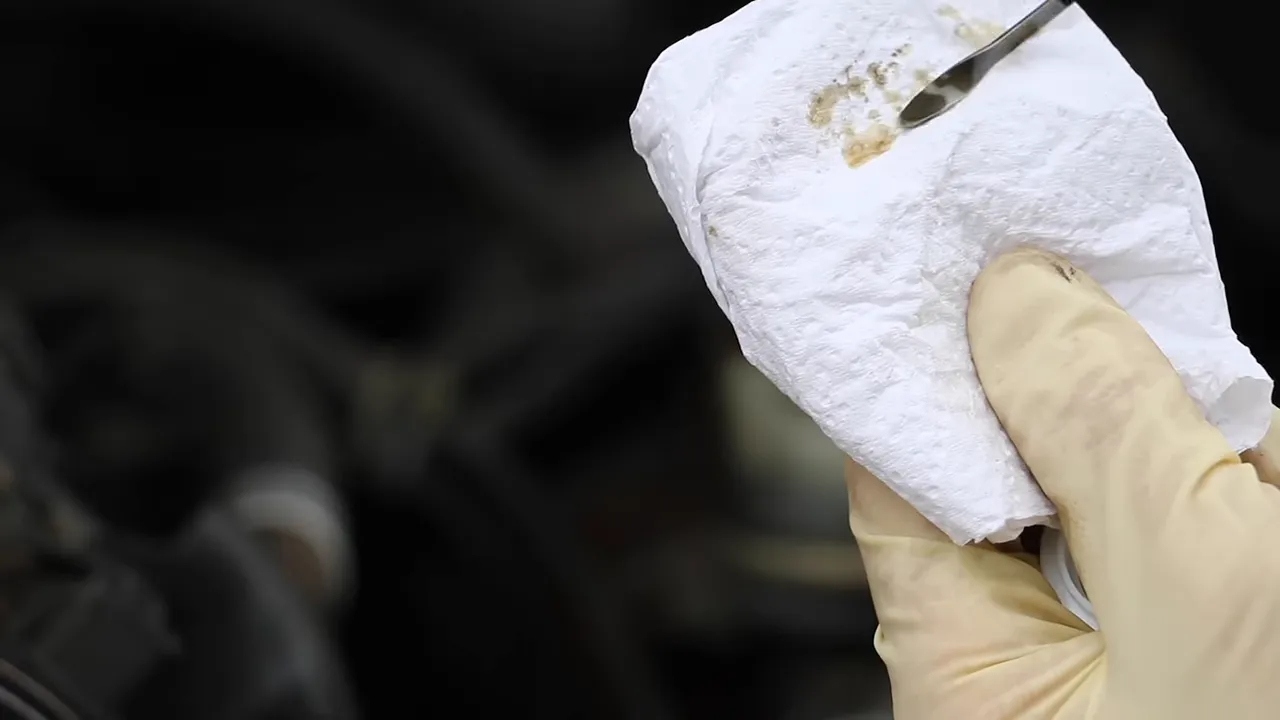
I had changed the oil fairly recently, so I also checked its appearance on the dipstick. Wiped onto a white paper towel, it looked reasonably clear rather than heavily blackened. That gave me a simple visual reference for the next day.
The instructions I followed called for 1 ounce of Sea Foam per quart of oil. For this engine, that meant measuring out 5 ounces and pouring it into the crankcase.
My plan was to operate the truck for a few hours, check whether the lifter noise changed, and inspect the oil again before draining it. These amounts describe what I used on this Ranger, not a universal dose for every engine. Product directions and the vehicle's requirements should guide any similar decision.
Using Sea Foam Spray Through the Intake
Next came the intake treatment. The engine was already warm. Following the spray-can directions for this application, I removed the intake hose and ran the engine somewhat above idle, around 1,500 RPM, while applying the spray.
The procedure was to use the entire can, shut the engine off, and allow it to hot soak. In this test, I let it sit for about 10 minutes before restarting.
The throttle plate had a lot of buildup
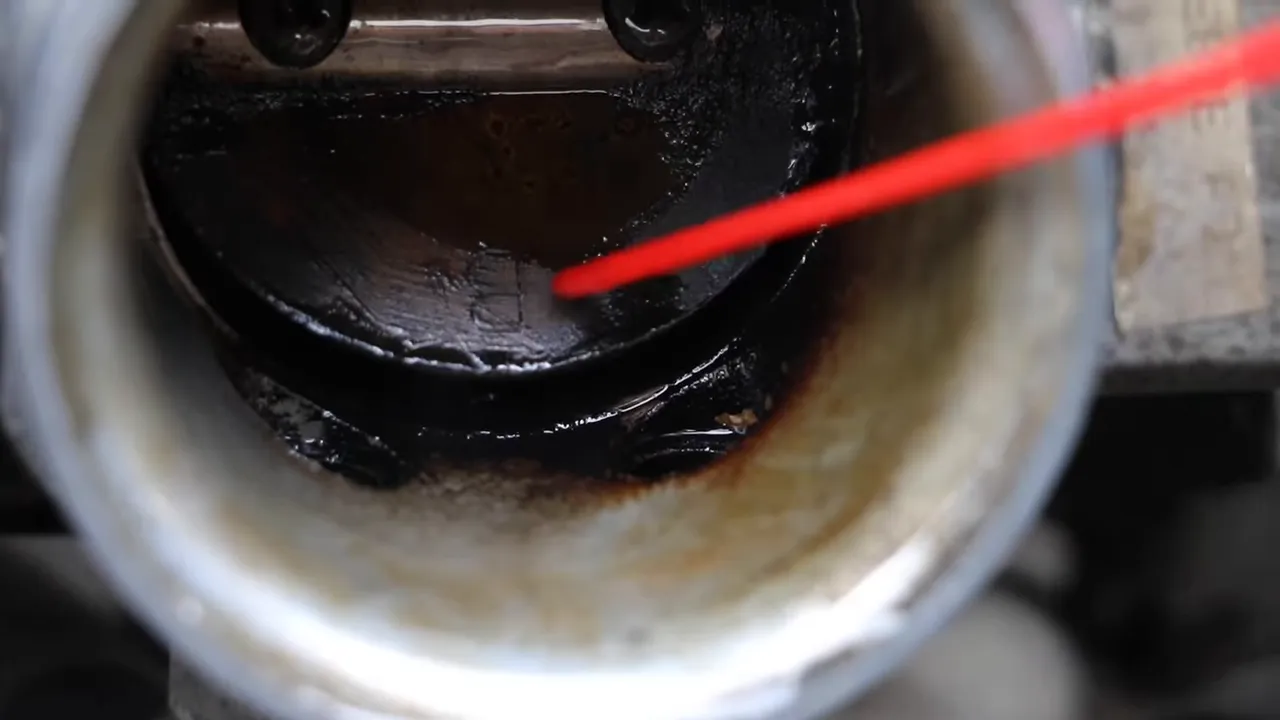
With the intake hose out of the way, the deposits around the throttle plate were easy to see. There was a substantial amount of black buildup, and I directed the spray against that area during the treatment.
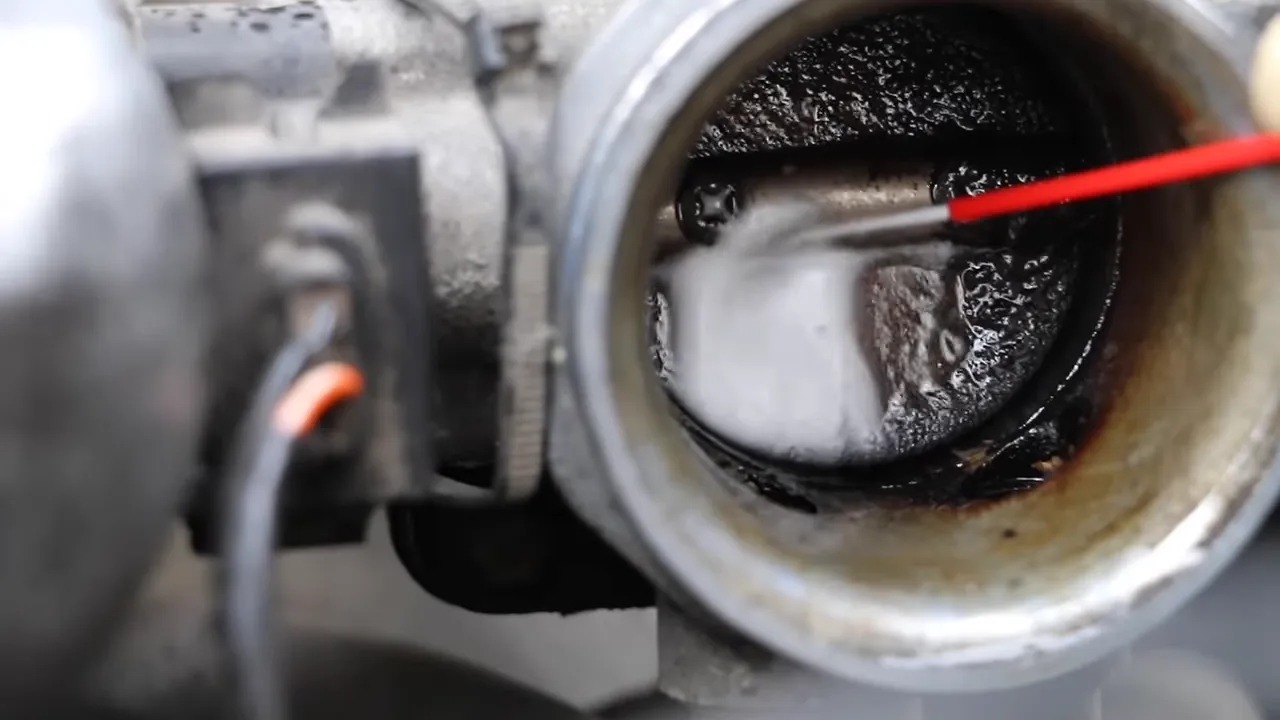
This was one area where I could see a direct cleaning effect. The spray broke up a lot of the deposits. It did not leave the throttle plate looking like shiny new metal, and traces of carbon remained, but it was noticeably cleaner.
Smoke was not proof of carbon removal
Toward the end of the spray treatment, quite a bit of smoke came out of the exhaust. There was another noticeable cloud when I restarted the truck after the hot soak, and it had largely cleared about a minute later.
It would be easy to assume that all that smoke was carbon leaving the engine. But Sea Foam is a petroleum-based product, so much of the smoke could simply be the treatment burning off.
The throttle-plate cleaning was visible. Piston and combustion-chamber cleaning was not verified. I hoped the treatment was helping there too, but smoke alone could not establish that.
The Next Day: Much Less Lifter Noise
About 24 hours after the Sea Foam treatments, I checked the oil again. To my eye, it was considerably darker than it had been the day before.
Then came the more interesting check: a cold start. The engine had been sitting for quite some time, and the shop was around 45°F. If it was going to rattle, this was a good opportunity to hear it.
The difference was impressive. After about two minutes of running, I could no longer hear the pronounced lifter noise that had been there before. There was still a very slight tick inside the engine, but nothing like the original racket.
This improvement happened before I added Lucas. That matters because the quieter operation could not be credited entirely to the later oil stabilizer treatment.
The truck also felt stronger at low RPM. Before treatment, taking off required extra engine speed to keep it from stalling. Afterward, it felt as though it had considerably more low-end power.
That was a driving impression, not a measured horsepower or torque increase. Still, on a truck that had been this difficult to get moving smoothly, it was a meaningful difference.
What the Darker Oil Did and Did Not Tell Me
After the Sea Foam portion of the test, I drained the oil and put some in a clear jar. It was very dark, despite having only about three hours of use on it.
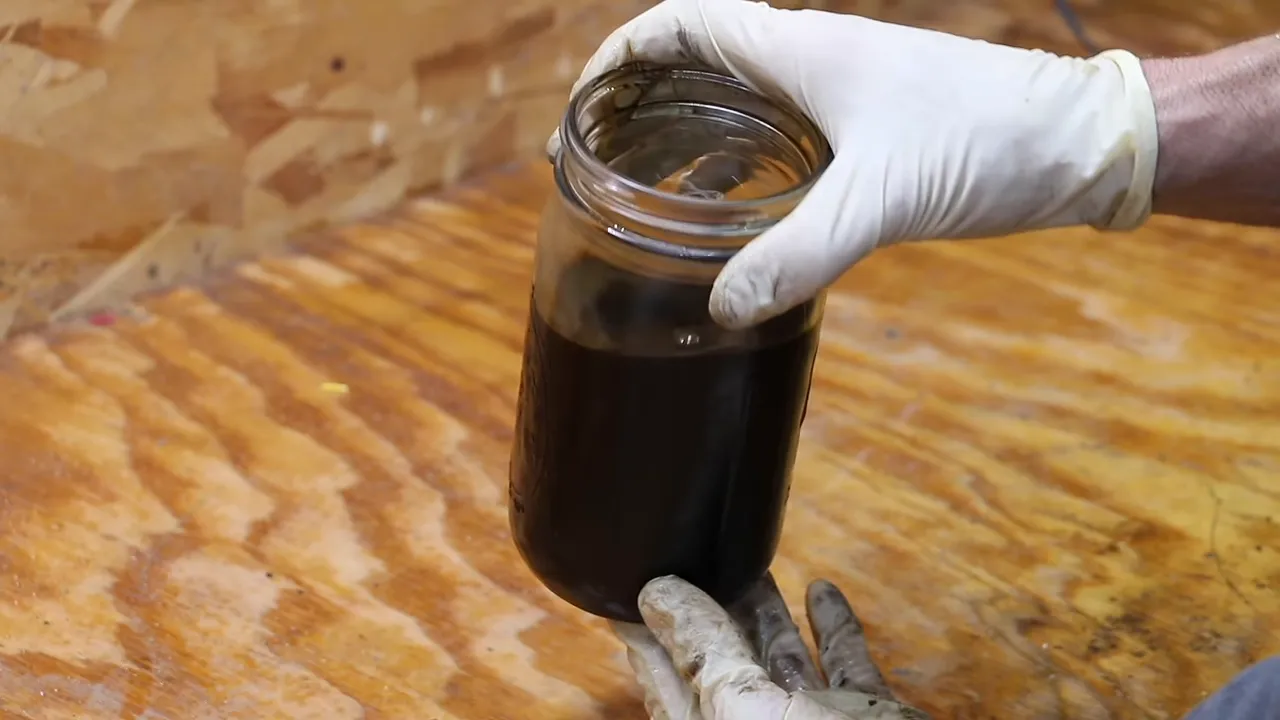
My belief was that the treatment had freed up some sludge or other buildup, allowing it to leave with the drained oil. The color change was consistent with that possibility, but it was not a scientific measurement of how much material had been removed.
A better way to evaluate the oil's condition and chemical properties would have been to send samples to an oil analysis laboratory. Looking at a jar cannot provide the same information.
I also checked the oil's feel and flow informally. Adding the 5 ounces of Sea Foam did not appear to have dramatically thinned it out. However, I did not measure viscosity, so that observation should not be mistaken for a laboratory result.
Fresh Oil and Lucas Heavy Duty Oil Stabilizer
With the treated oil drained, I added 4 quarts of fresh motor oil and 1 quart of Lucas Heavy Duty Oil Stabilizer.
The first thing that stood out was how thick the Lucas product was. It poured slowly and seemed very sticky. This was quite a contrast to the Sea Foam treatment.
The Lucas label made a long list of claims, including:
- Slowing oil leaks and blow-by.
- Reducing friction and wear.
- Improving fuel mileage and power.
- Helping protect against oil breakdown during overheating.
- Raising oil pressure.
- Extending life by at least 50 percent and not causing sludge or varnish.
Those were product claims, not findings from this experiment. I did not run a fuel-economy test, measure wear, establish longer service life, or record a quantified before-and-after oil-pressure result.
What I could do was start the engine again and compare how it ran. After the fresh oil and Lucas, the Ranger continued to run much better than it had at the beginning. Throttle response seemed better, and engine vibration appeared reduced as well.
Because fresh oil and Lucas went in together, this stage did not isolate the stabilizer's contribution. It did show that the improvement was still apparent after the oil change and addition of Lucas.
My Verdict: A Surprisingly Good Result on This Old Engine
I went into this experiment skeptical. The Ranger sounded rough enough that I did not expect a few bottles of treatment to accomplish much.
What stood out afterward was straightforward:
- The throttle plate was visibly cleaner after the Sea Foam Spray treatment.
- The loud lifter noise was greatly reduced by the next day's cold-start check, before Lucas was added.
- Low-end drivability felt better, especially when taking off with the manual transmission.
- The engine ran much better overall after the complete sequence of treatments and fresh oil.
This does not prove that an additive can repair a worn-out engine, nor does it establish which Sea Foam application made the biggest difference. It also does not tell me how long the improvement will last.
But on this particular old Ford Ranger, the change was substantial enough to impress me. If I had an engine I had nearly given up on, this experience would make me consider whether a modest investment in these treatments was worth trying, provided they were appropriate for the vehicle. I bought both brands with my own money, expected very little, and ended up with a truck that sounded and drove a whole lot better.


