Could DOT 3 brake fluid work better than penetrating oil on rusty bolts? It is an interesting idea, but getting a fluid onto a rusty fastener and getting that fastener loose are two different things. We’re going to test both.
For this comparison, I put brake fluid up against Sea Foam Deep Creep, CRC Knock’er Loose, Fluid Film, BG In-Force, and WD-40 Specialist Rust Release Penetrant. Each product received one application and one hour to work. A separate clear-plastic test made it possible to see how far the fluids actually traveled along rusty threads.
Sea Foam Deep Creep finished first, with CRC Knock’er Loose a close second. Brake fluid did penetrate, but it did not outperform the two leading purpose-made products. Just as interesting, a heavy coating on the outside of a nut did not necessarily mean much fluid had reached the threads inside.
Quick Summary
- Sea Foam Deep Creep finished first, narrowly ahead of CRC Knock’er Loose in average breakaway torque.
- DOT 3 brake fluid penetrated rusty threads but did not outperform the two leading dedicated penetrants.
- A heavy exterior coating did not necessarily indicate effective penetration beneath a rusty nut.
- The comparison tested one application and a one-hour soak, not repeated treatments or extended soaking.
Table of Contents
- How I Tested the Penetrating Fluids
- The Products and Their Claims
- What Happened After Application?
- Which Fluids Actually Penetrated the Rusty Threads?
- Breakaway Torque Results After One Hour
- What the Threads Looked Like After Removing the Nuts
- Does Mixing All the Fluids Together Help?
- The Verdict: Deep Creep Wins This Round
How I Tested the Penetrating Fluids
In my previous penetrating-fluid comparison, an acetone and automatic transmission fluid mixture finished second behind Liquid Wrench. This round used a different lineup and a shorter application schedule, so it was not a direct rematch with that winner.
Constructive feedback helped shape several changes to this test:
- Half-inch wheel lug studs and nuts: The fasteners were initially tightened to 80 foot-pounds before the rusty assemblies were tested.
- Washers under the nuts: These added another contact surface to the assembly.
- Dripper application: Each fastener received 10 drops rather than a direct spray from an aerosol can.
- One application: The fluids had one hour to work before breakaway testing began.
- Untreated controls: Four fasteners received no penetrating fluid for comparison.
There were 28 fasteners in the main test: four controls and four for each of the six products. The aerosol products were shaken before use and dispensed into separate containers for application with a dripper.
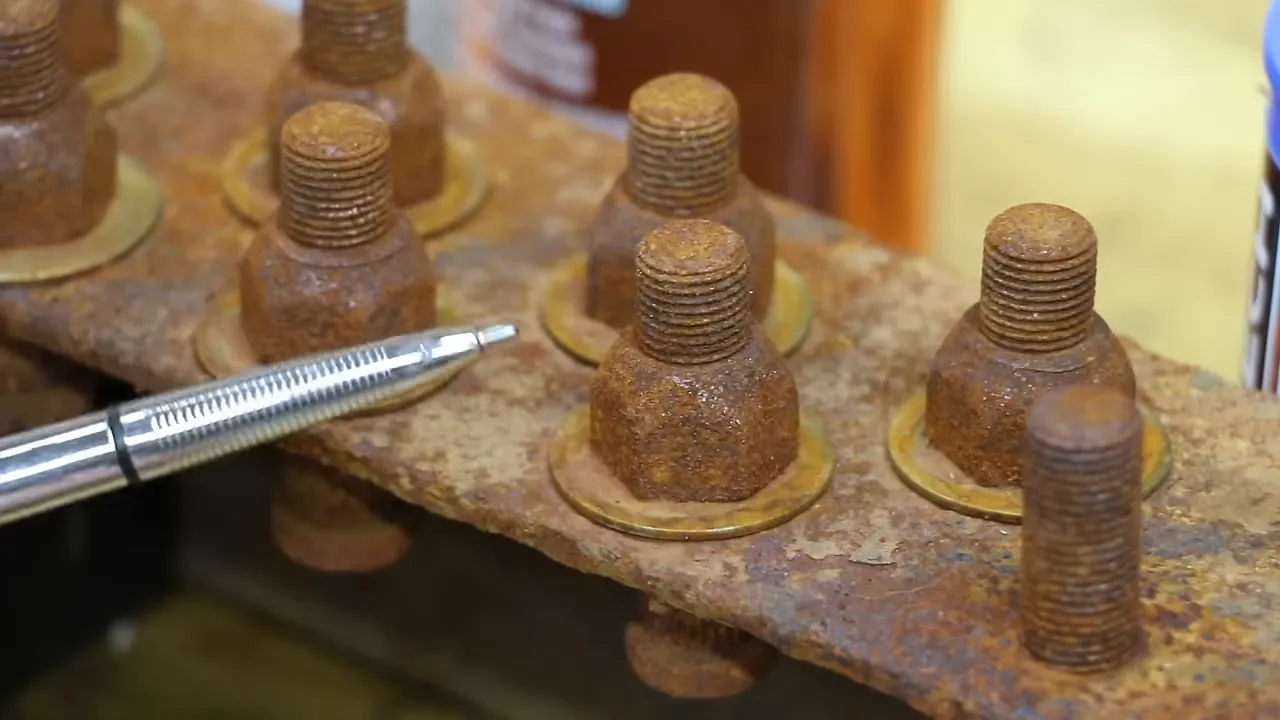
I chose the lower initial tightening torque because the digital torque adapter’s stated upper range was 147 foot-pounds. My preference was to keep the same measuring device throughout the test. Some fasteners nevertheless required the larger torque wrench, including one untreated control, two Fluid Film fasteners, and one WD-40 Specialist fastener.
Why Add a Clear-Plastic Test?
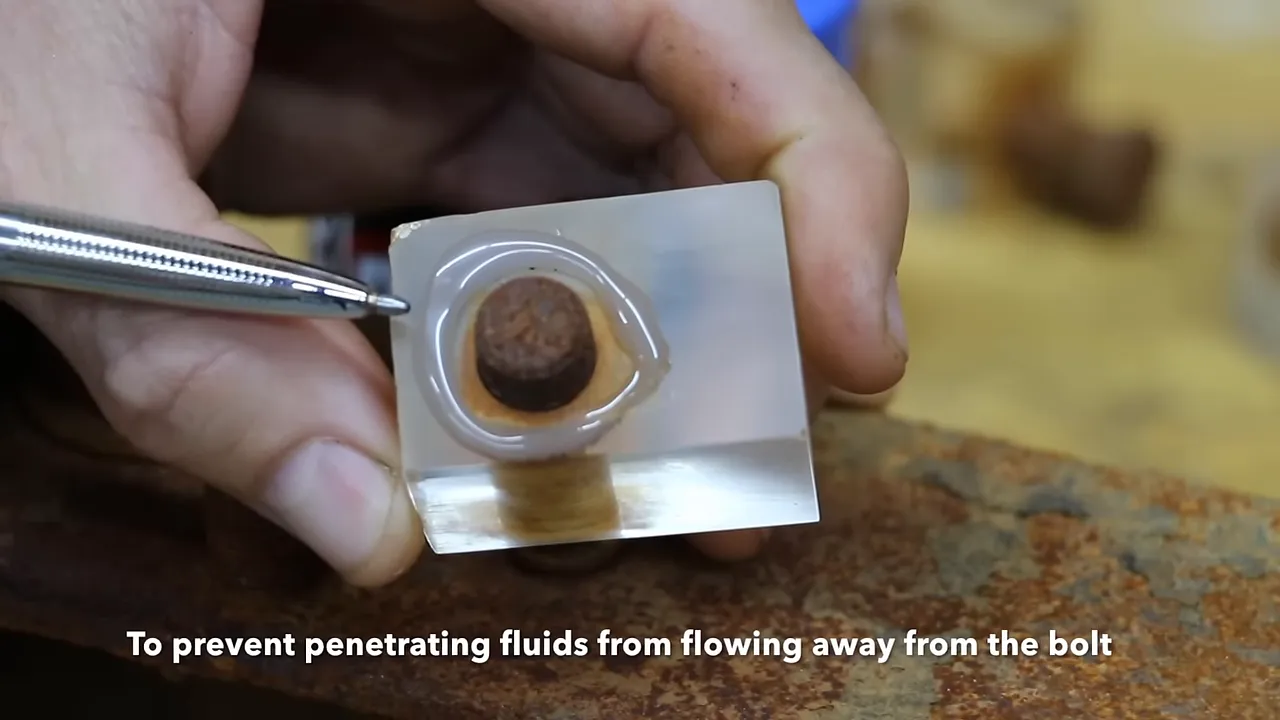
A torque measurement tells us how difficult a nut is to loosen, but it does not show where the fluid went. To make penetration visible, I drilled and tapped one-inch-thick pieces of Plexiglas, threaded rusty bolts into them, and added a hot-glue perimeter at the top to keep the applied fluid from simply running away.
This is not a perfect substitute for a rusty metal nut. A metal-on-metal joint has corrosion on both mating surfaces, while the plastic threads do not rust. Still, the transparent material provides useful evidence of whether a fluid can travel along the corroded threads.
The Products and Their Claims
Five of the products were marketed for penetrating or freeing seized parts. The sixth, DOT 3 brake fluid, was included because so many people had asked how it would compare.
- DOT 3 brake fluid: The unconventional contender, priced at $2.78 for a 12-fluid-ounce bottle at the time of testing.
- CRC Knock’er Loose: Marketed to free frozen metal parts, dissolve rust and corrosion, lubricate, and prevent rust. The tested can cost $7.99 for 13 ounces.
- Sea Foam Deep Creep: Marketed as a penetrating lubricant that works through rust and varnish. The tested can cost $11.99 for 12 ounces.
- Fluid Film: Its label included freeing heavily seized parts among its uses. The tested can cost $12.39 for 11.75 ounces.
- BG In-Force: Claimed an ion-activated formula with better penetration than standard penetrating oils. The tested can cost $24.95 for 15.75 ounces.
- WD-40 Specialist Rust Release Penetrant: A dedicated rust-release product, not the original WD-40 tested previously. The tested can cost $9.46 for 11 ounces.
Those are purchase prices from this test, not current price quotes. Container sizes also differed, so the sticker prices alone are not an equal-volume cost comparison.
What Happened After Application?
The fluids behaved quite differently on the outside of the fasteners.
Brake fluid stayed largely within the washer area and remained wet. It did not visibly spread beyond the washer or evaporate during the initial inspection.
CRC Knock’er Loose appeared mostly dry, with some fluid remaining near the base of the nut and a little spreading beyond the washer. Sea Foam Deep Creep looked similar, but more liquid remained on the nut and exposed threads, with less spreading away from the washer.
Fluid Film was noticeably different. It left a thick, obvious coating over the treated nuts and studs. BG In-Force flowed down the nut toward the washer and remained wet longer than some of the other products.
These observations were useful, but they were not the result. A wet exterior does not prove that fluid has reached the rusted contact surfaces. That is where the clear blocks and torque measurements came in.
Which Fluids Actually Penetrated the Rusty Threads?
After nearly an hour, the clear-plastic assemblies showed substantial differences.
Brake Fluid, CRC, Sea Foam, and WD-40 Reached the Bottom
DOT 3 brake fluid traveled all the way through the threaded section to the bottom of the bolt. Whatever its limitations in the torque test, it clearly could move along the rusty threads in this setup.
CRC Knock’er Loose also penetrated thoroughly and reached the bottom. Sea Foam Deep Creep did especially well visually: fluid had passed through the threaded area, collected underneath, and was ready to drip from the bolt.
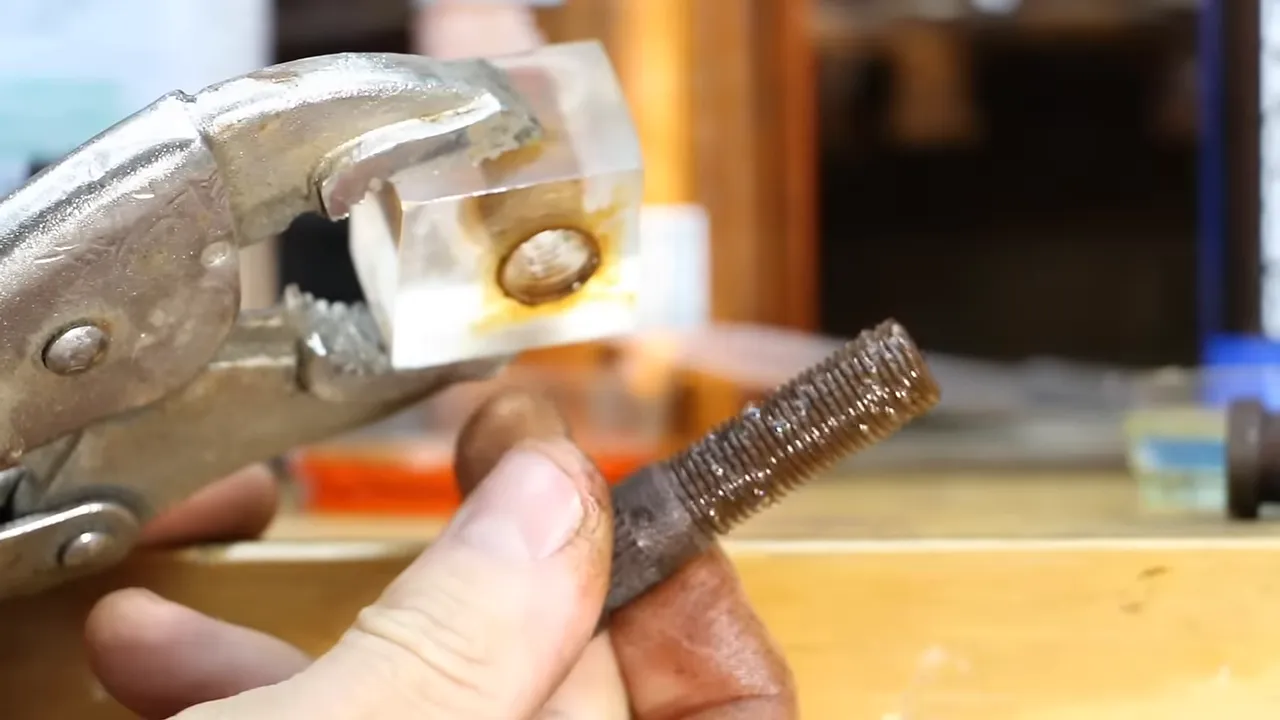
WD-40 Specialist Rust Release Penetrant reached the bottom as well. That would make its later performance on the metal fasteners particularly interesting.
Fluid Film and BG In-Force Did Not Travel as Far
Most of the Fluid Film remained near the top of its clear-plastic assembly. Despite the heavy coating it left on exposed surfaces, there was little visible penetration through the full threaded section.
BG In-Force moved partway down the threads but did not reach the bottom. A substantial amount remained at the top.
For this portion of the test, the distinction was clear: four fluids traveled through the threaded section, while Fluid Film and BG In-Force did not fully penetrate within the available time.
Breakaway Torque Results After One Hour
Once the hour was up, I measured the torque needed to start each nut moving. Lower breakaway torque is better in this comparison. The four readings for each group also show why it is important not to judge a product by one unusually easy or stubborn fastener.
The following averages are calculated from the four recorded readings in each group:
- Sea Foam Deep Creep: approximately 115.4 foot-pounds average. Individual readings were 108.8, 103.7, 112.1, and 136.8 foot-pounds.
- CRC Knock’er Loose: approximately 115.9 foot-pounds average. Individual readings were 107.2, 121.6, 114.2, and 120.7 foot-pounds.
- DOT 3 brake fluid: approximately 122.4 foot-pounds average. Individual readings were 104.3, 129.5, 126.6, and 129.3 foot-pounds.
- BG In-Force: approximately 127.9 foot-pounds average. Individual readings were 137.3, 124.4, 122, and 128 foot-pounds.
- Untreated control: approximately 131.6 foot-pounds average. Individual readings were 132.7, 140, 127, and 126.8 foot-pounds.
- Fluid Film: approximately 132.6 foot-pounds average. Individual readings were 122.1, 118.1, 145, and 145 foot-pounds.
- WD-40 Specialist Rust Release Penetrant: 136 foot-pounds average. Individual readings were 140, 134.9, 137.1, and 132 foot-pounds.
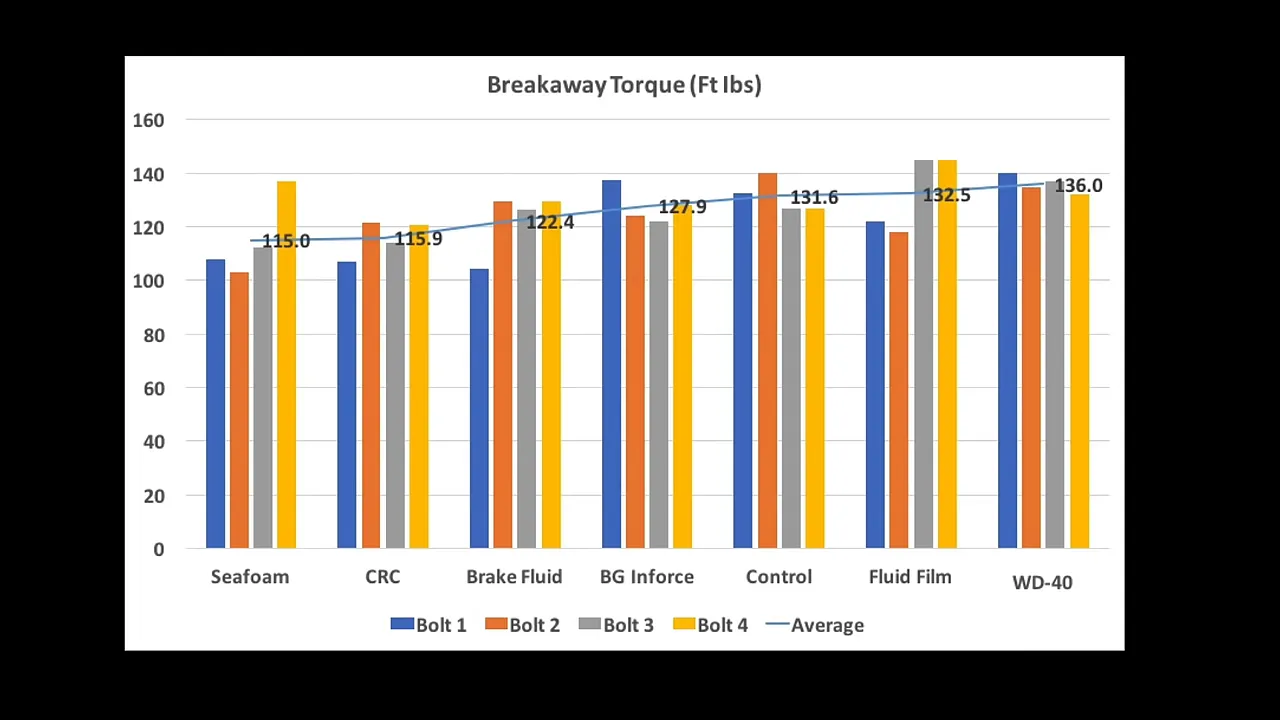
Deep Creep and CRC were very close. Sea Foam had three relatively low readings and one much higher reading, while CRC’s results were more tightly grouped.
Brake fluid finished behind those two but ahead of the remaining products on average. So, could brake fluid work as a penetrant? It showed both visible penetration and a lower average breakaway torque than the untreated controls, but it did not win.
Fluid Film and WD-40 Specialist did not beat the untreated group’s average in this test. That describes these four-fastener groups under these conditions, not every possible application of either product.
What the Threads Looked Like After Removing the Nuts
After measuring breakaway torque, I removed the nuts and inspected the covered portions of the studs.
- Brake fluid, CRC, and Sea Foam: The exposed threads appeared to show decent penetration.
- Fluid Film: There appeared to be very little penetration beneath the nuts.
- BG In-Force: The threads appeared to show decent penetration, despite its incomplete travel through the clear-block assembly.
- WD-40 Specialist: Three of the four fasteners did not appear to have received much penetration beneath the nuts.
The WD-40 result is an important limitation of the transparent test. Reaching the bottom of a bolt threaded through plastic did not guarantee equally good penetration inside a rusty metal nut. The visual demonstration is helpful, but it should be considered alongside the actual loosening measurements.
Does Mixing All the Fluids Together Help?
I also tried a separate experiment suggested by requests to combine the products. A nut had been threaded roughly three-quarters of the way onto a stud by hand, then allowed to rust in place. It had not been tightened against the fixture.
Instead of applying only the winning product, I combined small amounts of all six fluids and applied the mixture to the top of that nut.
I do not recommend mixing chemicals. Different formulations can react, and this experiment is not a mixing recipe. For general guidance on checking a product’s hazards, the OSHA Hazard Communication resources explain labels and safety data sheets.
The mixture showed no visible passage beyond the bottom of the nut, and the nut remained stuck. After soaking up the pooled fluid at the top, I measured 56.4 foot-pounds to break it loose, even though it had originally been installed only by hand.
The threads looked wet after removal, but turning the fastener could have allowed the remaining liquid to flow downward. That made the final wet appearance unreliable evidence of earlier penetration. This separate trial provided no convincing reason to combine the products.
The Verdict: Deep Creep Wins This Round
Sea Foam Deep Creep earned the top spot, with CRC Knock’er Loose finishing a very close second. Both penetrated well in the clear-block test and produced the lowest average breakaway torque on the rusty metal fasteners.
DOT 3 brake fluid was a credible contender rather than the surprise winner. Fluid Film’s heavy external coating did not translate into strong penetration during the test, and WD-40 Specialist’s success in the clear block did not carry over to most of its metal nut-and-stud assemblies.
The time limit matters. My earlier comparison allowed three applications over three hours. This test allowed one application and one hour, reflecting requests for a shorter wait before attempting removal. These results do not establish how the products would rank after repeated applications or a longer soak.
For the conditions tested here, the answer is straightforward: Deep Creep and CRC were the strongest performers. A direct comparison between Deep Creep and the previous winner, Liquid Wrench, would be the next useful showdown.


