I want an engine to stay in good shape, perform well, and last a long time. But does paying more at the pump actually help? With premium gasoline costing an extra 40 to 50 cents per gallon in this comparison, it needs to offer something useful beyond a bold label.
Shell V-Power NiTRO+ claims to contain seven times the required amount of detergents. It also promises to remove gunk, help prevent wear, and protect against corrosion. Those are some pretty strong claims.
To see where the extra money goes, I compared Shell V-Power NiTRO+ with inexpensive, generic 87 octane gasoline. The tests covered flame appearance, ethanol content, generator fuel efficiency, combustion chamber deposits, compression, and cleaning greasy bolts. The results showed a clear cleaning advantage in one test, but not a fuel economy advantage.
Key Takeaways
- Shell V-Power NiTRO+ cleaned greasy bolts substantially better than the inexpensive gasoline tested.
- Generator runtime was essentially identical with both fuels in an engine designed for 87 octane.
- Both fuels formed visible combustion chamber deposits after testing began with cleaned surfaces.
- Manually removing combustion chamber carbon did not cause a significant compression loss in the test engine.
Does Premium Gasoline Produce a Different Flame?
The first comparison used a small engine with a see-through cylinder head. That makes it possible to observe combustion directly rather than judge the fuel only by how the engine sounds.
I ran Shell through the engine at low speed, midrange speed, and wide-open throttle, then compared it with the cheap gasoline. Both produced the same general range of orange, yellow, and bluish-purple flame colors.
There was no visible difference in flame color between the two fuels. That does not settle the cleaning or efficiency questions, but the premium fuel did not produce an obvious visual difference in this check.
Checking Ethanol Content Before Testing Fuel Efficiency
Before comparing runtime, I wanted to find out whether the fuels contained similar amounts of ethanol. Otherwise, we would be comparing more than just the brand and fuel grade.
The check used water to separate ethanol from the gasoline. I mixed the samples, allowed about 15 minutes for separation, and examined how much the lower liquid layer increased.
- Cheap gasoline: 2 milliliters of water added to 10 milliliters of gasoline.
- Shell V-Power NiTRO+: 20 milliliters of water added to 100 milliliters of gasoline.
The proportions were identical, even though the sample sizes differed.
In the Shell sample, the lower layer rose from 20 milliliters to between 25 and 26 milliliters, indicating approximately 5% ethanol. In the cheap gasoline sample, it rose from 2 milliliters to roughly 2.4 to 2.5 milliliters, indicating about 4% to 5% ethanol.
Although the regular fuel was sold as a gasoline blend allowing up to 10% ethanol, this sample measured considerably lower. For this comparison, the two fuels were within roughly one percentage point of each other in ethanol content.
Generator Fuel Economy: Almost Identical Runtime
For the fuel efficiency comparison, I used a generator powering a space heater. A Kill A Watt meter monitored electrical output, including watts, amps, volts, and frequency. I purchased that meter myself; this was not a sponsored test.
The space heater stayed on its medium setting. On a hot day, that reduced the chance of its thermal protection shutting it off and changing the load halfway through a run.
Keeping the Comparison Consistent
The generator engine was designed to run on 87 octane gasoline. I warmed it up before the timed comparison and used the same fuel container and starting fill level for each fuel.
For the regular gasoline run, I also briefly started and stopped the engine before setting the final fuel level. That filled the carburetor bowl and fuel system so the timed test would not begin with part of the measured supply being used simply to fill empty passages.
The heater drew approximately 870 watts during the runs. Meter readings showed a very similar electrical load with either fuel, and thermal images showed similar generator engine and exhaust temperatures.
The Runtime Results
- Shell V-Power NiTRO+: 71 minutes, 24 seconds.
- Cheap 87 octane gasoline: 71 minutes, 28 seconds.
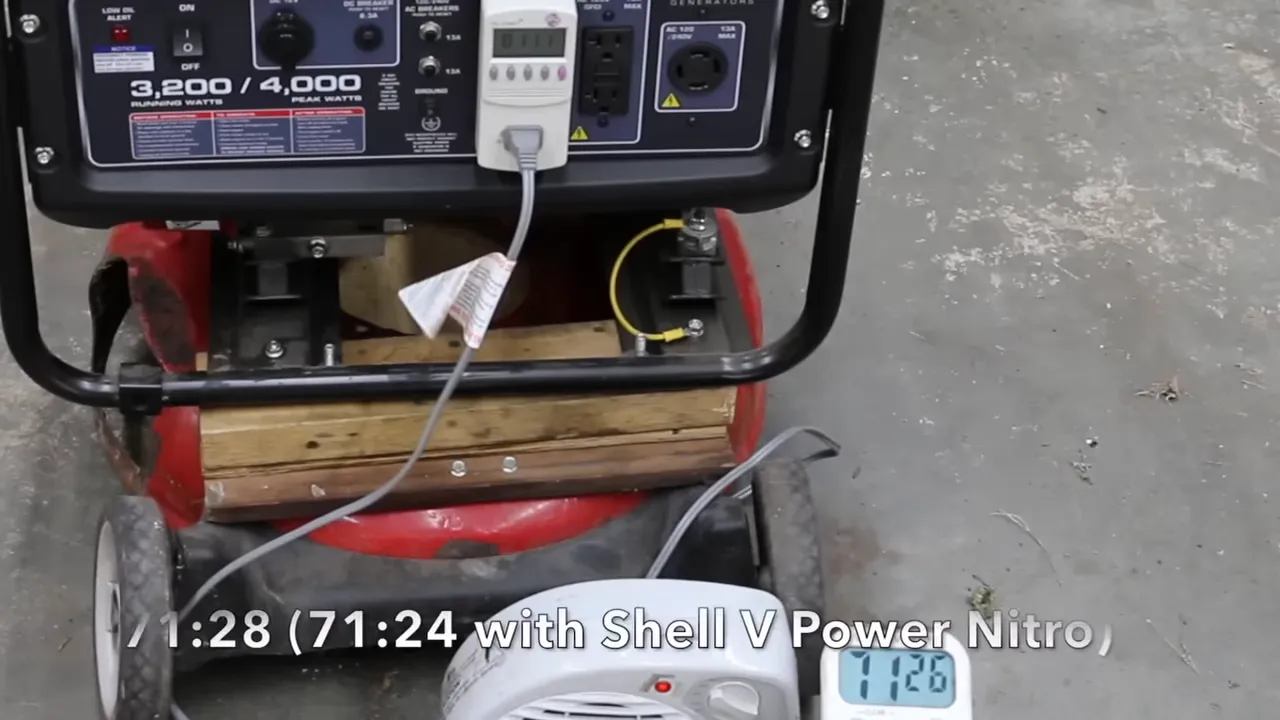
That is a four-second difference over more than 71 minutes. For this test, the result was essentially a tie.
Shell did not provide a meaningful fuel efficiency benefit in this engine. With closely matched ethanol content and an engine designed for regular gasoline, paying more did not buy a longer runtime.
Can Shell V-Power NiTRO+ Remove Existing Carbon?
Cleaning grease in a jar is one thing. Cleaning deposits inside a running engine is another. To examine that, I used a small mower engine with existing combustion chamber deposits.
The starting condition was documented with the cylinder head removed. The piston and head both had visible deposits. Initial compression measured approximately 97 psi.
After running Shell V-Power NiTRO+ through the engine, I checked the spark plug, compression, and combustion chamber again.
- Spark plug: The before-and-after comparison showed a much cleaner insulator and electrode area.
- Compression: The reading was about 100 psi afterward, compared with 97 psi before.
- Combustion chamber: Visible deposits remained on the piston and cylinder head.
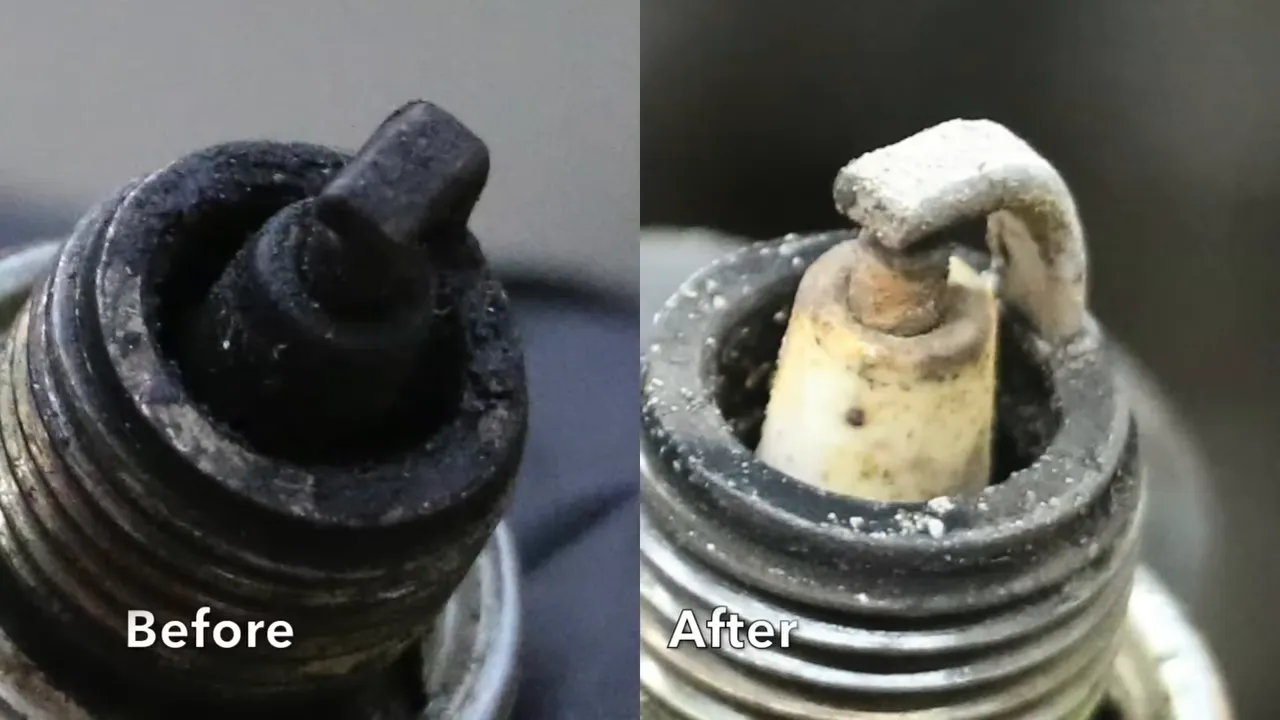
The plug comparison was encouraging, but the engine did not come apart looking freshly scrubbed. It is important to separate a visible improvement on one component from a claim that a tank of fuel removes all combustion chamber carbon.
Does Removing Carbon Cause Compression to Drop?
A common concern is that cleaning carbon out of an older engine will cause a large compression loss. Since the head was already coming off, this was a good opportunity to check that idea.
Before manually cleaning the combustion chamber, compression was around 100 psi. After removing the deposits and reassembling the engine, it was still around 100 psi.
There was no significant compression drop in this engine after cleaning. That is a result for this particular engine, not a guarantee for every worn engine, but the predicted large loss did not happen here.
Will Premium Gasoline Prevent New Carbon Deposits?
Removing existing deposits and preventing new ones are separate questions. To check deposit formation, I thoroughly cleaned the combustion chamber, reassembled the engine, and ran a full tank of Shell V-Power NiTRO+ through it.
Afterward, parts of the piston had very little carbon buildup. The exhaust valve was extremely clean, and portions of the head also remained fairly clean. However, other areas had accumulated visible deposits.
Thermal imaging during the mower run suggested that the cylinder head was warmer than usual. The clean exhaust valve also appeared to have experienced substantial heat. Those observations are worth noting, but they do not establish that the fuel caused a temperature change.
Next, I cleaned the combustion chamber again, confirmed compression was still about 100 psi, and repeated the run with inexpensive 87 octane gasoline.
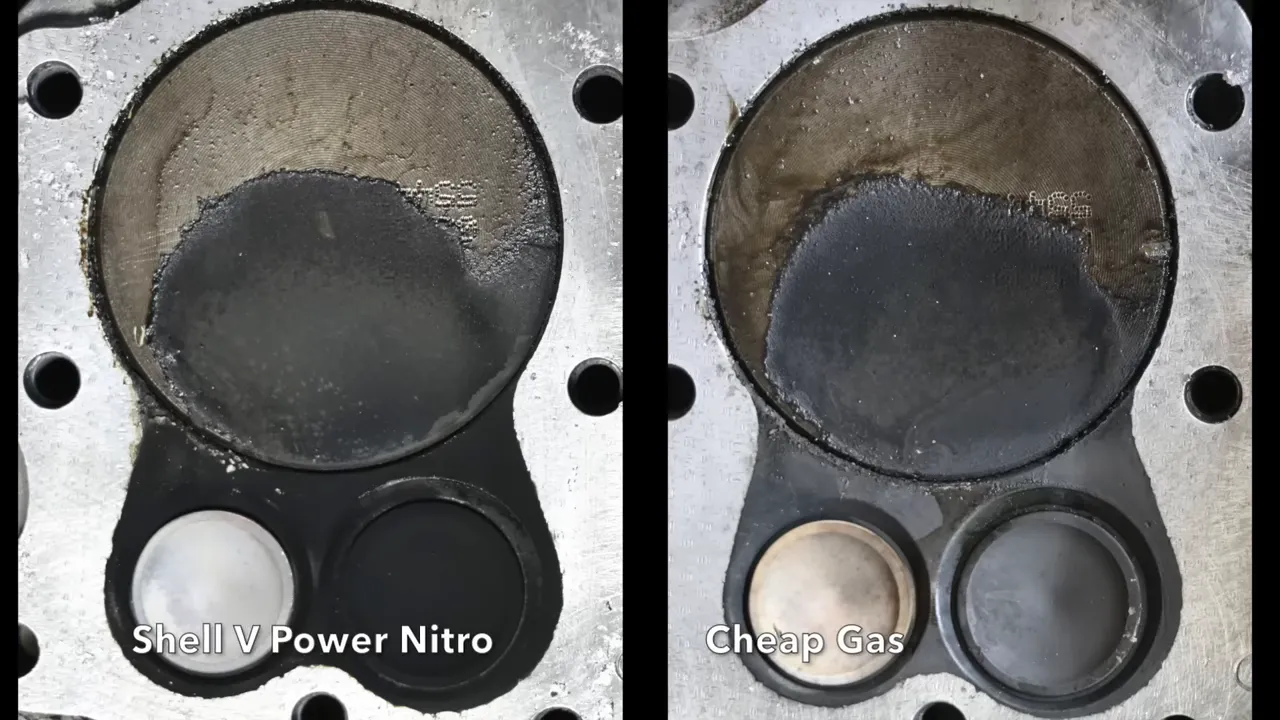
The final comparisons showed deposits with both fuels. The Shell exhaust valve looked cleaner, while the piston crowns and cylinder heads showed different deposit patterns. The mower also appeared a little cooler on the cheap gasoline during the thermal check.
The practical conclusion is narrower than saying premium fuel keeps everything clean: Shell did not prevent carbon buildup throughout the combustion chamber during this test. There were clean areas, but there were also obvious deposits.
The Greasy Bolt Test: A Clear Cleaning Advantage
The simplest cleaning comparison used two identical greasy bolts from the same engine. I placed one in a jar of cheap gasoline and the other in a jar of Shell V-Power NiTRO+.
As the bolts soaked, the Shell fuel became noticeably darker. It also appeared to contain more loosened dirt. That suggested it was removing more contamination, but examining the bolts themselves was the more useful check.
After removing them, I placed both on white paper and allowed the paper and bolts to dry. The bolt soaked in cheap gasoline left much more residue behind. Close inspection of the threads also showed that the Shell-soaked bolt was cleaner.
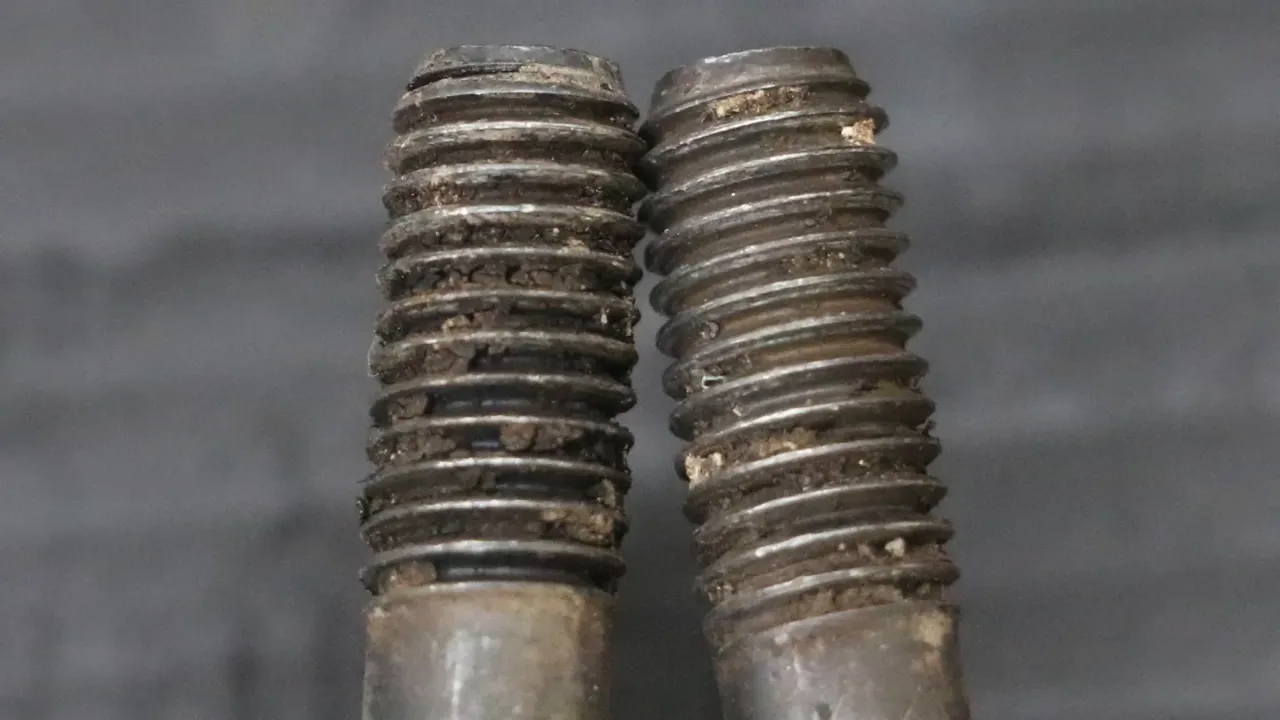
Even after 24 hours, the Shell sample remained darker. My interpretation was that it continued to hold more of the removed contamination in suspension.
Shell V-Power NiTRO+ did a substantially better job of cleaning the greasy bolt. Of all the comparisons, this provided the clearest evidence of a cleaning advantage over the inexpensive gasoline.
That supports the idea that its cleaning package can be useful. It does not, by itself, measure injector performance, intake valve cleaning, long-term wear protection, or corrosion resistance. Those would require their own tests.
Is Shell V-Power NiTRO+ Worth an Extra 50 Cents per Gallon?
Does Shell clean better than cheap gasoline? Based on the greasy bolt comparison, I think the answer is yes. The spark plug comparison also showed a visible improvement.
Does that make it worth paying an extra 50 cents per gallon for a vehicle designed to run on 87 octane? My conclusion from these tests is no. The generator received no meaningful fuel economy benefit, and the premium fuel did not keep the combustion chamber free of deposits.
I also would not assume it is a better value than a separate fuel treatment. Products such as Sea Foam, Marvel Mystery Oil, and Techron are alternatives I would consider for cleaning. However, they were not tested head-to-head here, so that is a value judgment rather than a result established by this comparison.
The important distinction is between better cleaning and better overall value. Shell demonstrated the first in the bolt soak test. For an engine designed around regular 87 octane gasoline, this testing did not demonstrate enough additional benefit to justify the higher price at every fill-up.


