SeaFoam did an impressive job in my earlier tests, improving engine compression and removing carbon deposits from the combustion chamber. But it comes at a price. A 16-ounce can cost $7 to $10, while a 32-ounce bottle of Marvel Mystery Oil cost me about $3.50.
That is twice as much product for roughly half the money. Marvel Mystery Oil has been around a long time and has quite a reputation, but does it deliver results that make it a better value?
I do not mind paying more for a product that performs better. If a less expensive product does the same job, though, that is the one I want. To compare the two, I treated a lawn mower engine with Marvel Mystery Oil, measured compression before and after, and opened the engine to inspect the carbon deposits. Then I compared those findings with my earlier SeaFoam results.
Key Takeaways
- Marvel Mystery Oil cost substantially less per ounce than SeaFoam at the prices tested.
- SeaFoam improved cold and hot compression in earlier tests; Marvel Mystery Oil did not.
- Marvel Mystery Oil visibly changed carbon deposits but did not leave the combustion chamber spotless.
- Different starting compression readings limit how directly the two products’ results can be compared.
SeaFoam vs. Marvel Mystery Oil: The Price Difference
Here is what the products cost at the time of this test:
- SeaFoam: $7 to $10 for 16 ounces, or about 44 to 63 cents per ounce.
- Marvel Mystery Oil: About $3.50 for 32 ounces, or roughly 11 cents per ounce.
On purchase price alone, Marvel Mystery Oil has a substantial advantage. But a lower price does not settle the question. The important part is what happens inside the engine.
This comparison focuses on two things: compression readings and visible combustion chamber cleaning. The SeaFoam results came from previous tests, rather than a simultaneous test on an identical engine. That distinction matters when interpreting the outcome.
Establishing the Engine’s Starting Condition
Before adding Marvel Mystery Oil, I removed the cylinder head to document the deposits. The combustion chamber and piston crown both had a visible coating of carbon. Those initial images provided a reference for the inspection after treatment.
After reassembling the engine, I checked compression both cold and warm.
Keeping the Throttle Wide Open
A compression test needs unrestricted airflow into the combustion chamber. If the throttle plate is partly closed, it restricts the air entering the engine and affects the measurement.
I used a screw to hold the throttle plate in the wide-open position, then repeated that setup for the later compression checks. Keeping the test procedure consistent is important when looking for a change of only a few PSI.
Cold and Warm Baseline Readings
The engine and exhaust were both approximately 66°F before the cold test. I turned the engine over five times to establish the initial reading, then warmed it up and repeated the compression test with the throttle held open again.
- Before treatment, cold: 105 PSI.
- Before treatment, warm: 106 PSI.
Those were already very good compression readings for this test engine. Marvel Mystery Oil was not starting with an engine that had an obvious compression problem, leaving relatively little room for improvement.
Applying Marvel Mystery Oil at a Controlled Rate
Rather than simply pouring the product into the carburetor, I put together a controlled-feed setup. A suspended bag held the Marvel Mystery Oil, a hose carried it down to the carburetor, and a clamp restricted the flow.
I added 8 ounces to the bag to stay consistent with the quantity used in the earlier SeaFoam treatment. Additional product was used for the soaking stages.
I also addressed a concern raised about previous tests: could fluid added at the carburetor find its way into the crankcase ventilation passage?
On this engine, that passage runs uphill toward the crankcase. To eliminate the possibility of spilled treatment entering that opening, I fitted a hose to the passage and secured it with tape. The purpose was to keep the carburetor treatment from accidentally becoming a crankcase treatment.
With the engine fully warmed and outdoors, I fed Marvel Mystery Oil through the carburetor. The engine produced substantial smoke during treatment.
Two Hot-Soak Stages
The treatment did not stop with the controlled feed. I followed it with a hot soak, then restarted the engine after approximately 20 minutes. Once the smoke cleared, the engine seemed to run well.
While it was still hot, I carried out a second soak, this time adding Marvel Mystery Oil directly through the spark plug opening.
The sequence was:
- Remove the spark plug while the engine was still hot.
- Position the piston at top dead center.
- Add Marvel Mystery Oil until the chamber was full.
- Reinstall the spark plug and allow it to soak for approximately 20 minutes.
- Remove the spark plug and drain the excess fluid before restarting.
At the end of the soak, the chamber was still full. After removing the excess product, I restarted the mower outdoors. It smoked initially, but after about 20 minutes the smoke had cleared and the engine was running well.
This was an experimental test, not a general maintenance recommendation. The procedure is described to explain how these results were obtained.
Compression Results: Did Either Product Improve the Numbers?
After the Marvel Mystery Oil treatment, I repeated the warm and cold compression checks, again holding the throttle wide open. The compiled results showed a different outcome from the earlier SeaFoam tests.
Marvel Mystery Oil
- Cold compression: 105 PSI before treatment and 101 PSI afterward, a decrease of about 4%.
- Hot compression: 106 PSI before and after treatment, with no change.
SeaFoam, From the Earlier Tests
- Cold compression: 93 PSI before treatment and 102 PSI afterward, an increase of 9.7%.
- Hot compression: 100 PSI before treatment and 105 PSI afterward, an increase of 5%.
SeaFoam showed the stronger compression improvement in these tests. Marvel Mystery Oil did not improve the compression readings on the engine used here.
However, the starting conditions were not the same. The Marvel Mystery Oil engine began at 105 PSI cold and 106 PSI hot, while the earlier SeaFoam engine started lower. That gives the Marvel Mystery Oil engine less opportunity to show an improvement.
The numbers are useful, but they do not establish that every engine will respond the same way.
Carbon Cleaning: What Changed Inside the Engine?
Compression was only part of the comparison. After completing the treatment and testing, I removed the cylinder head again to inspect the combustion chamber and piston.
Cylinder Head Before and After Marvel Mystery Oil
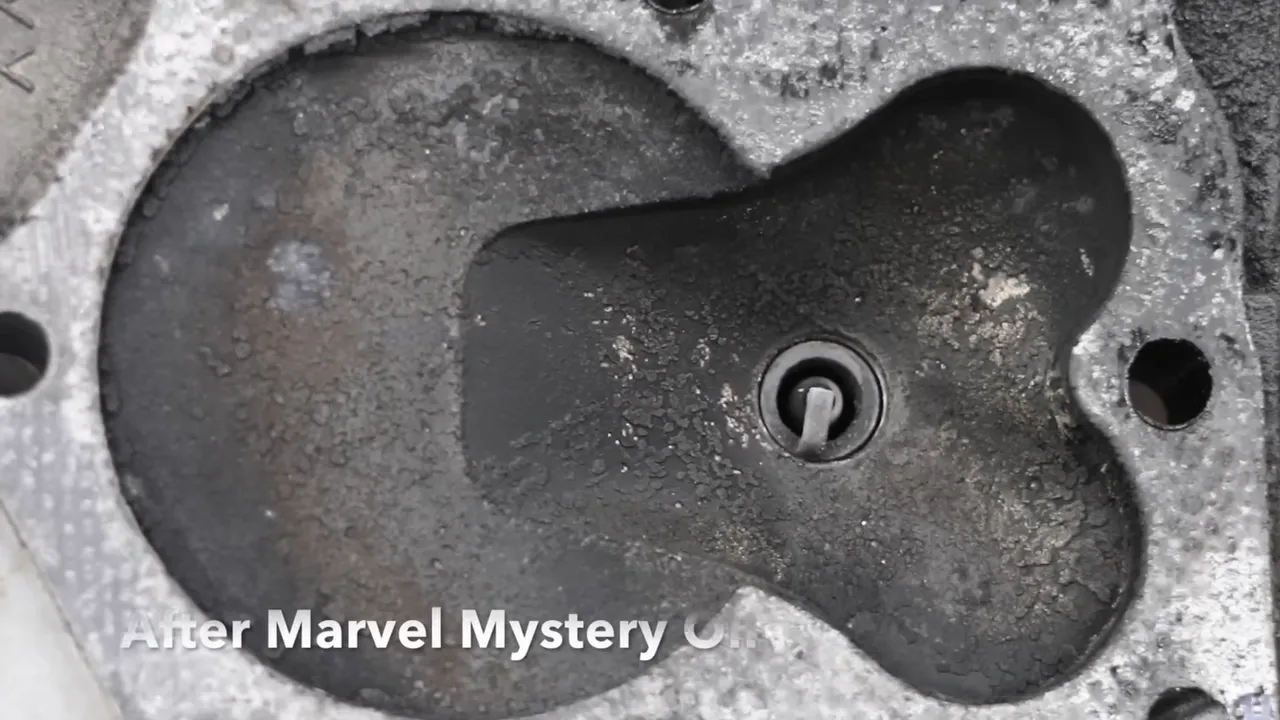
The initial cylinder head had a rough, widespread coating of carbon across the combustion chamber.
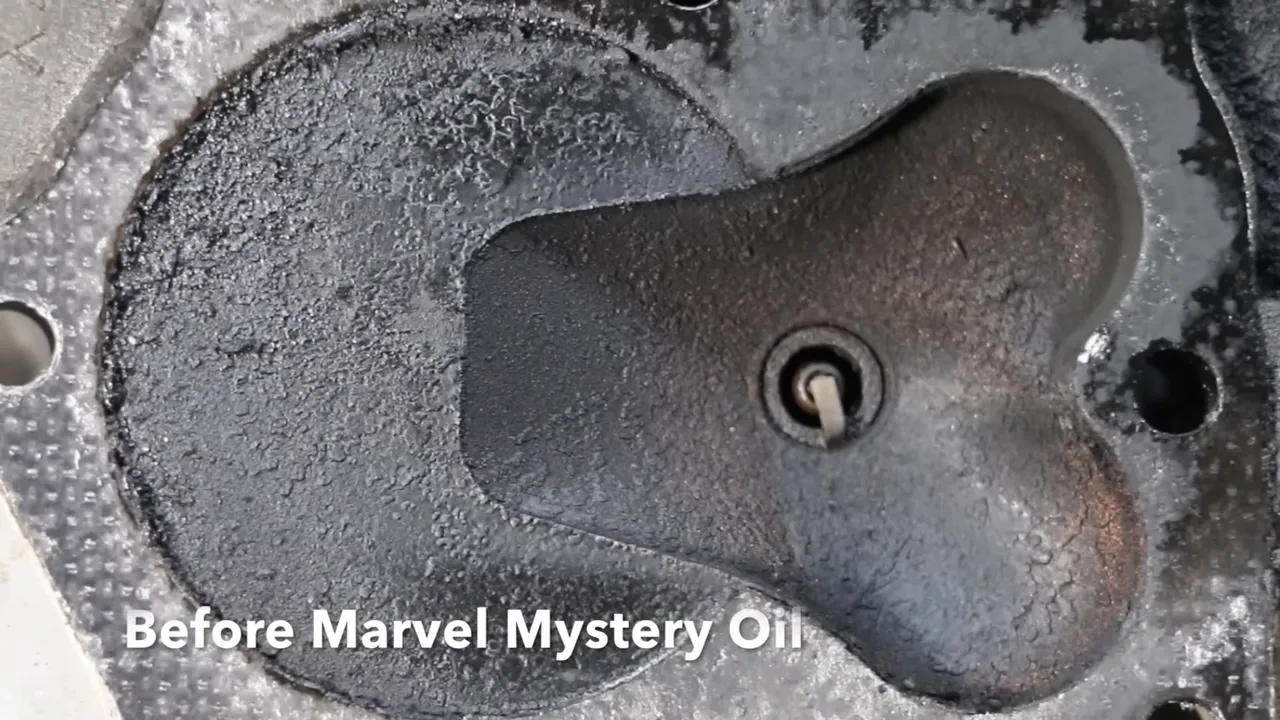
After treatment, the surface had visibly changed. Some areas appeared smoother and more exposed, although a substantial amount of dark material remained. This was not a completely clean combustion chamber.
Piston and Valves Before and After
The piston crown also showed a change in appearance. Before treatment, it had a relatively uniform, textured carbon coating.
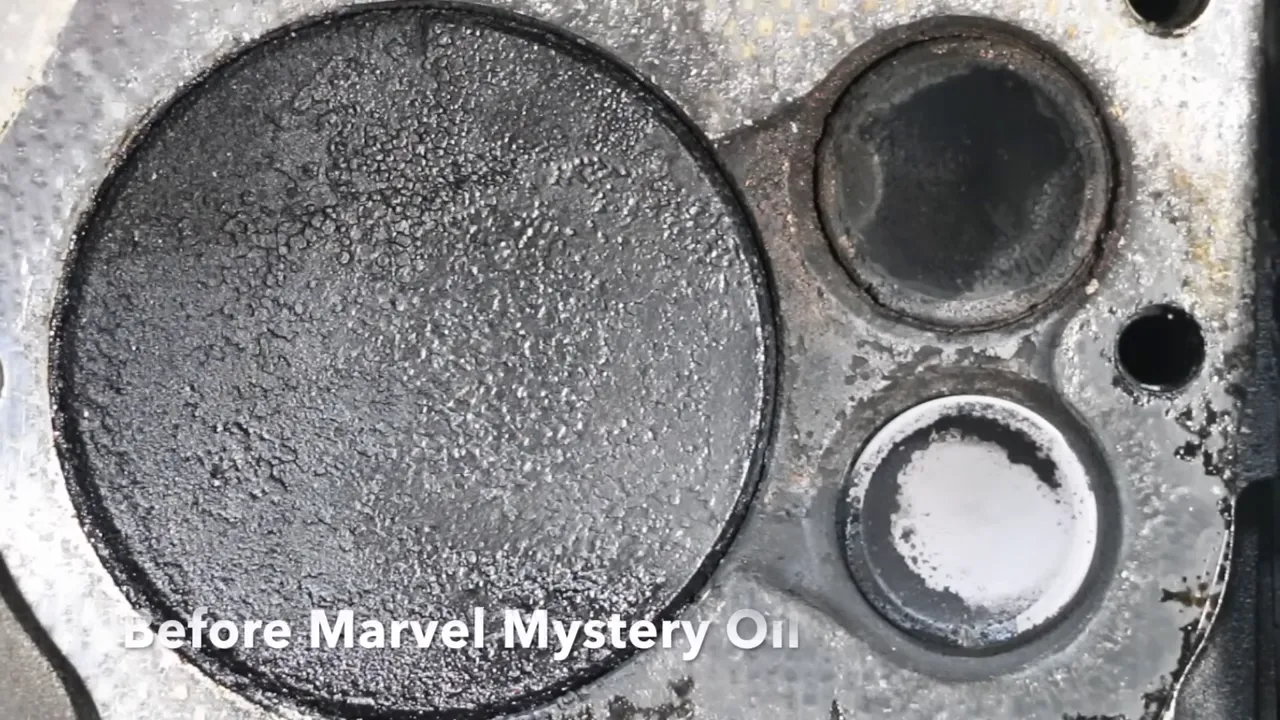
Afterward, the deposits looked less uniform, and parts of the piston surface were more distinct. Carbon was still present, but there was visible evidence of cleaning.
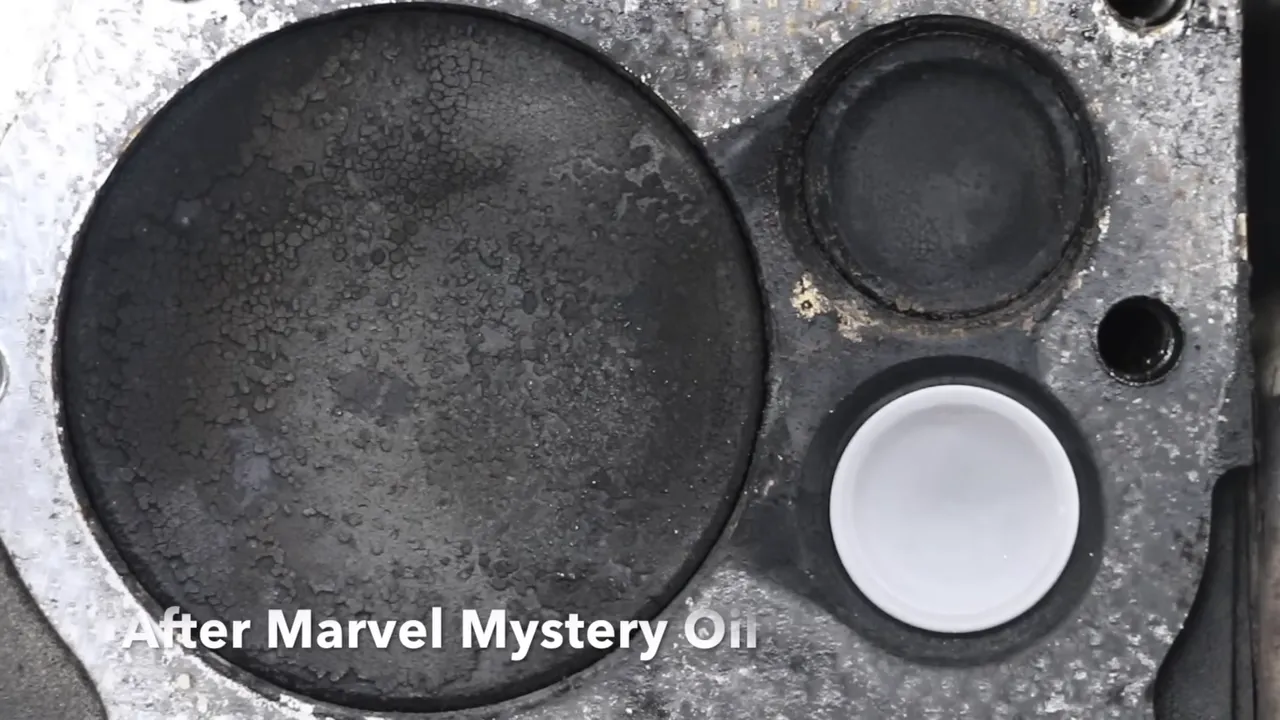
The earlier SeaFoam inspections also showed changes to the deposits on the piston and cylinder head. Neither set of images represents a spotless engine, and the visual comparisons do not provide a measured percentage of carbon removed. They do, however, add useful evidence beyond how smoothly the engine ran.
Which Product Is the Better Value?
There are two different questions here: which product produced the stronger measured result, and which offers the better value for the money?
For compression improvement, SeaFoam has the stronger results in this comparison. Its earlier tests showed gains both cold and hot. Marvel Mystery Oil left hot compression unchanged and produced a slightly lower cold reading.
For purchase price, Marvel Mystery Oil wins easily. It also produced visible changes in the carbon deposits, and the engine ran well once the treatment smoke cleared.
I would not turn that into a universal winner. The tests used engines with different starting conditions, and the Marvel Mystery Oil engine already had very good compression. Both products demonstrated useful cleaning results, but the lower-priced product did not duplicate SeaFoam’s compression gains here.
My buying standard remains simple: I am willing to pay more for better performance, but not just for a name. Whether SeaFoam’s extra cost is worthwhile depends on how much weight you give its measured compression improvement compared with Marvel Mystery Oil’s much lower price.


