People spend tens of millions of dollars each year on oil additives. Are they getting better protection, or just buying very thick snake oil?
To put STP Oil Treatment and Lucas Heavy Duty Oil Stabilizer to the test, I used a lubricity tester and two brand-new gasoline engines. First, I compared bearing wear with the additives straight out of the bottle and mixed with motor oil. Then came the destructive part: treating each engine, draining its oil, and running it until it failed.
This comparison was not sponsored by Lucas, STP, or any other company. Support through Patreon helped pay for the engines. And these engines were purchased specifically for destructive testing, not as an example of how to treat your own equipment.
Key Takeaways
- Straight STP produced the smallest bearing wear scar, while the tested Lucas mixture outperformed the STP mixture.
- The Lucas-treated engine ran warmer during the three-hour operating period before oil draining.
- The STP-treated engine failed first, but both engines suffered catastrophic damage after their oil was drained.
- These tests do not establish long-term engine-life benefits or whether either additive is worth its cost.
Making the Bearing Test Consistent
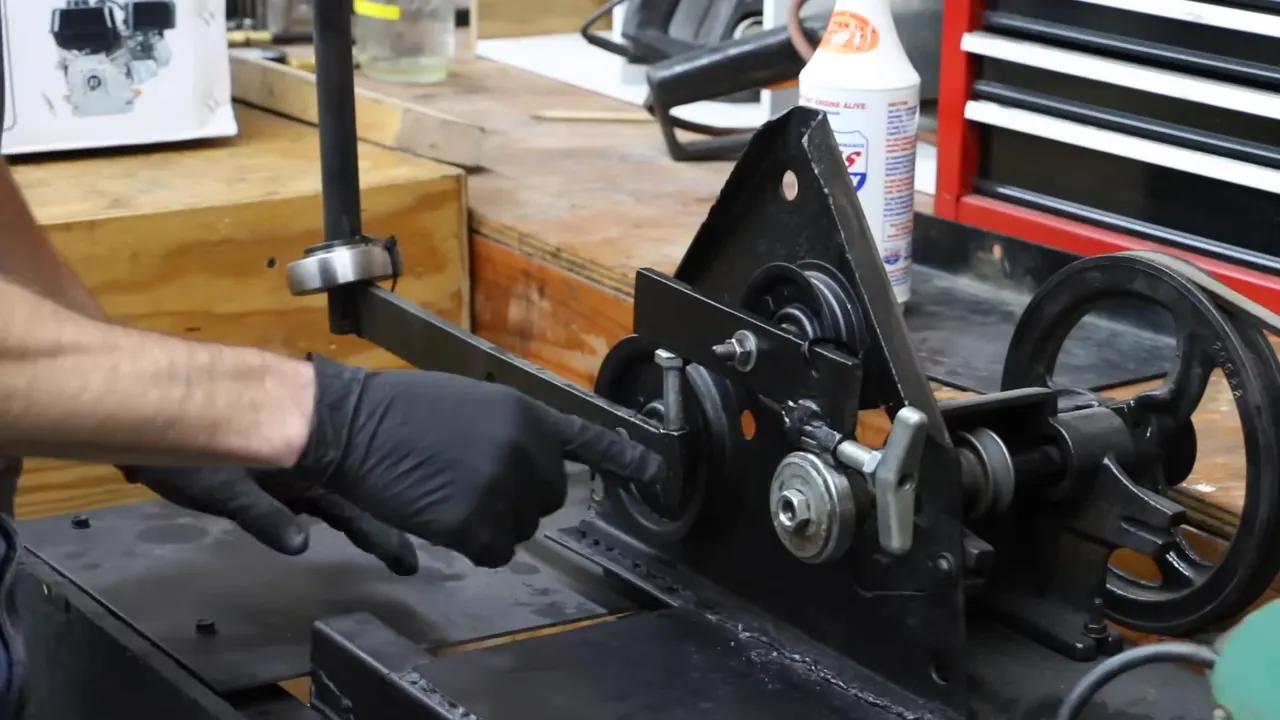
I’m skeptical of lubricity demonstrations that depend on someone pushing down on a torque wrench. Change the force, even unintentionally, and you can change the result. For a useful comparison, the machine needs to do the work without someone constantly adjusting the load.
This tester presses a small bearing roller against a rotating bearing race. Lubricant goes on both contact surfaces, and the resulting wear scar gives us something concrete to compare.
- Race speed: approximately 800 RPM.
- Applied downward force: approximately 12.4 pounds.
- Test duration: 30 seconds per run.
- Repeat testing: two runs to check consistency.
Between test conditions, the contact surface was cleaned and resurfaced, and a fresh bearing roller was installed. The load stayed the same throughout the comparison.
STP vs. Lucas in the Lubricity Test
Straight STP: Thick, With Small Wear Scars
STP was very thick coming out of the bottle. Used at full strength, it left relatively little visible damage on the bearing roller. Repeating the test produced two very similar wear marks, which was encouraging from a consistency standpoint.
There was also quite a bit of foaming and trapped air during testing. That observation matters, but it is separate from the wear measurement. A small wear scar does not tell us everything about how a lubricant behaves.
STP Mixed With Motor Oil
Full-strength additive is not how this product is normally used, so the next step was to mix it with oil. For the bearing comparison, I used one part STP to eight parts motor oil, following the bottle directions as interpreted for this test.
The diluted mixture left a larger wear scar than straight STP. Plain oil was included as a baseline so the additive mixtures had something to compete against besides each other.
Straight Lucas and the 20 Percent Mixture
Lucas also went through the tester at full strength first. The repeated runs produced similar wear marks. Like STP, Lucas was extremely thick and held a lot of air bubbles. It also visibly collected around and clung to the moving parts.
For its oil mixture, Lucas called for 20 percent of system capacity. That works out to one part Lucas for every four parts oil.
The Lucas-and-oil mixture outperformed the STP-and-oil mixture in this bearing test. But there is an important detail: the Lucas mixture contained a higher proportion of additive.
The Wear-Scar Measurements
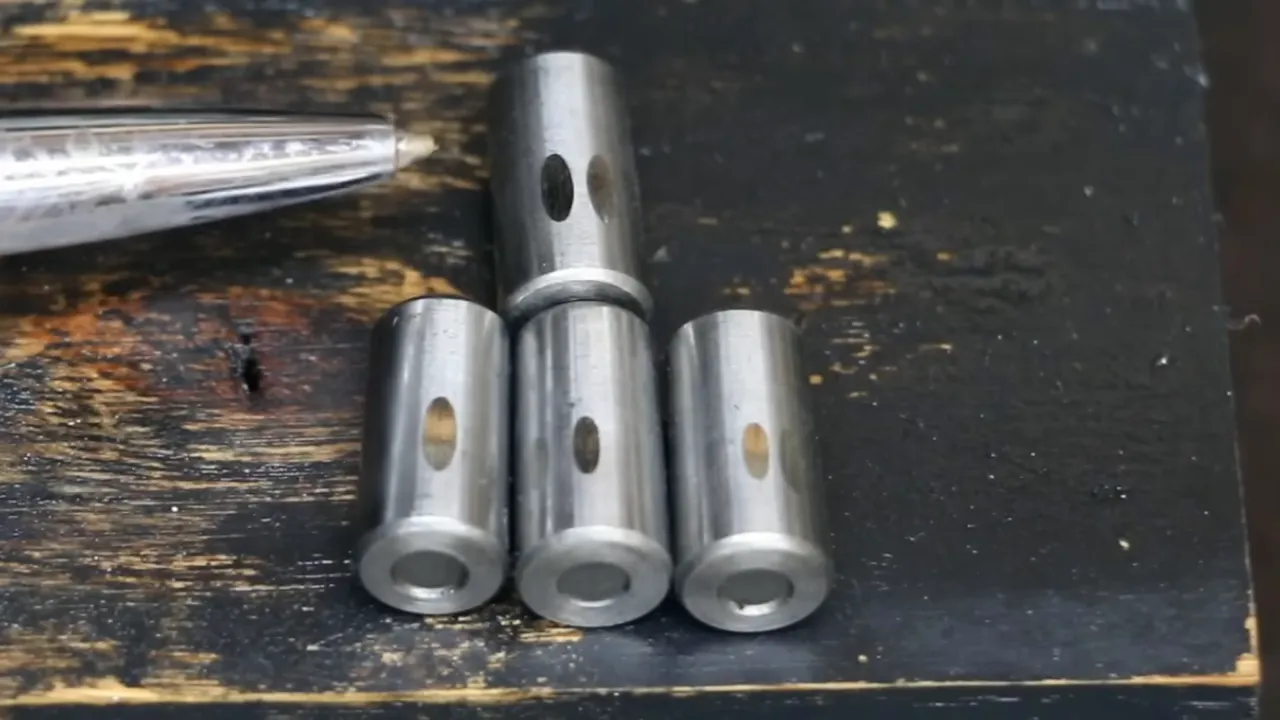
The measured scoring dimensions make the comparison more useful than appearance alone. All measurements below are in millimeters:
- 100 percent STP: 1.90 × 3.81 mm.
- 100 percent Lucas: 2.18 × 4.36 mm.
- STP and oil, 1:8: 2.30 × 5.32 mm.
- Lucas and oil, 1:4: 2.22 × 4.53 mm.
- 10W-30 oil alone: 2.46 × 6.03 mm.
Straight STP produced the smallest wear scar, while Lucas produced the smaller scar when the products were mixed at their respective test ratios. Both mixtures left smaller scars than the plain-oil baseline under these particular conditions.
Is comparing different concentrations fair? That is a reasonable question. My goal was to follow each manufacturer’s directions, not force both products into the same concentration. This is a comparison of the recommended mixtures used here, not an equal-dose test that isolates formulation alone.
Preparing Two New Engines
For the engine portion, both new engines received four hours of break-in running. That was one hour longer than the break-in period required for these engines.
I then drained enough oil from each engine to make room for its additive:
- STP engine: approximately 2 fluid ounces, or four tablespoons, of STP for an oil capacity of roughly 15 to 16 ounces.
- Lucas engine: approximately 3 fluid ounces of Lucas, targeting its 20 percent treatment rate.
The STP bottle contained 15 ounces and specified one bottle for four to five quarts of oil. The smaller dose was scaled down for this small engine.
After adding the treatments, I ran both engines for another three hours with oil still in their crankcases. Each engine therefore had seven hours of running before the oil-starvation test: four hours of break-in and three hours with its assigned additive.
What the Ingredient Sheets Revealed
I also checked the material safety data sheets. They gave broad ingredient ranges rather than complete formulations.
- Lucas: 60 to 100 percent lubricating oils described as petroleum, hydrotreated bright stock-based.
- STP: 60 to 100 percent mineral oil and petroleum distillates, plus less than 5 percent calcium long-chain alkylphenate sulfide.
Those disclosures provide some background, but they do not explain every performance difference. A broad composition range is not a complete recipe.
The Lucas Engine Ran Warmer Before Draining
After three hours with the additives, the Lucas-treated engine was running approximately 10 to 15 degrees warmer than the STP-treated engine.
I considered STP’s ZDDP content as one possible explanation. The Lucas-and-oil mixture also had higher viscosity. Neither observation establishes the cause of the temperature difference, so I would not turn that temperature reading into a firm conclusion about one ingredient.
It was, however, a useful result to record before moving on to the destructive test.
Running Both Engines Without Crankcase Oil
With the engines still hot, I drained their crankcases and tipped them to help remove the oil. The drain plugs and dipsticks were left out so any remaining pooled oil could escape.
The low-oil shutdown sensors were disconnected for this destructive experiment. Both engines were then started together and allowed to run until mechanical failure.
Strictly speaking, draining an engine does not remove every trace of lubricant from its internal surfaces. This test challenged whatever residual protection remained after draining, rather than testing chemically clean, completely unlubricated parts.
The STP-treated engine failed first. The Lucas-treated engine continued running longer before it also failed. The STP engine developed smoke and knocking before stopping. Lucas kept going, eventually began knocking, and finally suffered its own catastrophic failure.
Lucas won the survival portion of this particular head-to-head test. Neither additive prevented destruction without an oil supply.
The Teardown: Major Damage in Both Engines
Inside the STP Engine
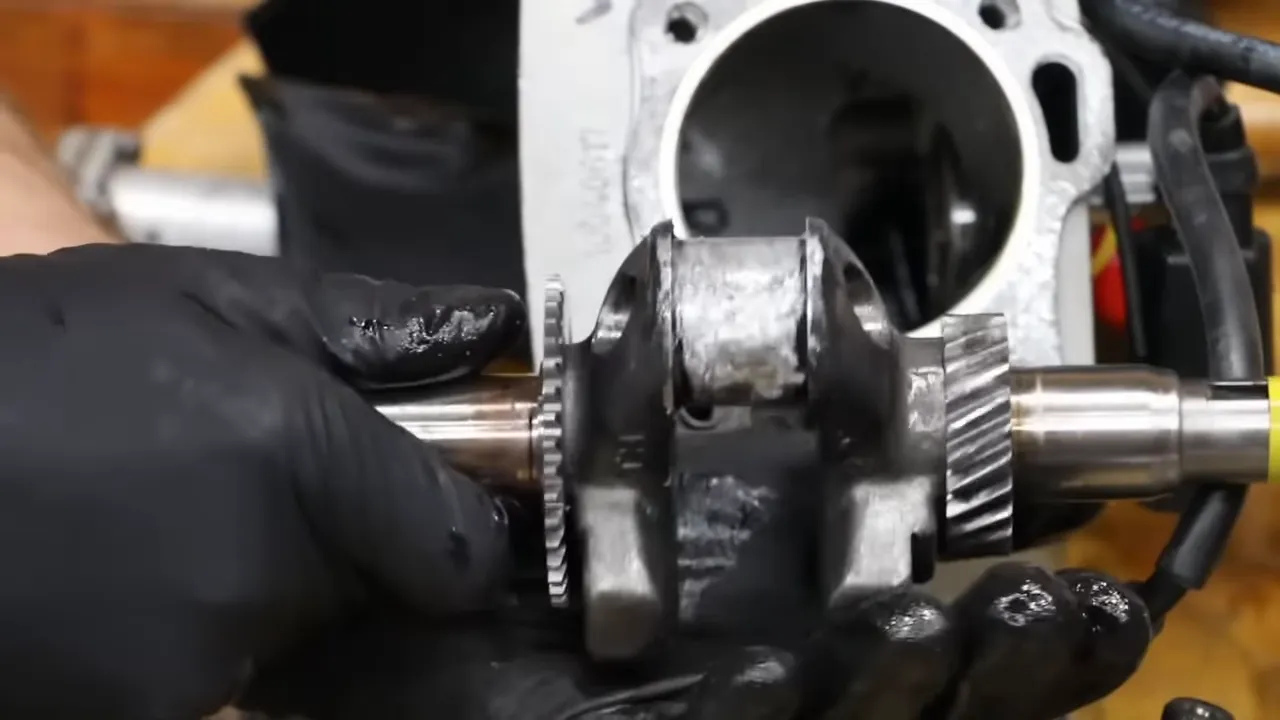
Opening the STP engine revealed a connecting rod that had broken apart, scattering pieces inside the crankcase.
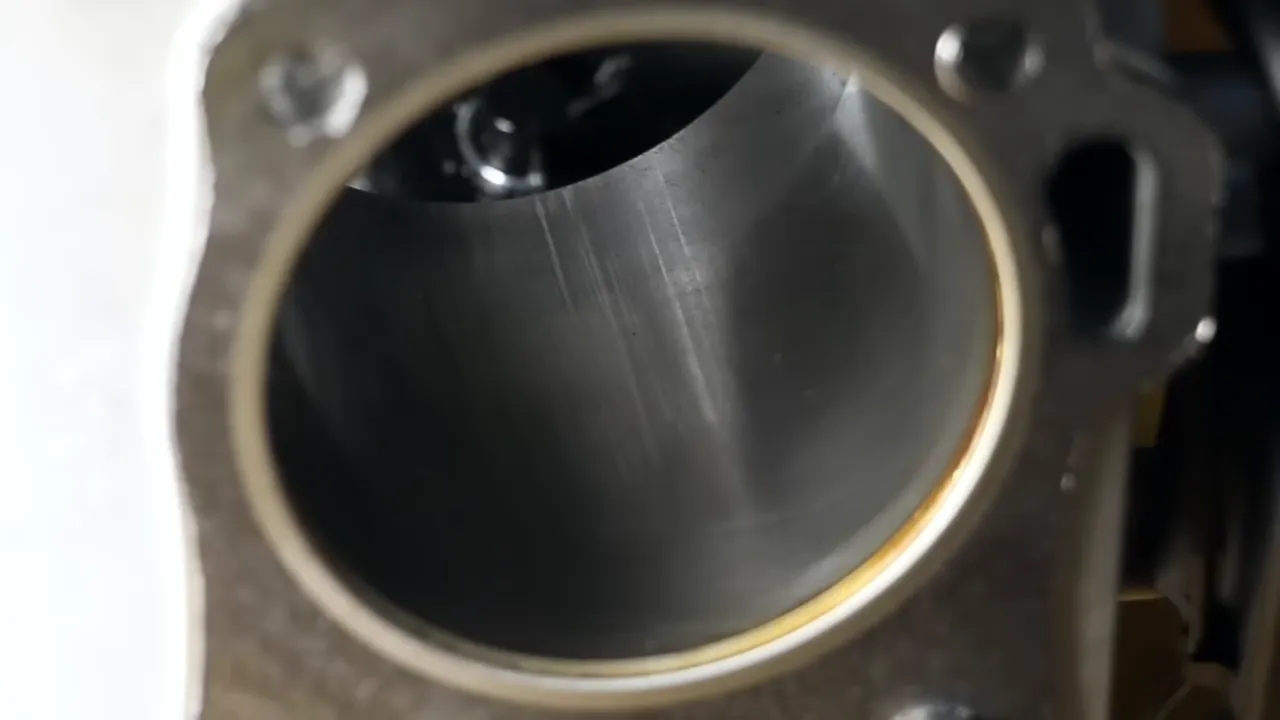
The crankshaft had substantial damage and heavy material buildup. Aluminum from the connecting rod appeared to have transferred onto the crankshaft under the extreme heat. The cylinder wall also showed considerable scoring.
Inside the Lucas Engine
The Lucas engine was badly damaged as well. Its connecting rod had broken apart, leaving loose pieces inside the crankcase, and its crankshaft showed extensive scoring.
The piston was scored, and the remaining connecting-rod section was very stiff against the wrist pin. The cylinder wall had substantial scoring too.
Lasting longer did not mean coming through in usable condition. Both engines suffered catastrophic internal damage.
Which Oil Additive Won?
That depends on which part of the competition matters:
- Smallest wear scar with undiluted additive: STP.
- Smallest wear scar at the tested manufacturer-directed mixtures: Lucas.
- Lower observed temperature during the treated-oil run: STP.
- Longer survival after draining the crankcase: Lucas.
That is why I would not declare one product the universal winner. The bearing tester and the engine destruction test ask different questions, and they did not produce an identical ranking.
This experiment also did not measure long-term engine life, fuel economy, or the financial value of adding either product during normal operation. There was only one engine per treatment in the destructive comparison, and no untreated engine alongside them in that portion of the test.
The practical conclusion is straightforward: both additives reduced bearing-test scoring compared with plain oil under the conditions tested, and the Lucas-treated engine survived longer after draining. But neither product made an engine safe to run without oil. The broken rods, damaged crankshafts, and scored cylinders made that point very clearly.


