Could a $200 add-on cut fuel consumption by as much as 35%, increase horsepower, and help an engine last longer? With high gas prices, that sounds like a pretty good investment. But a claim and a measurable improvement are two different things.
I purchased an HHO generator kit and tested it on a 2003 Chevrolet Suburban with a 5.3-liter V8, then on a fuel-injected portable generator. The plan was straightforward: measure acceleration, inspect the combustion chambers for carbon removal, and compare runtime on a fixed amount of gasoline.
I was hoping this kit would deliver. Unfortunately, it produced gas, but it did not produce the advertised benefits in these tests.
Key Takeaways
- The $200 HHO kit produced gas but delivered no consistent improvement in vehicle acceleration.
- Both HHO generator tests ran slightly shorter than the gasoline-only baseline.
- Increasing HHO production raised electrical consumption without improving runtime.
- Neither engine showed an obvious reduction in carbon deposits during testing.
What Is an HHO Generator Supposed to Do?
HHO is oxyhydrogen, a mixture of hydrogen and oxygen. This kit uses a dry-cell generator supplied with water and potassium hydroxide, which serves as the electrolyte. The gas it produces is routed into the engine’s air intake.
The manufacturer advertised several benefits:
- Up to 35% lower fuel consumption.
- A significant reduction in emissions.
- Longer engine life.
- Increased torque and power, with stronger, smoother acceleration.
- Cleaner combustion chambers with fewer carbon deposits.
The kit cost about $200 including shipping. As with my other product tests, I purchased the equipment and supplies myself and accepted no free products or compensation from the manufacturer.
What Came in the Kit
The package included the dry-cell HHO generator, hoses, a water and electrolyte reservoir, a bubbler, wiring, electrical connectors, potassium hydroxide, and threaded fittings. The installation also used a relay, an inline fuse, and a non-return valve.
The plumbing follows a simple path. Water flows from the reservoir down to the dry cell. Gas returns to the reservoir, then passes through the bubbler and non-return valve before entering the engine.
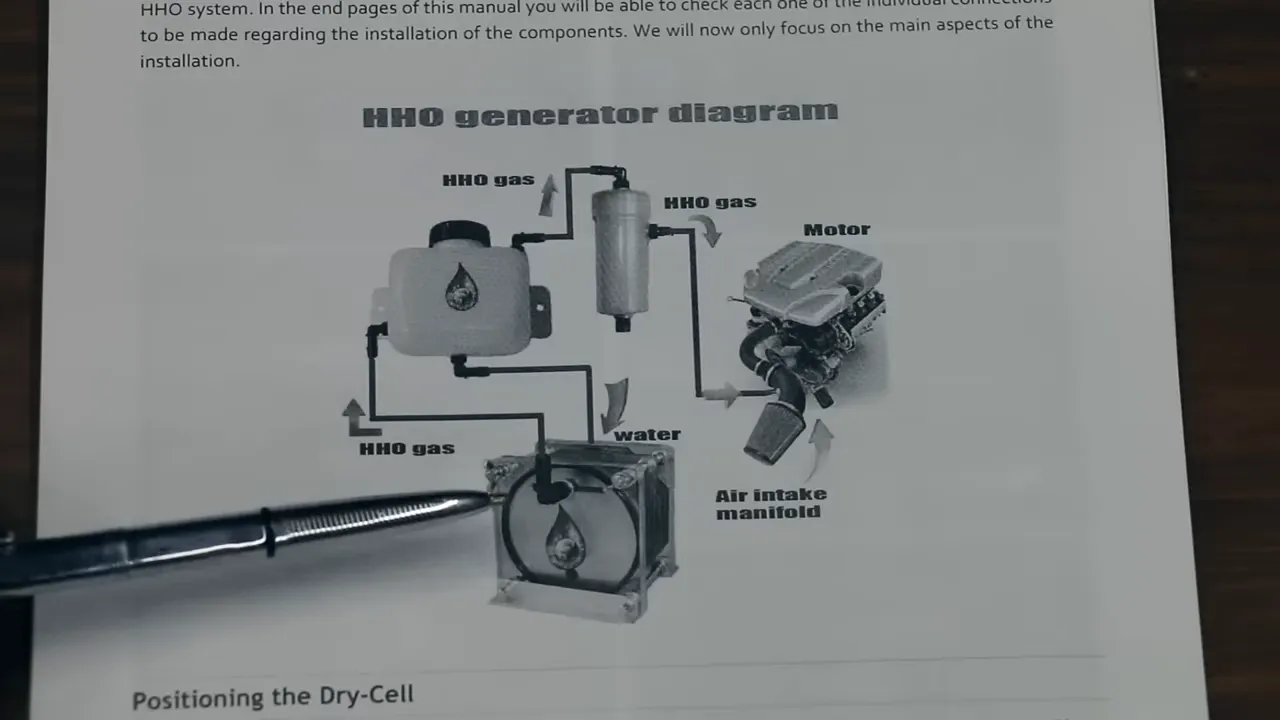
One important detail is that the reservoir needs to sit higher than the dry cell so gravity can supply the water. The non-return valve also needs to face the correct direction to allow gas to travel toward the engine.
Installing the HHO Kit on the Suburban
The Suburban had 266,978 miles at the start of testing. I planned to keep the system installed for about a week, so I used cable ties for temporary mounting and easier removal.
Assembling the Cell and Plumbing
I attached the supplied connectors to the dry cell, using gray wire for positive and black for negative, with short jumper sections connecting the appropriate contacts.
The threaded hose fittings went into the dry cell, reservoir, and bubbler. The kit did not include thread-sealing tape, so I supplied that separately to help seal the connections. A tight seal matters here because a leak can allow water or gas to escape.
After mounting the reservoir above the cell, I connected the hoses and installed the bubbler and non-return valve. I then removed part of the air intake, drilled the gas-feed hole, and cleared out the plastic shavings before reinstalling it. The final hose fed the HHO into the intake.
Wiring and Electrolyte
The electrical instructions were not especially clear. The setup used a relay to switch power to the HHO generator, with a fused battery supply, frame grounds, and an ignition-switched trigger. I removed the inline fuse while making the battery connection.
The goal was to avoid having the system powered continuously. I checked the switched connection with a meter and confirmed approximately 12 volts with the ignition on. The kit also needed a little extra wire that was not included.
For the vehicle test, I mixed 40 grams of potassium hydroxide with approximately 1 liter of water. More electrolyte increases current draw and gas production, but the instructions cautioned that excessive concentration can accelerate deterioration of the generator plates and darken the water.
With power applied, the system was making gas. Before putting miles on the vehicle, I inspected a spark plug and the piston crown to establish a baseline for the carbon-cleaning comparison.
Does HHO Improve 0 to 60 MPH Acceleration?
First, I pulled the HHO system’s fuse and tested the Suburban on 87-octane gasoline alone. I made runs in both directions because the southbound run involved a slight uphill grade and a headwind.
The baseline times were:
- Southbound, without HHO: 10.3 seconds.
- Northbound, without HHO: 9.6 seconds.
After reinstalling the fuse, I made two more runs in each direction with HHO operating:
- First southbound HHO run: 10.0 seconds, which was 0.3 seconds quicker than the southbound baseline.
- First northbound HHO run: 9.9 seconds, which was 0.3 seconds slower than the northbound baseline.
- Second southbound HHO run: 10.4 seconds, which was 0.1 seconds slower than the southbound baseline.
- Second northbound HHO run: 9.8 seconds, which was 0.2 seconds slower than the northbound baseline.
The vehicle was quicker without HHO in three of the four directional comparisons. The differences were small, and there was no consistent acceleration improvement.
The HHO kit did not demonstrate a useful performance gain. Aside from adding an electrical load to the alternator, it did not seem to change much in either direction. This was an acceleration comparison, not a direct horsepower or torque measurement.
Did It Remove Carbon After About 250 Miles?
After roughly 250 miles with HHO operating, I checked the spark plug and piston again. The odometer had reached 267,229 miles, an increase of 251 miles.

The spark plug looked much the same, and so did the carbon on the piston. Judging deposits from images is subjective, but there was no obvious cleaning benefit over this test period.
Testing Fuel Efficiency with a Fixed Fuel Supply
For fuel consumption, I moved the kit to a fuel-injected portable generator. Instead of comparing road mileage, I could give the engine a measured amount of gasoline, apply an electrical load, and time how long it ran.
Establishing the Gasoline-Only Baseline
I warmed the engine for about five minutes, shut off the fuel supply, and let it run out of fuel. Then I filled a 500-milliliter fuel cell with non-ethanol gasoline and opened the fuel line.
Once the engine started, I connected five halogen lights to load the generator:
- Two lights drew approximately 930 watts from one outlet.
- Three lights drew approximately 1,450 watts from the other outlet.
- The combined lighting load was approximately 2,380 watts.
I timed the engine until it stopped completely, rather than stopping when the visible fuel cell emptied. Fuel remaining in the line and pump allowed the engine to continue running after the cell was empty.
The gasoline-only baseline was 19 minutes and 46 seconds. That was the time the HHO setup needed to beat.
Before the HHO runs, I also inspected the generator’s spark plug and piston. The plug was fairly clean, but the piston had visible deposits, leaving an opportunity for the kit to demonstrate a cleaning effect.
Adapting the HHO System to the Smaller Engine
The portable generator supplies 120-volt alternating current, while the HHO kit requires 12-volt direct current. I used an AC-to-DC power supply powered by the generator itself, so the engine also had to supply the electricity used to make the HHO.
Following the kit’s guidance to reduce gas production for a smaller engine, I mixed 10 grams of potassium hydroxide with approximately 500 milliliters of water. I used replacement air hose because the original clear hose had already been shortened for the vehicle installation.
The power supply consumed about 5.5 watts by itself. With the HHO cell connected, total consumption rose to about 35 watts, an increase of approximately 30 watts.
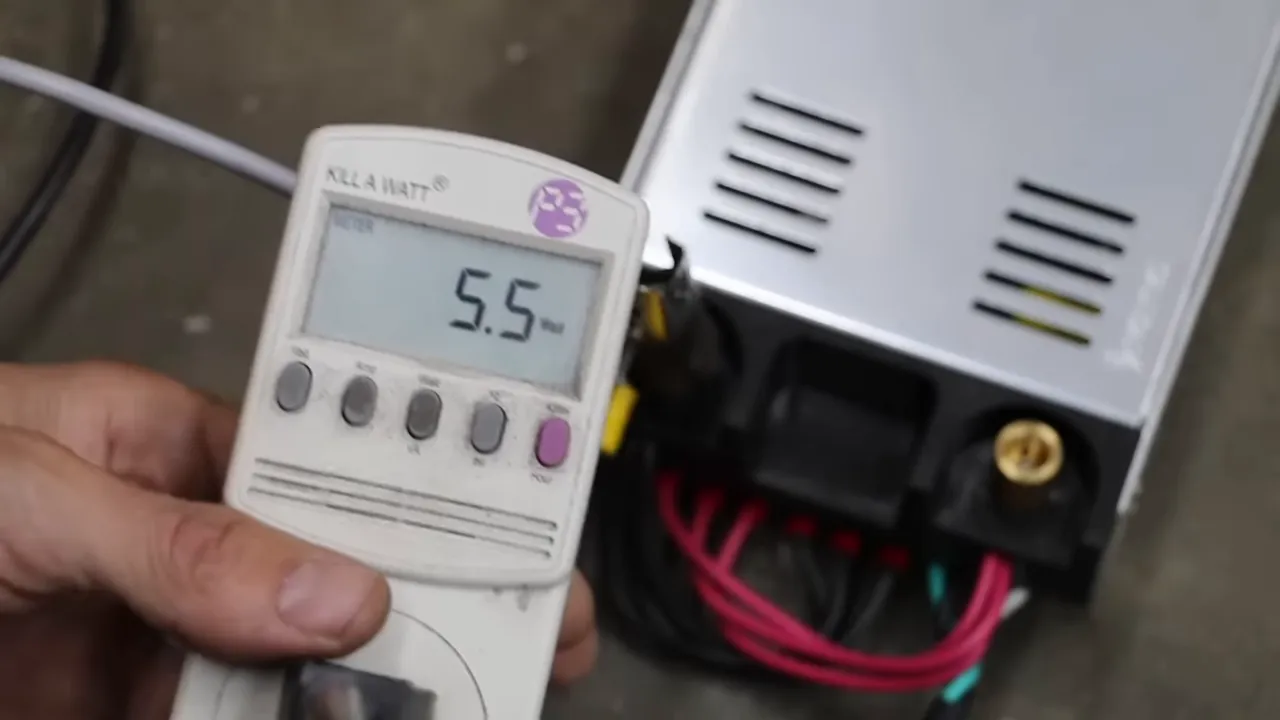
I verified that gas was being produced, then routed it into the generator’s intake through a hole in the air-filter housing.
Fuel-Efficiency Results: HHO Versus Gasoline Alone
First HHO Run
With the same measured fuel supply and lighting load, the engine sounded just as it had before. I could not hear a meaningful difference, and its temperature appeared similar.
At about eight and a half minutes, roughly half the visible fuel supply had been used. A 35% fuel saving was not looking promising.
The engine stopped at 19 minutes and 37 seconds, nine seconds short of the gasoline-only baseline. The kit had not helped runtime.
Increasing HHO Production
For another test, I added a stronger batch made with 30 grams of potassium hydroxide and approximately 500 milliliters of water to the HHO reservoir.
Total electrical consumption rose to roughly 73 watts, about twice the previous reading. The system visibly appeared to produce more gas, although I did not directly measure the gas flow rate.
Once again, the engine sounded the same. This time it stopped at 19 minutes and 25 seconds, 21 seconds short of the gasoline-only baseline.
The complete runtime comparison was:
- Gasoline only: 19 minutes, 46 seconds.
- HHO at the lower electrical draw: 19 minutes, 37 seconds.
- HHO at the higher electrical draw: 19 minutes, 25 seconds.
Both HHO runs were slightly shorter, and the higher-output setup delivered the shortest runtime. These were small differences from individual runs, but neither test came close to demonstrating the advertised fuel savings.
Did HHO Clean the Generator’s Combustion Chamber?
After the fuel-efficiency tests, I removed the spark plug and inspected the combustion chamber again.

As with the Suburban, the amount of carbon looked about the same. The spark plug also showed no obvious cleaning improvement. This is a visual judgment rather than a measured deposit analysis, but I could not identify a clear benefit.
Is This $200 HHO Kit Worth It?
I really wanted this kit to work. Lower fuel consumption, better acceleration, and a cleaner engine would be an impressive return on $200.
Unfortunately, the results did not support those benefits. Acceleration did not consistently improve, both generator fuel tests produced slightly shorter runtimes, and neither engine showed obvious carbon removal.
These tests did not measure emissions or long-term engine life, and the fuel-consumption comparison was performed on the portable generator rather than as a Suburban MPG test. Those limits matter. Still, the results gave me no reason to expect the advertised savings from this kit.
For this setup, producing more HHO did not translate into better fuel economy or useful performance. Based on these tests, I would not buy it expecting relief from high gas prices.


