A garden hose can cost $25 or $70, and both packages might promise the same thing: no kinks, easy handling, and tough fittings. But does spending more actually get you a better hose?
I purchased 18 different 50-foot garden hoses to compare water flow, kink resistance, pulling effort, ease of reeling, burst pressure, and fitting durability. The lineup includes conventional rubber and hybrid hoses, lightweight non-expanding hoses, and two expanding hoses.
Some of the cheapest hoses delivered excellent water flow and resisted kinking. Some of the lightest hoses were much easier to move but restricted water flow. And several supposedly crush-resistant fittings did not appreciate being introduced to a truck tire.
The best choice depends on which compromise you're willing to make. Here's how they performed.
Quick Summary
- Eight hoses avoided kinks, including APEX, Gilmour, Zero-G, and both expanding hoses.
- Conventional hoses delivered the fastest water flow, with all 12 finishing within three seconds.
- Flexzilla excelled on the hose reel but developed four kinks in the pullout test.
- Zero-G offered the best lightweight balance of flow, handling, kink resistance, and fitting durability.
Table of Contents
- The Garden Hose Lineup: Prices, Weights, and Construction
- Water Flow: Conventional Hoses Finish Well Ahead
- Kink Resistance: Eight Hoses Straightened Without a Kink
- Pulling Effort: A Light Hose Really Can Make Yard Work Easier
- Hose Reel Performance: Flexzilla Is Extremely Cooperative
- Burst Pressure: Lightweight Hoses Deliver a Surprise
- Hose Fittings: Corrosion and Crushing Are Different Problems
- Can a Damaged Garden Hose Be Repaired?
- Which Garden Hose Is Best?
The Garden Hose Lineup: Prices, Weights, and Construction
All hoses were sold as 50-foot models. Prices below are what I paid for the test, and weights are the measured weights before filling them with water. Product claims are just that until they're tested.
Conventional Rubber, PVC, and Hybrid Hoses
- APEX, $25, 8.22 pounds: Made in the USA. Advertised with improved scuff resistance, high burst strength, and crush-resistant couplings. A fairly stiff conventional hose.
- Gilmour, $30, about 7.4 pounds: Made in the USA. Its Flexogen construction uses eight layers with a reinforced core, and the packaging promises maximum kink resistance and crush-resistant brass couplings.
- SPECILITE, $36, 7.28 pounds: Made in China. A hybrid rubber hose advertised as kinkless and 30% lighter than traditional rubber hoses. A spray nozzle is included.
- Swan, $38, 6.68 pounds: Made in the USA. Advertises a 400 psi burst rating, crush-resistant aluminum couplings, and hose armor intended to prevent kinking.
- Aqua Joe, $40, 7.31 pounds: Made in China. Uses a hybrid polymer with aluminum fittings and is advertised as kink and twist free.
- Yamatic, $40, 7.51 pounds: Made in China. A flexible hybrid hose with brass fittings, advertised as lightweight and free of permanent kink memory.
- Flexzilla, $40, 6.67 pounds: Made in Taiwan. Advertised to coil easily and lie flat with zero memory. It has anodized aluminum fittings and is advertised as drinking-water safe with lead-free connections.
- Craftsman, $44, 7.44 pounds: Made in China. Advertised as lightweight and anti-kink, with a 500 psi pressure claim and titanium-coated aluminum fittings.
- Giraffe Tools, $45, 6.25 pounds: Made in China. A rubber and polymer hybrid with aluminum fittings and a claimed 600 psi burst strength. Its removable ends allow the hose to be shortened.
- RAINPOINT conventional hose, $50, about 7.05 pounds: Made in China. Advertised as a PVC garden hose with copper-clad aluminum fittings, flexible construction, and a 600 psi burst rating.
- DeWalt, $50, 7.46 pounds: Advertised as a professional-grade hose with heavy-duty twist collars and anodized aluminum fittings.
- Continental, $50, 11.65 pounds: Made in the USA. Uses reinforced rubber and brass fittings advertised as crushproof. By far the heaviest hose in the lineup.
Lightweight Non-Expanding Hoses
- GUKOK, $35, 2.69 pounds: Made in China. Advertises kink-free construction, a 600 psi burst rating, and suitability down to 0°F.
- Velybrin, $40, 3.55 pounds: Made in China. Has a PVC inner layer and comes with a spray nozzle. Its non-expanding design is advertised to avoid problems associated with pressure fluctuations.
- Zero-G, $43, 4.39 pounds: Made in the USA. Advertised as kink resistant, easy to maneuver and store, and 50% lighter than commercial hoses.
- RAINPOINT Lightweight, $60, 6.17 pounds: Made in China. Combines a PVC inner tube, stainless metal reinforcement, and a knitted outer cover. It includes a nozzle and advertises a 750 psi pressure rating.
Expanding Hoses
- Flexi Hose, $57, about 2.2 pounds: Made in Thailand. Advertised as lightweight, compact, high-pressure resistant, and free of kinks and leaks, with brass fittings.
- Copper Head Pocket Hose, $70, 2.34 pounds: Made in Thailand. Advertises triple-layer tubing, tear-resistant fabric, and lead-free, kink-free construction. A 10-pattern nozzle is included.
Those construction differences matter. A soft hose can be wonderfully cooperative on a reel but still fold into a kink when pulled out. A lightweight hose can be easy to carry but have restrictive openings in its fittings. No single packaging claim tells the whole story.
Water Flow: Conventional Hoses Finish Well Ahead
The water supply measured close to 68 psi. To compare flow, I timed how long each hose took to fill a five-gallon bucket. Lower times are better.
A restrictive hose can limit how well a lawn sprinkler or spray nozzle operates. This test measures delivered water volume, not just how impressive the stream looks.
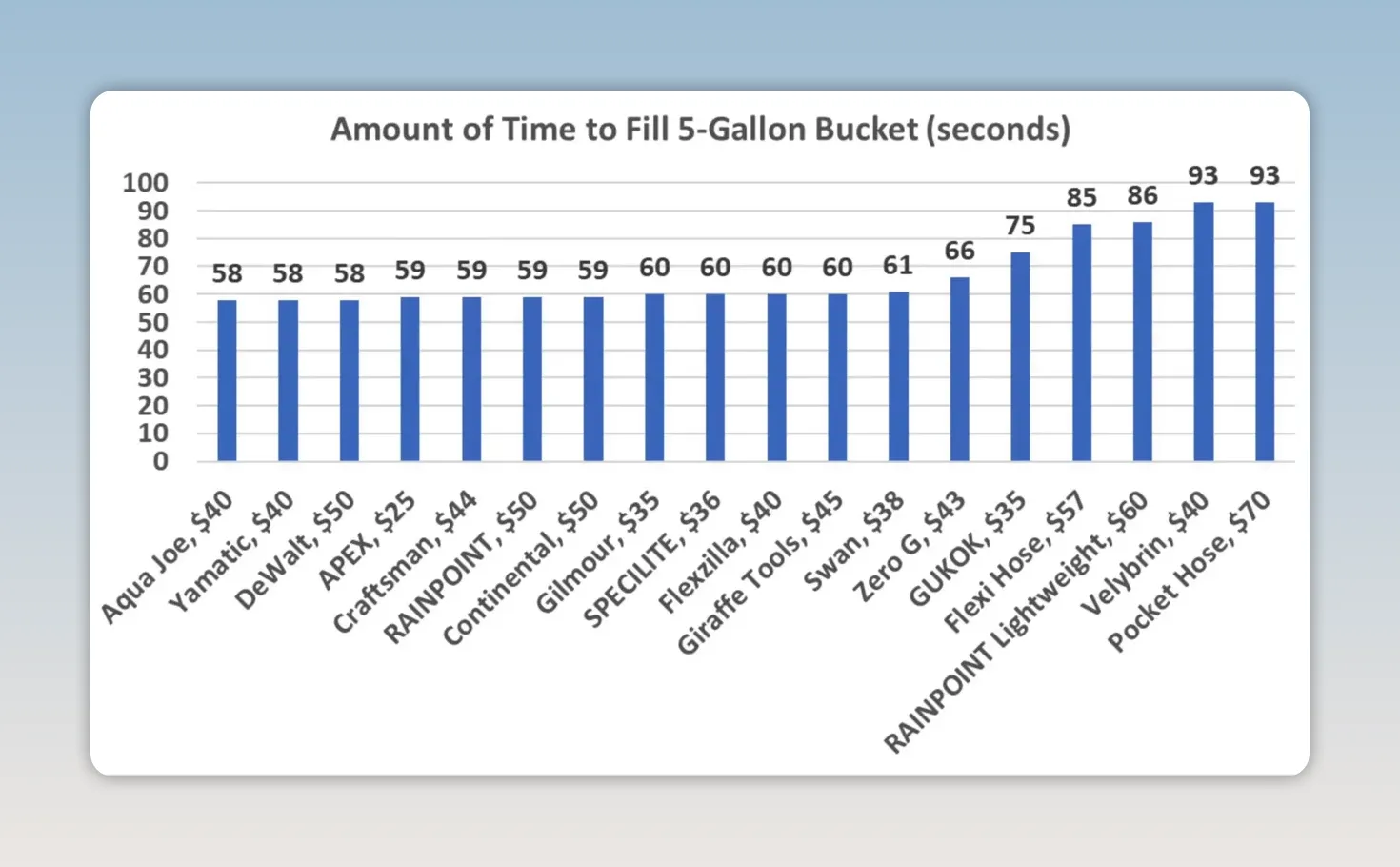
- 58 seconds: Aqua Joe, Yamatic, and DeWalt tied for the fastest time.
- 59 seconds: APEX, Craftsman, RAINPOINT conventional, and Continental.
- 60 seconds: Gilmour, SPECILITE, Flexzilla, and Giraffe Tools.
- 61 seconds: Swan.
- 66 seconds: Zero-G.
- 75 seconds: GUKOK.
- 85 seconds: Flexi Hose.
- 86 seconds: RAINPOINT Lightweight.
- 93 seconds: Velybrin and Copper Head Pocket Hose.
All 12 conventional hoses finished within three seconds of one another. That's a very tight group, especially considering the price range.
Zero-G was the closest lightweight non-expanding hose at 66 seconds. The others gave up considerably more flow. The small openings in the RAINPOINT Lightweight and Pocket Hose fittings were noticeable restrictions.
For sprinkler use or any job where maximum water delivery matters, the conventional hoses have a clear advantage in this comparison. The expanding hoses offer low weight and compact storage, but neither matched conventional-hose flow.
Kink Resistance: Eight Hoses Straightened Without a Kink
To compare kink resistance, I coiled each hose into five loops and then pulled it out across the grass. This puts the anti-kink claims to work instead of leaving them on the package.
The stiff APEX and Gilmour both straightened without kinking. The thick-walled Continental also did very well. Several softer hoses were much less cooperative.
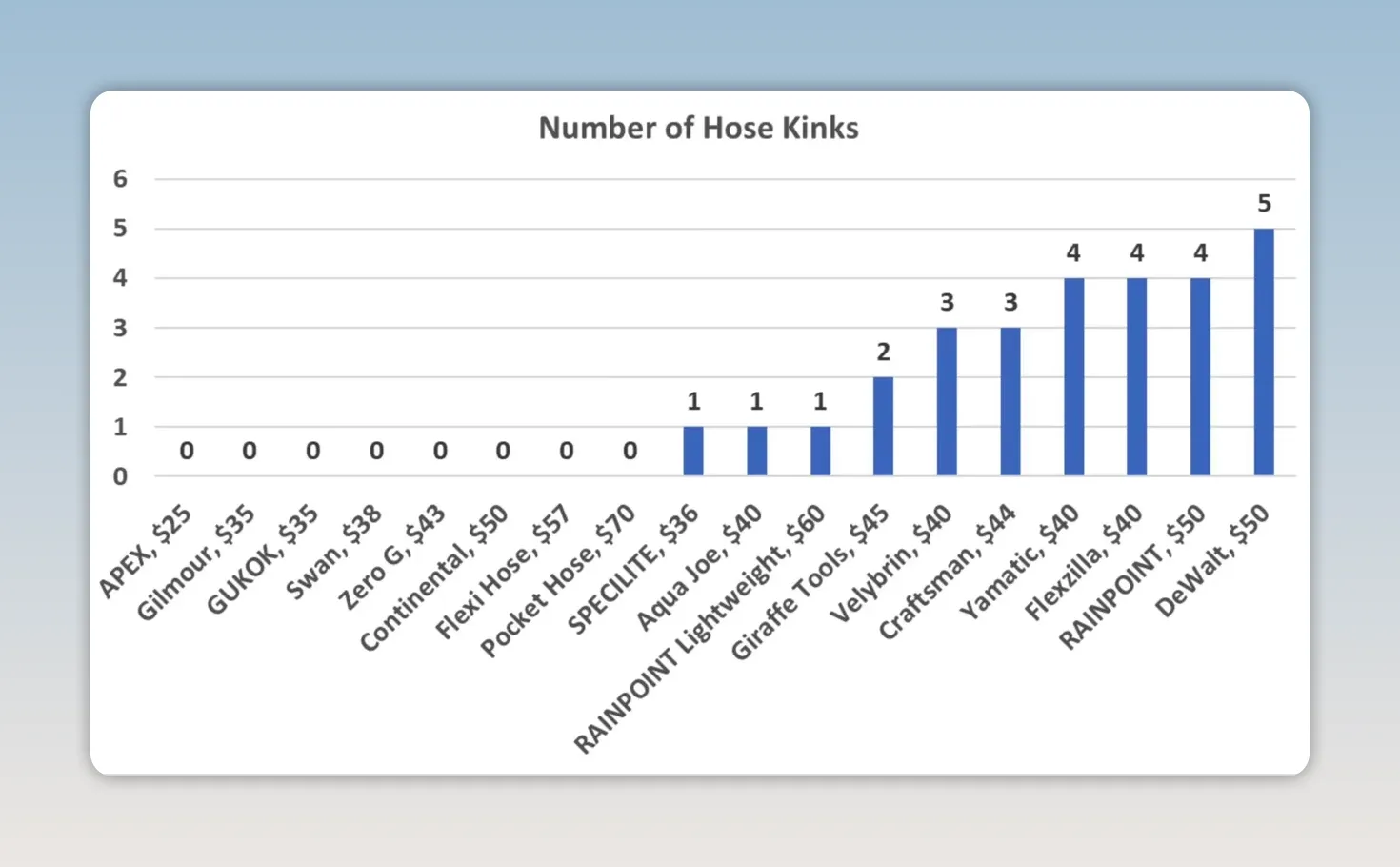
- Zero kinks: APEX, Gilmour, GUKOK, Swan, Zero-G, Continental, Flexi Hose, and Copper Head Pocket Hose.
- One kink: SPECILITE, Aqua Joe, and RAINPOINT Lightweight.
- Two kinks: Giraffe Tools.
- Three kinks: Velybrin and Craftsman.
- Four kinks: Yamatic, Flexzilla, and RAINPOINT conventional.
- Five kinks: DeWalt.
Aqua Joe initially looked like it might kink in four places, but three of those loops unwound as the hose extended. It finished with just one kink.
Flexzilla and Yamatic were both very soft and flexible, but each developed four kinks. DeWalt was also exceptionally soft and finished with five, the most in the test.
Flexibility and kink resistance are not the same thing. A hose that's easy to bend around a reel may also be easy to fold sharply enough to restrict water. And zero kinks in this test is not a guarantee that a hose can never kink under other conditions.
Pulling Effort: A Light Hose Really Can Make Yard Work Easier
Dry weight only tells part of the handling story. For this test, each 50-foot hose was full of water and under approximately 68 psi. I used a force meter to measure the effort needed to drag it across the grass.
The outer jacket matters along with weight. A slick surface slides more easily, while a textured jacket can create more resistance.
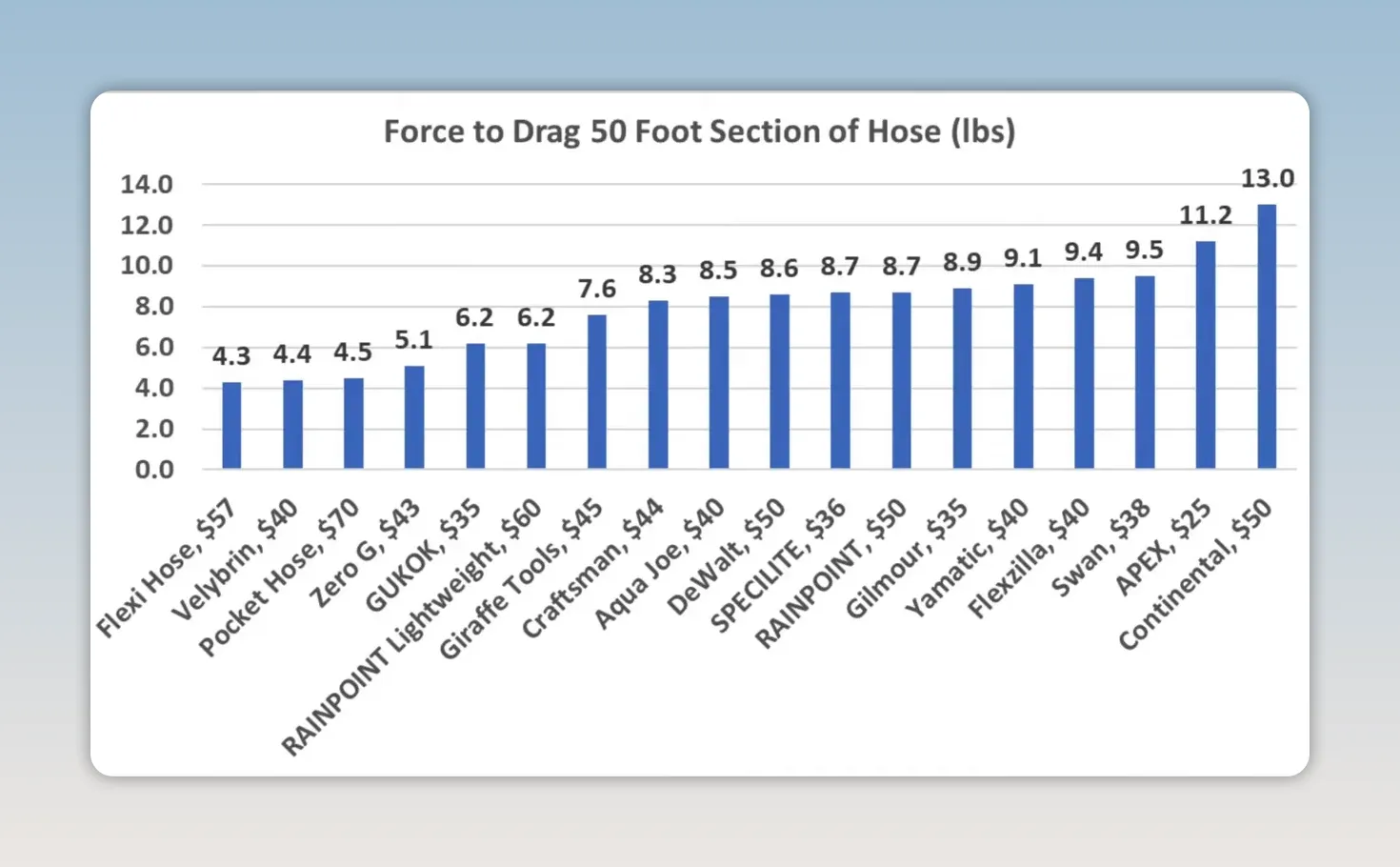
- Flexi Hose: 4.3 pounds of force.
- Velybrin: 4.4 pounds.
- Copper Head Pocket Hose: 4.5 pounds.
- Zero-G: 5.1 pounds.
- GUKOK and RAINPOINT Lightweight: 6.2 pounds each.
- Giraffe Tools: 7.6 pounds.
- Craftsman: 8.3 pounds.
- Aqua Joe: 8.5 pounds.
- DeWalt: 8.6 pounds.
- SPECILITE and RAINPOINT conventional: 8.7 pounds each.
- Gilmour: 8.9 pounds.
- Yamatic: 9.1 pounds.
- Flexzilla: 9.4 pounds.
- Swan: 9.5 pounds.
- APEX: 11.2 pounds.
- Continental: 13 pounds.
Flexi Hose was the easiest to pull, with Velybrin and Pocket Hose close behind. Zero-G also required very little effort while delivering better flow than the other lightweight designs.
Among the conventional hoses, Giraffe Tools performed particularly well at 7.6 pounds. Continental's extra weight was very noticeable at 13 pounds.
Fifty feet might not seem challenging, but those differences become important with longer runs. Scaling the 50-foot results to 200 feet gives roughly 17 to 18 pounds of force for the easiest designs, compared with about 45 pounds for APEX and 52 pounds for Continental. Those are projections from the shorter test, but they show why handling deserves attention.
Hose Reel Performance: Flexzilla Is Extremely Cooperative
Some hoses practically settle onto a reel. Others need help with nearly every turn of the handle.
I rated ease of reeling subjectively on a scale where 1 is excellent and 5 is poor. Five hoses received the best possible score:
- Flexzilla.
- Velybrin.
- Flexi Hose.
- RAINPOINT Lightweight.
- Copper Head Pocket Hose.
Flexzilla was especially cooperative. Its soft construction made it easy to wind onto the reel, even though that same flexibility did not help it in the kink test.
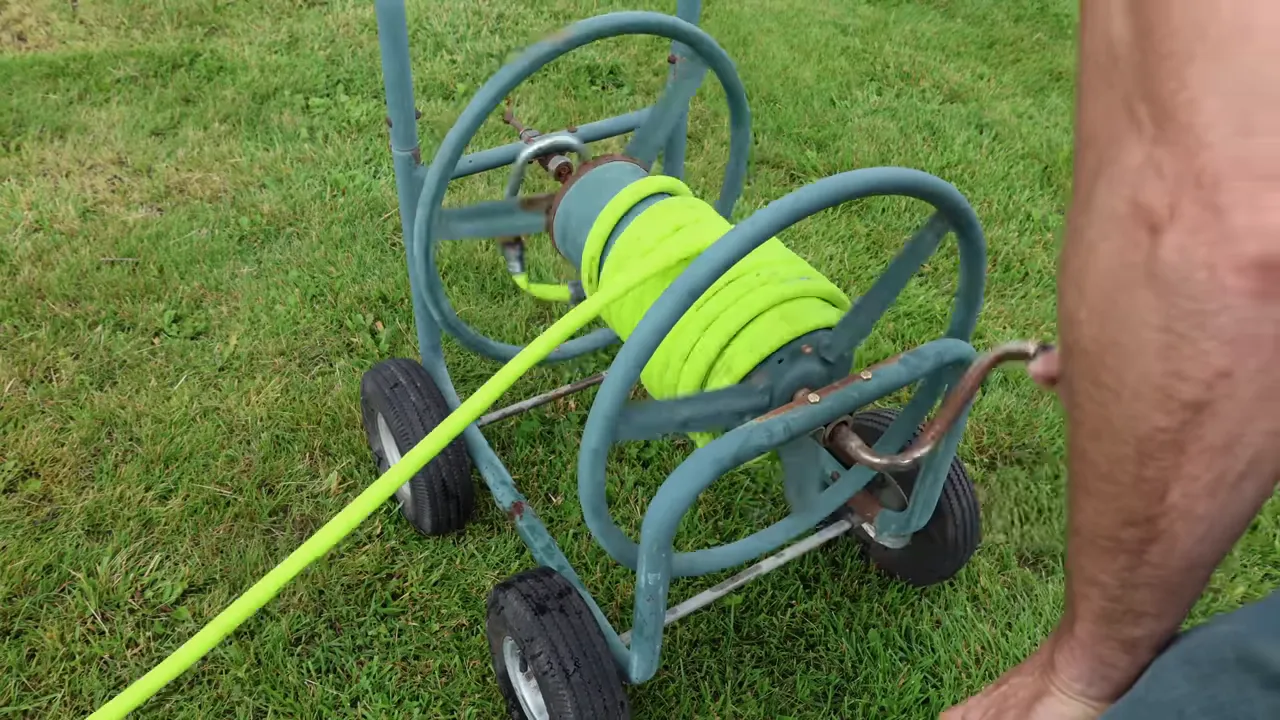
SPECILITE was much easier to work with than the stiffer APEX and Gilmour. Aqua Joe and Yamatic also reeled reasonably easily. Craftsman, Giraffe Tools, the conventional RAINPOINT, and DeWalt were cooperative, and Continental's considerable weight did not stop it from winding well.
GUKOK and Zero-G tended to flatten and wrap over themselves instead of laying evenly around the reel. They could be wound up, but they did not behave like a round conventional hose.
APEX needed assistance, and Gilmour seemed even stiffer. Swan was more like APEX than the softer hybrid hoses.
Overall, five hoses earned a score of 1, and six more earned 1.5. There were plenty of good options, but excellent reel behavior did not necessarily mean excellent kink resistance.
Burst Pressure: Lightweight Hoses Deliver a Surprise
Cousin Eddie apparently prefers to run his garden hoses at about 600 psi. That's not a recommendation, but it does make for a demanding test.
I increased water pressure until the hose ruptured or a fitting failed. These are approximate destructive failure pressures, not safe working-pressure ratings. Do not use them as operating limits or attempt to reproduce the test.
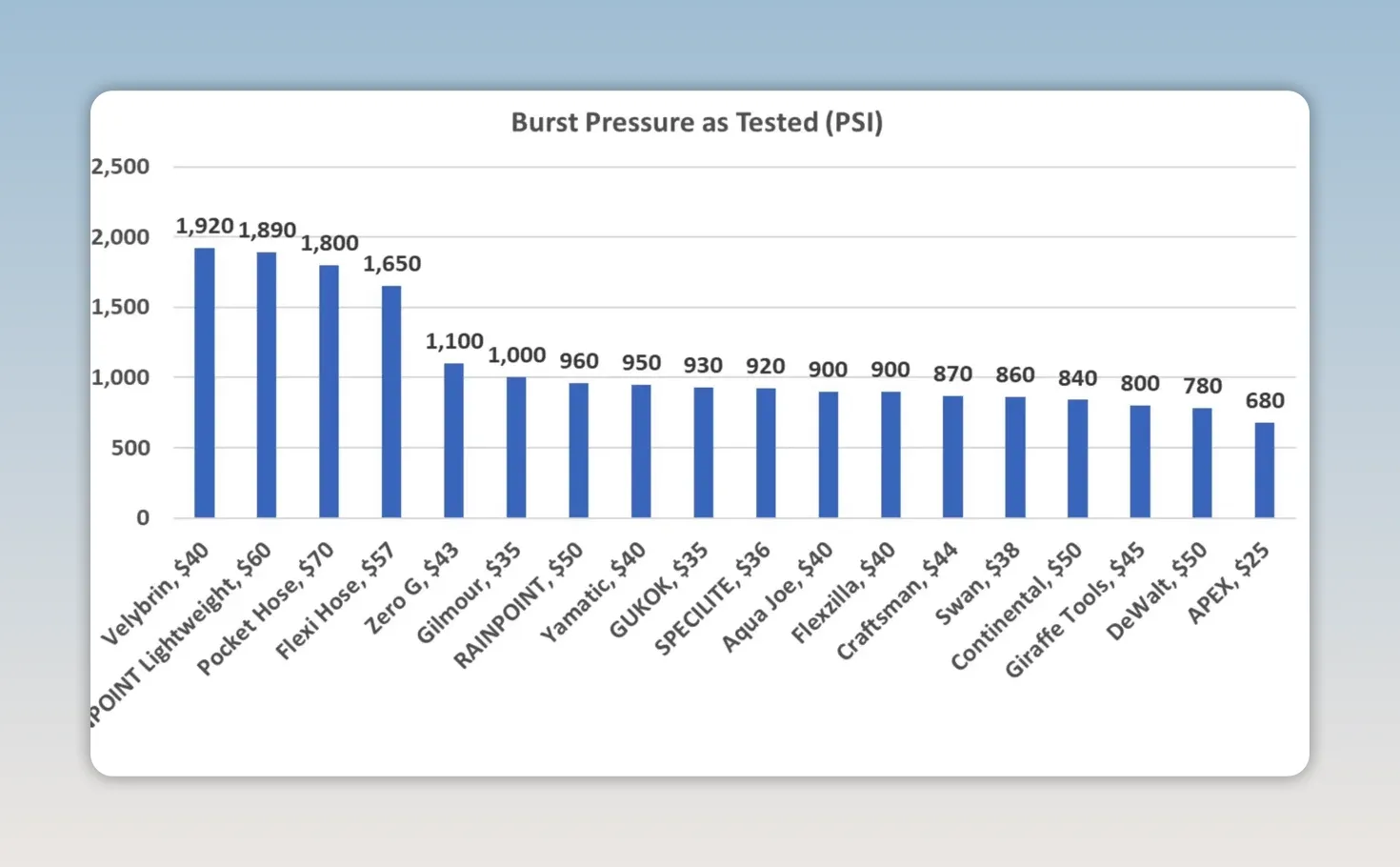
- Velybrin: 1,920 psi.
- RAINPOINT Lightweight: 1,890 psi.
- Copper Head Pocket Hose: 1,800 psi.
- Flexi Hose: 1,650 psi.
- Zero-G: 1,100 psi.
- Gilmour: 1,000 psi.
- RAINPOINT conventional: 960 psi.
- Yamatic: 950 psi.
- GUKOK: 930 psi.
- SPECILITE: 920 psi.
- Aqua Joe and Flexzilla: 900 psi each.
- Craftsman: 870 psi.
- Swan: 860 psi.
- Continental: 840 psi.
- Giraffe Tools: 800 psi.
- DeWalt: 780 psi.
- APEX: 680 psi.
The lightweight designs were very impressive here. Velybrin, RAINPOINT Lightweight, Pocket Hose, and Flexi Hose all reached pressures well above the conventional hoses before their fittings let go. Their low weight certainly did not mean low resistance to internal pressure.
GUKOK relies heavily on its outer fabric jacket for strength and reached about 930 psi. Zero-G also performed well at approximately 1,100 psi.
Gilmour started leaking around the test end cap early on, then twisted around itself as pressure climbed. It ultimately ruptured at about 1,000 psi. Most conventional hoses failed through the hose wall, while Giraffe Tools lost a fitting at around 800 psi.
Several hoses exceeded their advertised burst ratings by a substantial margin. Swan, for example, was rated at 400 psi and reached about 860 psi. SPECILITE reached about 920 psi against its advertised 600 psi rating.
Continental's heavy construction did not give it a leading result. At 840 psi, it finished behind much lighter competitors. As for Pocket Hose, Cousin Eddie might want to rename it Pocket Rocket after its fitting departed at around 1,800 psi.
Hose Fittings: Corrosion and Crushing Are Different Problems
Why I Prefer Brass Fittings
Before considering crush resistance, there's another fitting issue worth discussing: galvanic corrosion.
When dissimilar metals such as brass and aluminum remain in contact in wet conditions, the aluminum can corrode. The resulting white, powdery buildup can make a hose connection very difficult to unscrew.
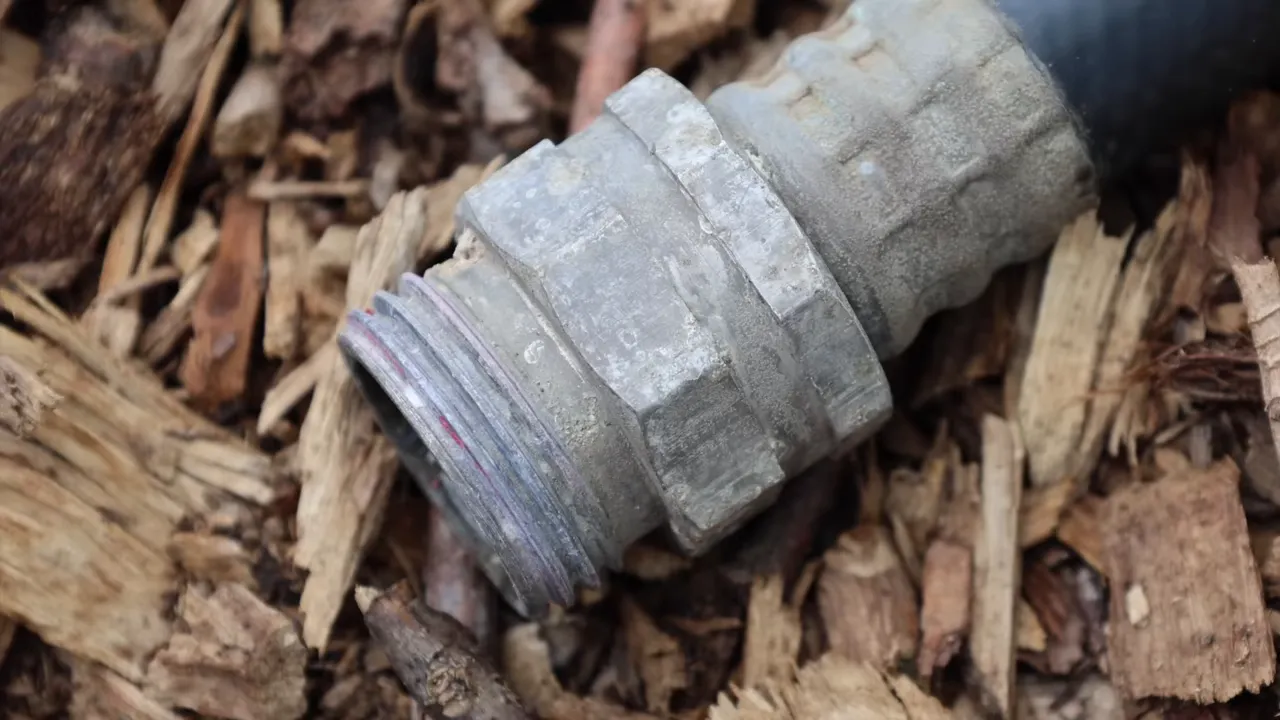
For that reason, I try to use brass fittings and avoid aluminum where possible. However, material preference and crush resistance are separate questions. Several aluminum fittings survived the truck test, while several brass fittings did not.
Which Fittings Survived Being Driven Over?
I drove over the hose ends with a truck and inspected them for damage. The results were not kind to every crush-resistant claim.
- Both ends survived without visible damage: Swan, Aqua Joe, Zero-G, Giraffe Tools, RAINPOINT conventional, and DeWalt.
- Both ends were crushed: APEX and Gilmour.
- One end was damaged: GUKOK, SPECILITE, Yamatic, Flexzilla, Velybrin, Craftsman, and Continental. The female connector was the damaged end in each of these cases.
The remaining three hoses require a qualification. Flexi Hose had already lost its female fitting during pressure testing, but its remaining male fitting survived the truck. RAINPOINT Lightweight and Pocket Hose had already lost their male ends, and their remaining female fittings survived.
Those are successful results for the fittings available to test, not complete two-fitting passes.
Zero-G's fittings looked substantial and held up without visible damage. RAINPOINT's conventional fittings, protected by plastic housings, also survived. Flexzilla did better than APEX overall, but its female fitting still experienced damage.
Can a Damaged Garden Hose Be Repaired?
A damaged hose end does not necessarily mean throwing away the entire hose. Repair parts are inexpensive compared with replacing many of these hoses.
Using the damaged APEX, I demonstrated both replacement ends and an inline repair:
- Cut off the damaged hose end.
- Install a replacement male fitting.
- Cut out a section of hose and reconnect the two pieces with a hose repair adapter.
- Install the replacement female fitting.
- Pressurize the repaired section and check for leaks.
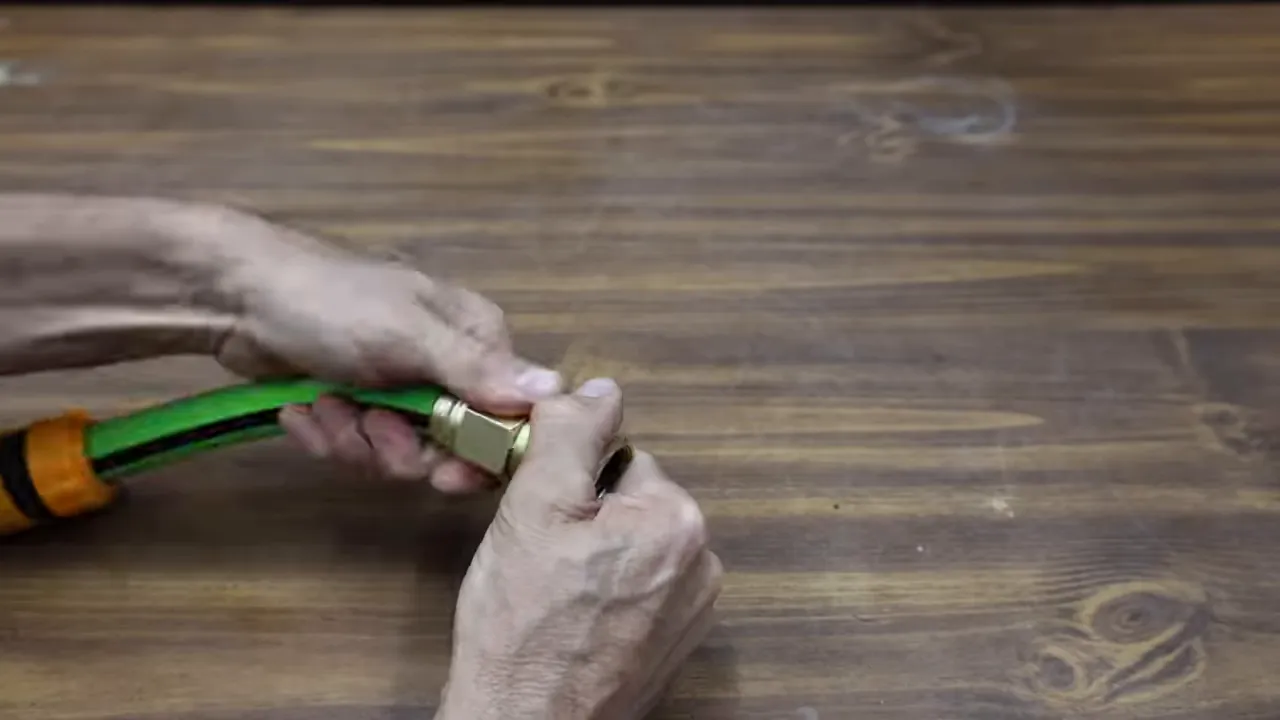
The finished section was only about two feet long. Just about right for the next time Cousin Eddie wants to borrow a hose.
More importantly, the repairs held without leaking at approximately 70 psi. That was a successful functional repair.
The follow-up truck test was another matter. The replacement female fitting suffered catastrophic damage, and so did the plastic inline connector. A repair can restore service without making the hose crush resistant.
Which Garden Hose Is Best?
There isn't one hose that wins every test. My recommendations come down to affordability, storage, and the balance between flow and handling.
Best Affordable Conventional Hose: APEX
At $25, APEX offers very good value if you want a conventional hose with strong water flow and good kink resistance.
- Filled the five-gallon bucket in 59 seconds.
- Had zero kinks in the pullout test.
- Cost less than every other hose tested.
The tradeoffs are handling and fitting strength. It took 11.2 pounds of force to drag, needed help on the reel, and both fittings were crushed by the truck. Keep it out of the driveway, and it makes a lot more sense.
Best for Easy Reeling: Flexzilla
If you're comfortable with aluminum fittings and want a conventional hose that's extremely easy to put away, I really like Flexzilla.
It delivered good flow at 60 seconds and earned the best possible ease-of-reeling score. Its fittings were more durable than APEX's, although the female fitting did sustain damage.
The main drawback is kinking. It developed four kinks in the five-loop test. This is an easy-reeling recommendation, not a claim that Flexzilla is kink proof.
Best Balanced Non-Expanding Hose: Zero-G
For a lightweight non-expanding hose, Zero-G is my pick. It earned A grades across the rated performance categories and had very durable hose ends.
- Weighed 4.39 pounds before filling.
- Required only 5.1 pounds of pulling force.
- Had zero kinks in the pullout test.
- Filled the bucket in 66 seconds, closer to conventional hoses than the other lightweight designs.
- Survived the fitting crush test without visible damage.
It did tend to flatten and overlap on the reel, so it wasn't the neatest hose to wind up. Even so, its combination of flow, low pulling effort, kink resistance, and tough fittings was very impressive.
The product links above are affiliate links. As an Amazon Associate, I earn from qualifying purchases.
My bottom line: choose APEX for affordable flow and kink resistance, Flexzilla for easy reeling, or Zero-G for the strongest all-around lightweight balance. The most expensive hose isn't automatically the best, and a kink-free claim is only one part of the decision.


