Flex product commercials make some pretty impressive repairs look easy. A badly damaged container goes from leaking to holding water in a matter of moments. I enjoy the demonstrations, but I’m always skeptical of a product sold on television.
Flex Tape did surprisingly well in my earlier testing. So, how about Flex Seal? Can the spray sealant actually repair significant damage, and is it any better than the competition?
I put Flex Seal, Rust-Oleum LeakSeal, and Perma-Seal through four tests involving cut buckets, broken PVC pipe, and holes in PVC and metal. None of these brands sponsored the testing. Each product had a chance to show whether it could bridge a gap, add strength, and stay bonded under pressure.
Key Takeaways
- Flex Seal was the only spray that kept the cut bucket from leaking.
- Flex Seal and Rust-Oleum tied in the broken-PVC strength test.
- Rust-Oleum dominated PVC pressure testing, while Perma-Seal lasted longest on metal.
- Major structural repairs may require stronger adhesives and reinforcement than spray sealants provide.
The Products and the Test Preparation
All three products promise to seal leaks, but their advertised applications cover quite a range of materials and repairs:
- Perma-Seal: Flashing, gutters, drywall, PVC, roofs, shingles, and underlayment.
- Flex Seal: Roof leaks, gutters, skylights, window seals, flashing, ductwork, foundations, awnings, chimneys, downspouts, vent pipes, AC drip pans, RVs, campers, trailers, and assorted projects.
- Rust-Oleum LeakSeal: Metal, aluminum, galvanized metal, PVC, concrete, masonry, asphalt roofing, vinyl siding, and fiberglass.
Those are broad claims. The useful question is how the products behave when a repair needs more than a coating over an intact surface.
I cleaned the test surfaces with rubbing alcohol before applying the sealants. For the metal test, I also sanded the tank down around the holes. The products required different curing times, with Flex Seal calling for the longest wait at 48 hours. Rather than stop there, I allowed 70 hours of cure time for all three products.
There were noticeable application differences, too. Perma-Seal came out very thick, while Rust-Oleum sprayed quickly. Flex Seal was the easiest of the three to apply in this comparison.
Test 1: Can Spray Sealant Repair a Bucket Cut From Top to Bottom?
A small pinhole is one thing. A bucket cut from top to bottom is a much bigger challenge.
I used a reciprocating saw to cut each bucket, cleaned the repair areas, and taped the top edges to keep the gaps comparable. Then I applied the assigned sealant over each cut, including the inside of the bucket.
Appearance Was Not Enough to Predict the Result
After curing, Rust-Oleum had an obvious problem: a large gap remained in the repair despite application on both sides. It was not going to hold water.
Perma-Seal looked much more promising. Its thick coating appeared to fill the crack very well. Flex Seal also appeared to have closed the gap, although its coating did not look as thick as Perma-Seal’s.
Filling the buckets settled the question:
- Rust-Oleum leaked through the open cut.
- Perma-Seal leaked through a pinhole near the bottom.
- Flex Seal held water.
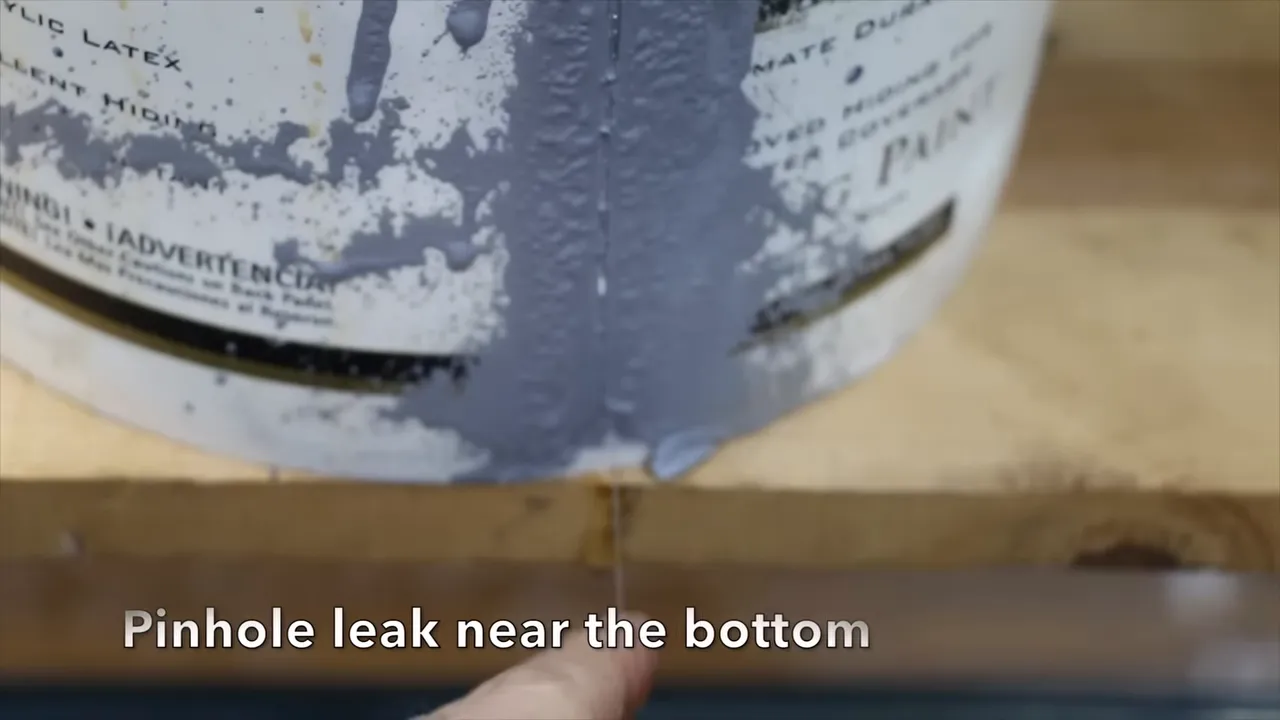
Flex Seal was the only product that completed this bucket repair without leaking. Perma-Seal came second, with Rust-Oleum third.
Would the Repair Survive Handling?
A repaired bucket also needs enough strength to stay together when it is moved. I pulled on the sides of each bucket to see how easily the sealants would give way.
Flex Seal took quite a bit of force before tearing. I did not measure that force, so this was a hands-on comparison rather than a numerical strength test. Even so, it did a fairly good job holding the bucket together.
A couple of additional coats might have made it harder to tear, but that was not tested. Rust-Oleum behaved similarly during the pulling check. Perma-Seal was much more rubbery and began stretching with relatively little force.
That distinction matters: a product can stretch without providing much structural support.
Test 2: How Much Strength Can the Sealants Add to Broken PVC?
Next, I cut three PVC pipes completely into two pieces. Before cutting, I marked each pipe so I could put the halves back together in their original orientation. That kept the outside surfaces aligned instead of introducing an uneven joint.
After cleaning the PVC, I sprayed each product around the outside of its cut joint and allowed it to cure.
For the strength test, I slid each repaired PVC pipe over a metal support pipe. A hanging load of 5.5 pounds, or 2.5 kilograms, started at the break. I then moved it outward in one-inch increments until the repair failed. Moving the same load farther from the joint increased the bending demand on the repair.
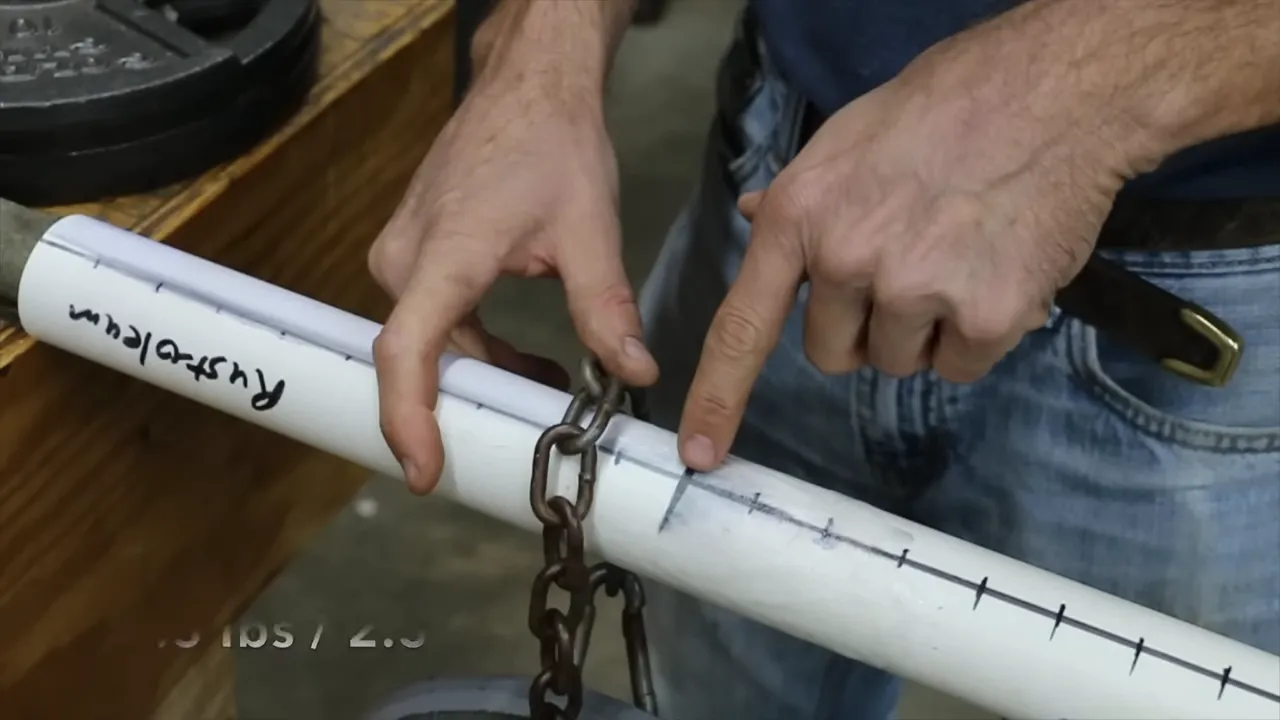
The failure positions were:
- Rust-Oleum: 6 inches, or 15.2 centimeters, from the break.
- Perma-Seal: 3 inches, or 7.6 centimeters, from the break.
- Flex Seal: 6 inches, or 15.2 centimeters, from the break.
Flex Seal and Rust-Oleum tied for first. Perma-Seal failed with the load much closer to the repair.
This agreed with the bucket handling check. Perma-Seal offered plenty of flexibility, but it did not hold the cut pieces together as strongly as the other two products.
Test 3: Which Sealant Sticks Best to PVC Under Pressure?
Holding a cut pipe together and sealing a hole under pressure are different jobs. A coating may have enough strength across a joint but still peel away from the surface around a small opening.
I drilled three holes in a PVC test assembly using a 3/32-inch drill bit, approximately 2.36 millimeters. Each hole received one of the sealants. The assembly included a pressure gauge so I could track the air pressure while the repaired section was submerged in an aquarium.
As pressure increased, escaping bubbles made leaks easy to identify.
- Flex Seal began leaking at about 2 PSI.
- Perma-Seal began leaking at about 8 PSI.
- Rust-Oleum remained sealed when the test was stopped at 43 PSI, approximately 3 bar, for safety.
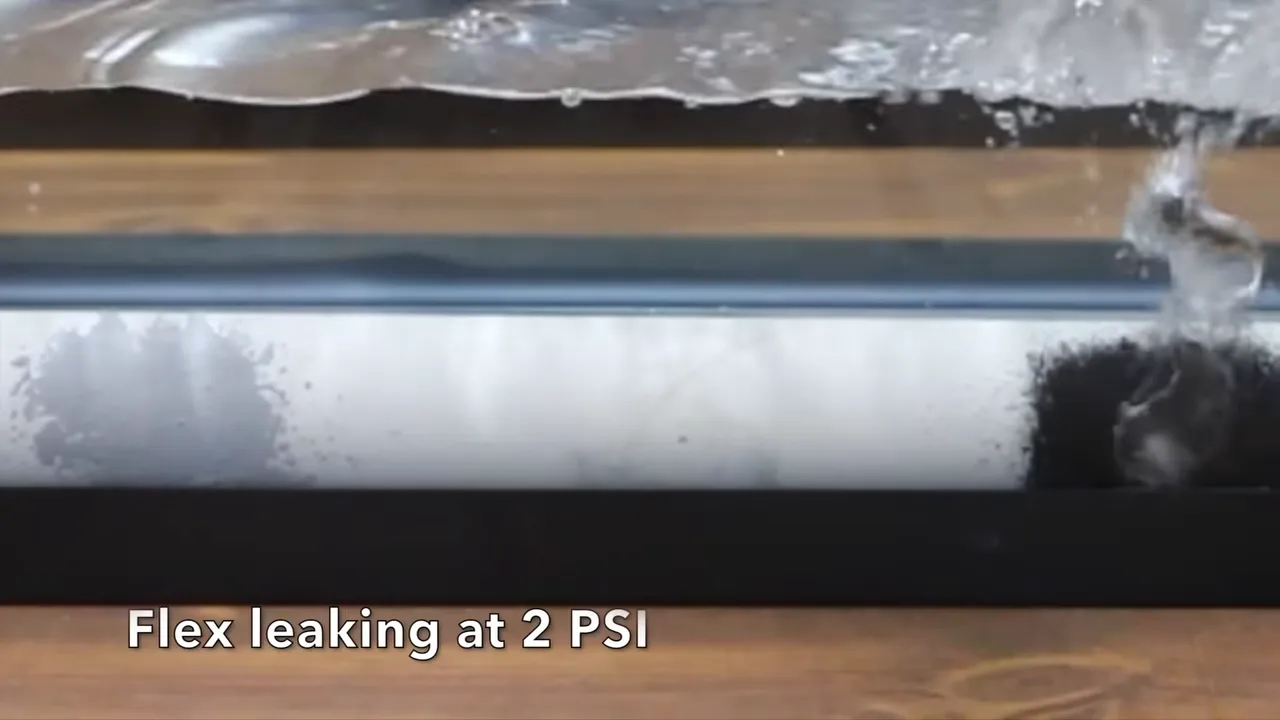
Rust-Oleum won this test by a very large margin. The stopping pressure was not its measured failure point, since the patch had not failed.
These were comparative experiments, not pressure ratings or proof that a spray coating is an appropriate repair for pressurized equipment.
A Scratch Check Helped Explain the Difference
I also scratched the cured coatings to compare their texture and attachment to the PVC. This was not a highly scientific adhesion test, but it helped explain what happened under pressure.
Perma-Seal was gummy and adhesive-like, reminding me of rubber cement. Rust-Oleum had a noticeably better bond to the PVC. Flex Seal formed a substantial coating, but I could scratch it off without much difficulty.
That is an important limitation of judging a repair by its appearance. A solid-looking patch is not necessarily strongly bonded to the material underneath it.
Test 4: How Well Do They Seal Holes in Metal?
For the metal test, I used an air tank with several existing holes and assigned one hole to each product. I sanded the repair area down to bare metal, cleaned it, applied the coatings, and allowed them to cure.
As with the PVC assembly, I submerged the repaired area and increased the air pressure while checking for bubbles.
Flex Seal began leaking at about 2 PSI. Rust-Oleum held longer before failing. Perma-Seal lasted the longest, although it also eventually began leaking.
The finishing order was:
- Perma-Seal
- Rust-Oleum LeakSeal
- Flex Seal
Perma-Seal’s win here is worth noting. It had not won the bucket or pipe-strength tests, yet it performed best on the metal pinhole test. There simply was not one product that handled every kind of damage best.
Price: Rust-Oleum Cost the Least per Ounce
At the time of testing, the purchase prices and can sizes were:
- Rust-Oleum LeakSeal: $8.27 for 11 ounces, approximately $0.75 per ounce.
- Flex Seal: $12.98 for 14 ounces, approximately $0.93 per ounce.
- Perma-Seal: $19.99 for 16 ounces, approximately $1.25 per ounce.
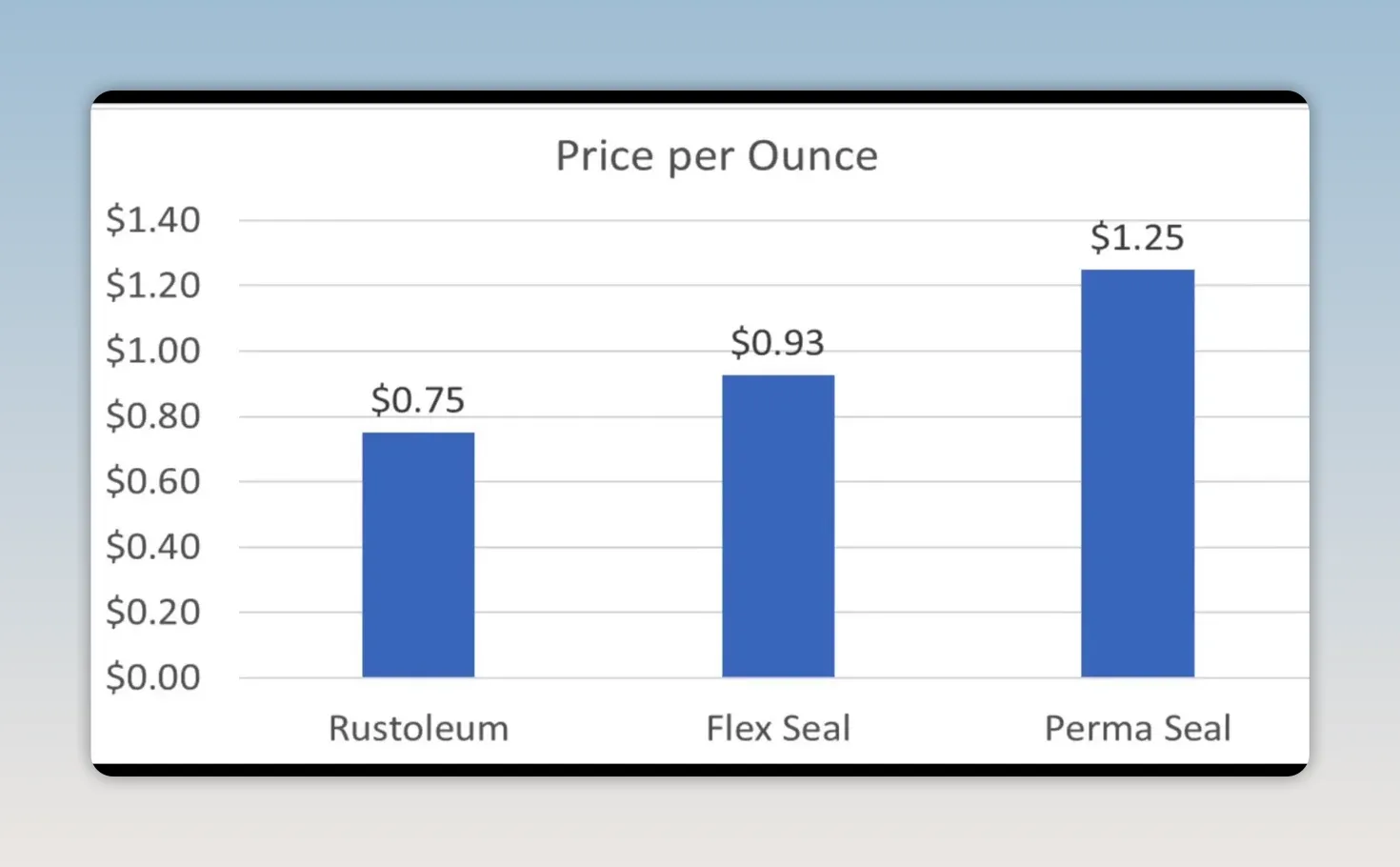
Rust-Oleum was the least expensive option per ounce and delivered the strongest PVC pressure result. Perma-Seal was the most expensive, despite its weaker showing in the structural test. Price alone did not predict which repair each product would handle best.
So, Is Flex Seal the Best?
For most of the general repairs I would make around my home, Flex Seal looks like the best all-around choice of these three. It was the only product that kept the cut bucket from leaking, and it tied Rust-Oleum in the broken-PVC strength test.
But it was definitely not the best in every application. Its low-pressure leaks on both PVC and metal are a good reason not to treat an all-around recommendation as a universal one.
- Choose Flex Seal for the best balance demonstrated here: It combined successful gap sealing on the bucket with useful strength across a cut PVC joint.
- Consider Rust-Oleum when bond strength matters more than flexibility: Its adhesion to PVC and performance in the PVC pressure test were particularly impressive.
- Consider Perma-Seal when stretch is the priority: It was much more flexible than the other two and may be worth considering for flashing that needs to accommodate temperature-related movement.
That flashing application is a judgment based on Perma-Seal’s flexibility, not a result from a roof test. Likewise, its first-place metal result does not erase its limited structural strength.
Some Repairs Need More Than a Spray Can
Are there products better suited to major repairs than these three? Absolutely, but they do not necessarily come in a spray can.
Spray application is convenient. In my experience, that convenience often comes with a compromise in another property. A significant repair may demand much more adhesion and structural support than a spray coating can provide.
I have repaired a 1,000-gallon water tank with a long split, and that job required products with more adhesive ability and reinforcement than these sprays offered.
The biggest lesson from this comparison is to match the sealant to the failure. Bridging a crack, resisting bending, bonding to PVC, and sealing a metal pinhole are not the same challenge. Flex Seal earned its place as my all-around pick, but the repair itself should decide which product you reach for.


