Can a $10 to $12 bottle of transmission additive help a car that a transmission shop says needs a $1,500 rebuild? That is a pretty good reason to do some testing.
Lucas Transmission Fix claims to reduce slipping, hesitation, and rough shifting in worn transmissions. It does not claim to repair broken parts. To find out what it could actually do, I tested it in a 2000 Honda Accord with more than 220,000 miles and a very reluctant second-to-third shift.
I also compared Lucas with automatic transmission fluid in heat, lubricity, and cold-flow tests, and sent samples to an independent oil testing lab. The short answer: Lucas improved the Honda’s shifting, but it did not fix the transmission. The bench tests help explain what makes this product different from ordinary ATF.
Key Takeaways
- Lucas improved the Honda’s second-to-third shift but did not eliminate the transmission problem.
- Lucas showed lower evaporative loss and less wear than ATF in the bench tests.
- Undiluted Lucas flowed dramatically slower than ATF after exposure to minus 20°F.
- The lab results suggested viscosity increase was the product’s most obvious function.
The Test Car: A Transmission Already Facing a Rebuild
The Accord has a 3.0-liter VTEC V6 and a four-speed automatic transmission. The owner had already changed the transmission fluid, but that did not solve the problem.
A transmission shop had diagnosed a bad torque converter and recommended a complete rebuild. The owner did not want to spend the quoted $1,500, so this was an opportunity to see whether an inexpensive additive could offer any improvement.
There was also a history of a P0740 torque converter clutch circuit code. The owner reportedly replaced the torque converter clutch, or TCC, solenoid. However, I could not confirm whether the code had been cleared after that repair. A check engine light being off later would not, by itself, establish that anything had been fixed.
The fluid still had a pinkish color, but that did not tell us much about the condition of the transmission because the fluid had recently been changed.
Establishing the shifting problem
Before adding anything, I took the Honda on a road test. The shift pattern was fairly consistent:
- First to second: Shifted normally.
- Second to third: Hesitated significantly and sometimes did not want to engage.
- Third to fourth: Shifted normally once third gear finally engaged.
This was not just a slightly firm shift. The transmission was clearly struggling to complete the second-to-third change. That gave us a specific symptom to compare before and after adding Lucas.
Bench Testing Lucas Against Automatic Transmission Fluid
For the bench tests, I used ACDelco Dexron VI automatic transmission fluid as the comparison product. The Dexron VI was only used for testing; I did not add it to the Honda.
The purpose was to compare the properties of the two products, not to suggest that a bottle of Lucas and a bottle of ATF serve identical roles. In the car, Lucas would be mixed with the existing transmission fluid. On the bench, I tested the products separately.
Evaporative loss: Two hours of heat
Heat resistance matters to transmission fluid performance and service life. To compare evaporative loss, I measured 200 grams of each product into separate containers and heated them to around 300°F for two hours.
I rotated the containers every 10 minutes to reduce the effect of hot spots on the griddle and monitored their temperatures to keep the conditions as similar as possible.
This was not a standardized Noack volatility test. I did not have the equipment for that procedure. It was a practical comparison of how much mass each product lost under the same heating conditions.
- Lucas Transmission Fix: The container and product started at 394.62 grams and finished at 394.00 grams, a loss of 0.62 grams.
- ACDelco ATF: The container and product started at 430.00 grams and finished at 428.70 grams, a loss of 1.30 grams.
Lucas lost less than half as much mass as the ATF. Both losses were small, but Lucas did a very good job in this comparison.
Lubricity: A clear difference in wear
Next, I compared the heat-treated products on the lubricity tester. I measured 40 milliliters of each fluid and ran each test for approximately 10 minutes, cleaning the tester between products.
The right combination of detergents, dispersants, and anti-wear chemistry can make a substantial difference in transmission life. However, this tester does not perfectly reproduce the conditions inside an automatic transmission. It gives us a controlled wear comparison, not a complete transmission durability test.
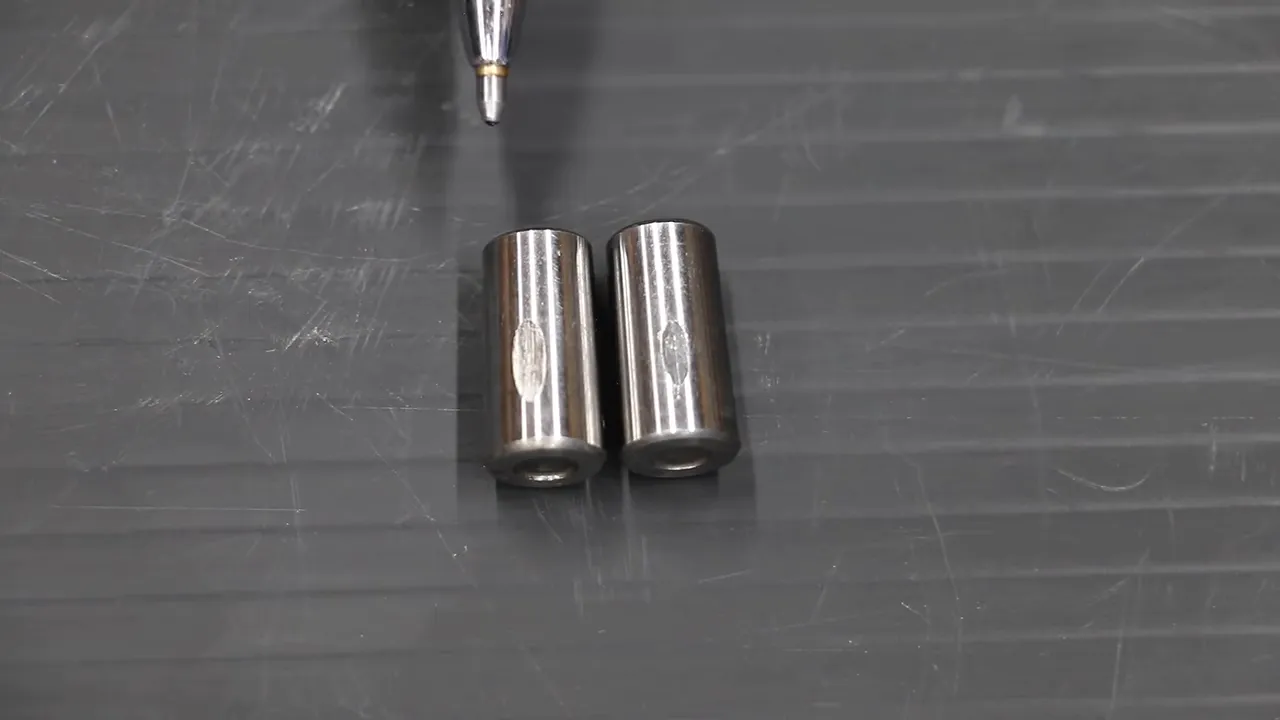
The result was easy to see. The ATF test piece had a much larger wear scar than the Lucas test piece. Lucas performed considerably better in this particular lubricity test.
Cold flow: Team Lucas gets a very late start
Lucas is a very thick product at room temperature. To see how it behaved in extreme cold, I placed fresh and heat-treated samples of both products in a freezer set to minus 20°F.
The cold-flow comparison used four lanes:
- New automatic transmission fluid.
- Heat-treated automatic transmission fluid.
- Heat-treated Lucas Transmission Fix.
- New Lucas Transmission Fix.
Once released onto the slide, both ATF samples got moving quickly. The new ATF finished first, less than an inch ahead of the heat-treated ATF.
Team Lucas did not seem to know the race had started. The Lucas samples finally began making progress about two minutes after the ATF had already finished.
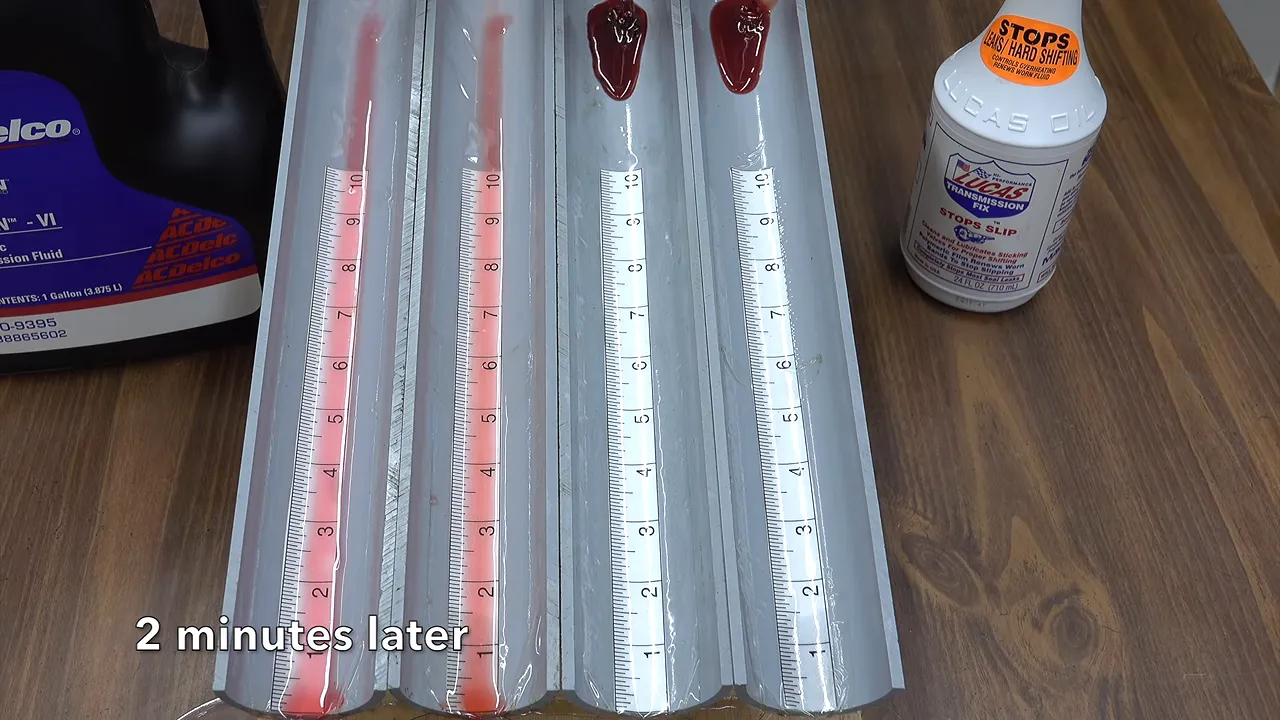
The heat-treated Lucas narrowly beat the new Lucas, but both took more than seven minutes to travel down the slide.
That is a substantial difference in cold-flow performance. It also makes the product’s high viscosity very apparent. These were undiluted samples, though, not the mixture of Lucas and ATF that would circulate inside the Honda.
What the Independent Oil Analysis Revealed
I sent samples of the ATF and Lucas Transmission Fix to an independent oil testing lab. The results reinforced what the cold-flow test had already suggested: these are very different fluids.
The ATF had a recognizable additive package
The main additive elements detected in the ACDelco transmission fluid were boron, calcium, and phosphorus. The measured detergent- and dispersant-related elements were low compared with what I would expect in motor oil.
That does not necessarily mean the fluid lacked other detergent or dispersant chemistry. The lab may not detect every type of additive used in a transmission fluid.
The ATF’s viscosity was within the normal range for transmission fluid and lower than that of 5W-30 motor oil. Its flash point measured 410°F, a good result in this comparison.
Lucas stood out mainly for its viscosity
The Lucas report showed very little of an elemental additive package by comparison. Based on those results, its most obvious function appeared to be increasing the viscosity of the existing transmission fluid.
The reported viscosity was nearly 180 SUS at 210°F. For perspective, the 5W-30 motor oil comparison I referenced was closer to 60 on that scale. Lucas is a very high-viscosity product, and the slow trip down the cold-flow slide was no surprise.
Lucas also had a higher flash point of 455°F, compared with 410°F for the ATF. Together with its low evaporative loss, that was another favorable heat-related result. Neither measurement, however, proves that an additive can repair a damaged transmission.
Adding Lucas Transmission Fix to the Honda
Before adding the product, it was worth reading the limitations right on the bottle. Lucas states that Transmission Fix will be ineffective if the transmission has broken internal parts or completely burned-out bands or clutch packs.
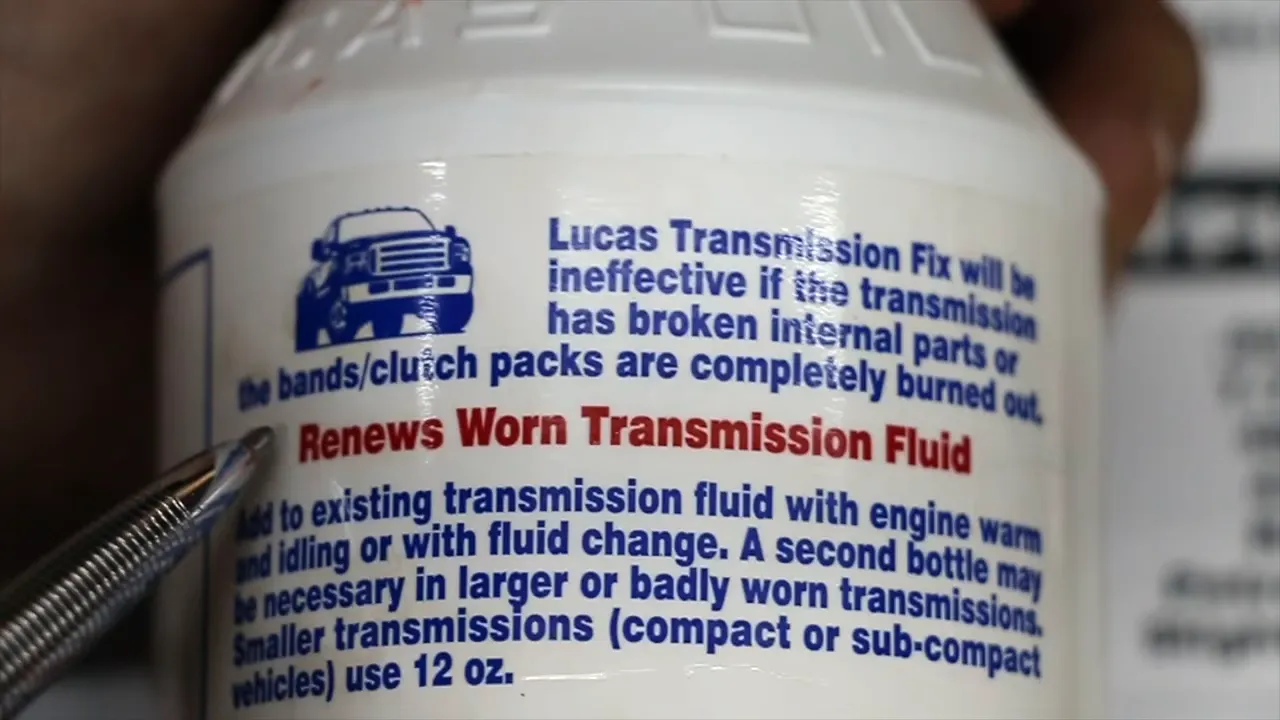
The directions stated that one 24-ounce bottle could be added to the existing fluid without draining, and that a second bottle might be needed in a large or badly worn transmission. Those were the manufacturer’s directions, not proof that more product would improve this particular Honda.
For this test, I added one full 24-ounce bottle. On this V6 Accord, the transmission has a dedicated fill point toward the back of the unit.
The label said results were usually immediate. My plan was to take the car back out, give the product five to 10 minutes, and compare the shifting with the baseline drive.
The Road-Test Result: Better, but Not Repaired
After adding Lucas, the Honda did seem to shift into third gear more readily. The second-to-third change was noticeably better under light acceleration.
It was not perfect. There was still a delay during a hill climb, and another acceleration run showed a slight hesitation before third gear engaged. The improvement was real enough to notice, but the original problem had not disappeared.
I also reset the check engine light after adding Lucas. That is important context: the light being off during the later drive was not evidence that Lucas had corrected the P0740 fault.
The fairest description is that Lucas improved the transmission’s behavior. It did not restore normal operation.
Is Lucas Transmission Fix Worth Trying?
For this worn Honda, I thought Lucas was worth trying at the roughly $10 to $12 price paid for the bottle. The owner was not ready to authorize a rebuild, and the additive produced a useful improvement in the troublesome second-to-third shift.
My impression was that a product like this might help squeeze some more use out of a worn transmission. I did not expect it to make this Honda’s problem worse, but this single test cannot establish that outcome for every transmission.
At the time, my rough estimate was that the Honda might have another 15,000 to 20,000 miles before needing a rebuild. That was an opinion, not a measured lifespan or a promise of additional miles from Lucas. Confirming the internal damage would require disassembly, which the owner did not want to do.
The overall results were mixed in a useful way: Lucas showed low evaporative loss, a smaller wear scar, and a higher flash point than the comparison ATF, but dramatically slower flow in extreme cold. In the car, it reduced the shifting hesitation without eliminating it.
Does Lucas Transmission Fix work? In this test, it helped a worn transmission shift better. It did not fix a transmission that was already being considered for a rebuild. That is the distinction to keep in mind when deciding what to expect from the bottle.


