A brand-new Milwaukee impact driver for $47? A DeWalt for $39? At those prices, it feels like winning the lottery. But a familiar logo and a battery that fits don't tell you what's inside the tool.
I purchased five inexpensive impact tools from AliExpress and compared them with genuine Milwaukee, DeWalt, and Makita tools. The genuine tools cost between $200 and $249 at the time of purchase. All the tools were purchased for this comparison.
The tests started with speed, dimensions, and bit movement, then moved on to deck screws, lag bolts, heat, and tightening torque. Finally, I opened up the Milwaukee impact wrenches. The inexpensive tools were counterfeits, and the differences went a lot deeper than the packaging.
Quick Summary
- Every genuine tool placed ahead of every counterfeit in the overall working-test rankings.
- Counterfeit impact drivers worked much slower and became substantially hotter during repeated lag-bolt installation.
- The genuine Milwaukee driver led overall, while the DeWalt Atomic excelled in demanding lag-bolt work.
- Teardown revealed a lighter hammer assembly and visibly less motor-winding copper in the counterfeit Milwaukee wrench.
Table of Contents
- The Lineup: Five Counterfeits Against Five Genuine Tools
- First Clues: Similar Colors, Different Tools
- Five-Inch Deck Screws: The Genuine Drivers Pull Away
- Five-Inch Lag Bolts: Speed Comes With a Big Heat Difference
- Removing Lag Bolts: DeWalt Atomic Goes to Work
- The 10-Inch Lag Bolt Torture Test
- Load-Cell Testing: Comparing Tightening Performance
- Inside the Milwaukee Wrenches: The Differences Are Obvious
- Overall Results: Are Counterfeit Tools Worth the Savings?
The Lineup: Five Counterfeits Against Five Genuine Tools
This comparison included three pairs of quarter-inch impact drivers and two pairs of half-inch impact wrenches:
- Milwaukee impact driver: $47 counterfeit versus $200 genuine.
- DeWalt DCF860 impact driver: $39 counterfeit versus a genuine tool that cost about $200 new.
- Makita impact driver: $39 counterfeit versus $249 genuine.
- Milwaukee compact impact wrench: $47 counterfeit versus $249 genuine.
- DeWalt Atomic DCF921 impact wrench: $41 counterfeit versus $240 genuine.
The genuine DeWalt impact driver was slightly used. The other genuine comparison tools were purchased from reliable sources on Amazon. Prices here are what I paid, not a promise of current pricing.
Impact drivers and impact wrenches aren't interchangeable categories. A quarter-inch driver is built around driving bits, while a half-inch wrench uses a square-drive anvil for sockets. I tested both on several of the same tasks, but the overall ranking needs that context.
First Clues: Similar Colors, Different Tools
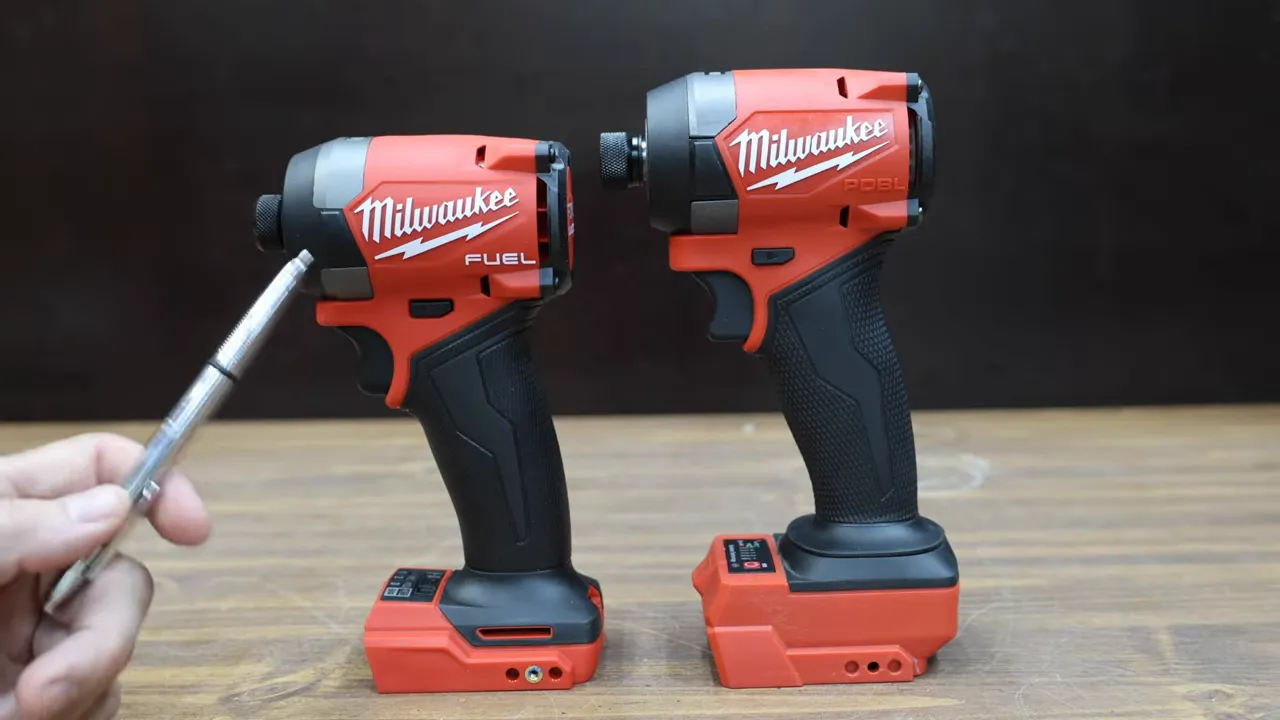
Milwaukee Impact Drivers
The $47 counterfeit advertised 2,000 inch-pounds of torque, 3,900 RPM, a brushless motor, and compatibility with an 18-volt Milwaukee battery. Neither its packaging nor the tool provided a manufacturing country.
The genuine Milwaukee also advertised 2,000 inch-pounds and 3,900 RPM, along with a 4.47-inch body length, a 2.2-pound tool weight, and a five-year tool warranty. It was marked as manufactured in Vietnam.
- Measured no-load speed: 3,394 RPM counterfeit; 3,835 RPM genuine.
- Tool weight: 952 grams counterfeit; 980 grams genuine.
- Body length: 4.63 inches counterfeit; 4.47 inches genuine.
- Axial bit movement: 0.26 inch counterfeit; 0.08 inch genuine.
The genuine tool was smaller but slightly heavier. It also had almost 70% less axial movement, or end play. Excessive end play makes it harder to keep the bit firmly engaged with a screw, increasing the risk of cam-out.
DeWalt Impact Drivers
The $39 DeWalt-labeled driver claimed to be a DCF860, rated for 3,800 RPM and 2,500 inch-pounds of torque. It also claimed a brushless motor and used a DeWalt 20-volt battery. There was no manufacturing-country information on the tool or packaging.
At its highest setting with a fully charged battery, the counterfeit reached approximately 2,889 RPM. The genuine DeWalt, marked as made in Mexico, ran almost 1,000 RPM faster.
- Tool weight: 990 grams counterfeit; 1,110 grams genuine.
- Body length: 4.74 inches counterfeit; 4.78 inches genuine.
- Axial bit movement: just under 0.25 inch counterfeit; approximately 0.10 inch genuine.
The sizes were very close, but the housings, front ends, and control pads weren't identical. The counterfeit was also noticeably lighter.
Makita Impact Drivers
The $39 Makita-labeled driver advertised 1,590 inch-pounds of torque, up to 3,600 RPM, and an 18-volt lithium battery platform. It was marked as made in China. The genuine $249 Makita was marked as made in Thailand.
The mode selectors looked different, and the genuine tool's light appeared about twice as bright. However, the counterfeit actually won the no-load speed test.
- Measured no-load speed: 3,519 RPM counterfeit; 3,426 RPM genuine.
- Tool weight: 804 grams counterfeit; 840 grams genuine.
- Body length: 4.54 inches counterfeit; 4.42 inches genuine.
- Axial bit movement: just over 0.25 inch counterfeit, with almost 70% less movement in the genuine tool.
That's an important early lesson: a tool spinning faster without a load doesn't necessarily do more work.
Milwaukee Impact Wrenches
The $47 Milwaukee-labeled wrench claimed 250 foot-pounds of nut-busting torque, 2,400 RPM, a brushless motor, a 4.9-inch length, and a 2.4-pound weight. Its label included Milwaukee Tool's USA address, but that isn't the same as identifying where the tool was manufactured.
One unusual feature was the counterfeit's combination anvil, which accepted quarter-inch hex bits as well as half-inch sockets. Its measured no-load speed was 2,656 RPM, roughly 350 RPM faster than the genuine wrench.
- Tool weight: 1,142 grams counterfeit; 1,076 grams genuine.
- Body length: 5.13 inches counterfeit; approximately 4.9 inches genuine.
The genuine $249 wrench was made in Vietnam and had a different anvil, control pad, rear housing, and overall size. It also included a belt clip, which I removed before continuing.
DeWalt Atomic Impact Wrenches
The $41 counterfeit was labeled DCF921 and carried claims of 300 foot-pounds of fastening torque and 450 foot-pounds of breakaway torque. The advertised dimensions were 4.95 inches long and 2.47 pounds, with a 2,500-RPM rating. Its label claimed German manufacture.
The genuine $240 DeWalt Atomic had the same advertised torque ratings and was marked as made in Mexico.
- Measured no-load speed: 2,942 RPM counterfeit; approximately 2,470 RPM genuine.
- Tool weight: 1,012 grams counterfeit; 1,126 grams genuine.
- Body length: approximately 4.9 inches counterfeit; 4.94 inches genuine.
Just like the counterfeit Milwaukee wrench, the fake DeWalt accepted quarter-inch bits through its anvil. Its controls looked different from the genuine tool, it sounded different, and its work light was much dimmer.
Manufacturing-country labels alone don't settle authenticity. In this group, the more useful evidence was the combination of mismatched construction, controls, dimensions, performance, and internal components.
Five-Inch Deck Screws: The Genuine Drivers Pull Away
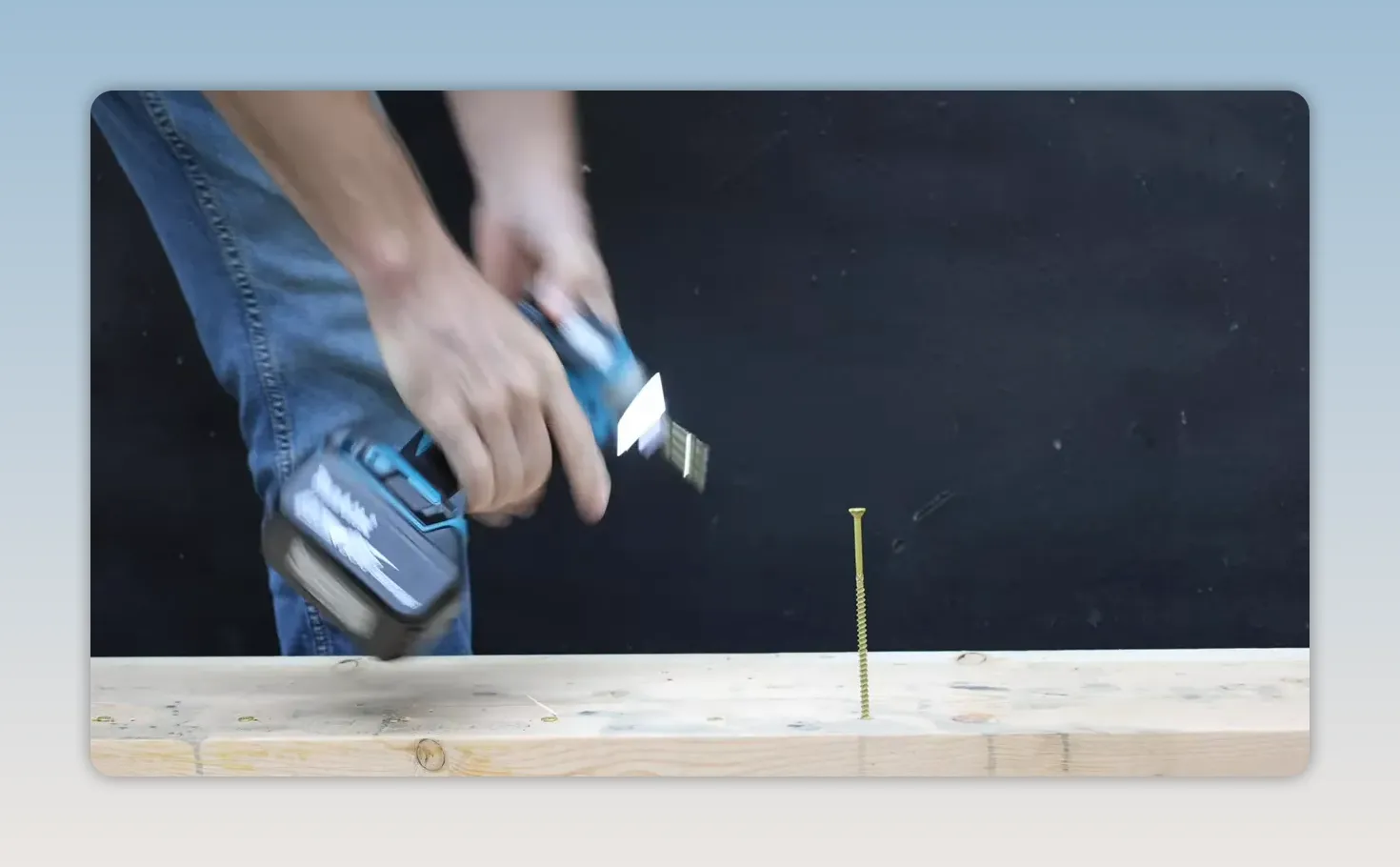
Each tool drove three 5-inch deck screws into the test wood. Wood isn't perfectly uniform, and a knot can slow an individual attempt, so the three runs help show consistency.
Quarter-Inch Impact Driver Results
- Counterfeit Milwaukee: 3.91, 3.91, and 3.55 seconds.
- Genuine Milwaukee: 1.27, 1.17, and 1.27 seconds.
- Counterfeit DeWalt: 3.13, 3.08, and 3.03 seconds.
- Genuine DeWalt: 1.22, 1.17, and 1.01 seconds.
- Counterfeit Makita: 3.50, 4.90, and 3.50 seconds.
- Genuine Makita: 1.63, 1.58, and 1.69 seconds.
The genuine Milwaukee and DeWalt were roughly three times as fast as their counterfeit counterparts. The genuine Makita also finished comfortably ahead of the fake, despite having a slightly lower no-load RPM.
Half-Inch Impact Wrench Results
The counterfeit wrenches accepted bits directly. The genuine wrenches used an adapter for this task.
- Counterfeit Milwaukee: 3.18, 2.82, and 3.03 seconds.
- Genuine Milwaukee: 2.77, 2.46, and 3.23 seconds.
- Counterfeit DeWalt: 2.41, 3.23, and 2.92 seconds.
- Genuine DeWalt Atomic: 1.43, 1.84, and 1.89 seconds.
The genuine DeWalt Atomic led the wrench group. Surprisingly, the counterfeit DeWalt's best time of 2.41 seconds narrowly beat the genuine Milwaukee's 2.46 seconds.
That's not too bad for a $41 tool. But deck screws were only the beginning.
Five-Inch Lag Bolts: Speed Comes With a Big Heat Difference
Driving three 5-inch lag bolts put substantially more load on the tools. This is where the counterfeit impact drivers really began to struggle.
Milwaukee Drivers: About Four Times Faster, Much Cooler
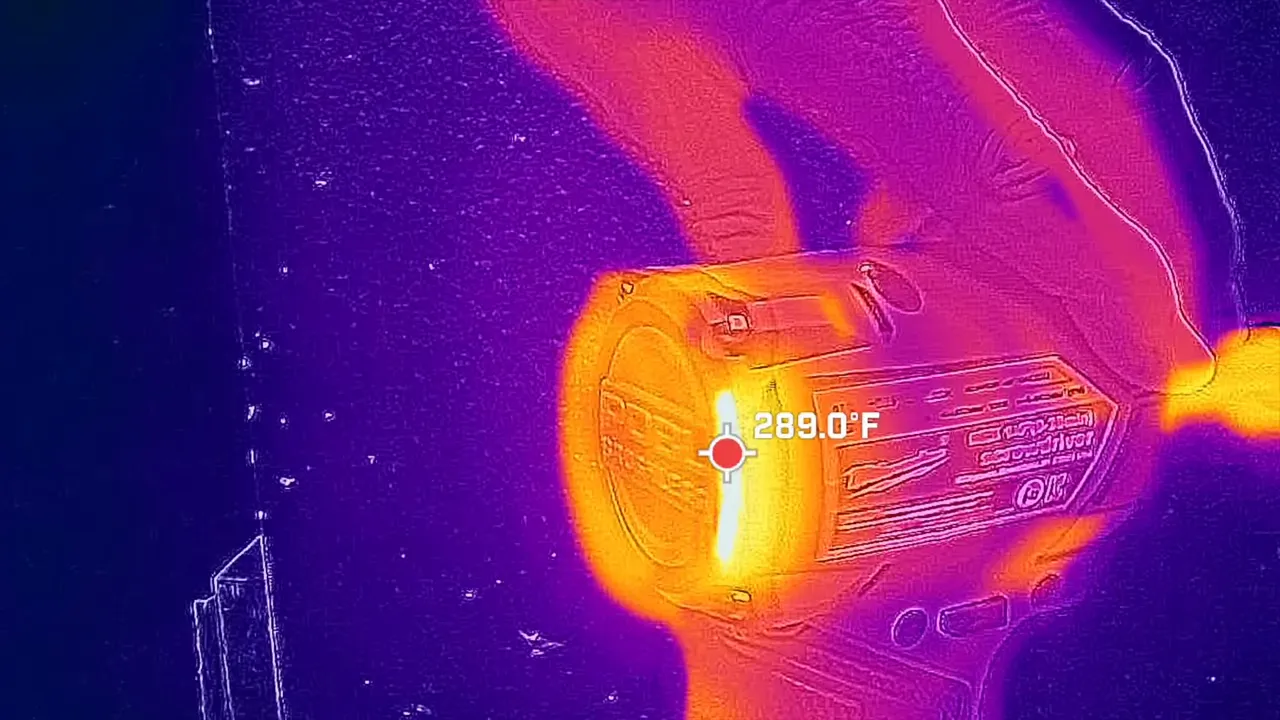
The counterfeit Milwaukee needed approximately 31.5, 33.32, and 33.58 seconds. Its progress slowed as the heat built up, and the rear of the tool reached approximately 289°F.
The genuine Milwaukee completed the same task in 7.17 seconds, just under 7 seconds, and 7.12 seconds. Its fastest recorded run was 6.86 seconds. The tool stayed below approximately 140°F.
The genuine tool cost more than four times as much, but it also worked more than four times as fast on this task and stayed dramatically cooler.
DeWalt Drivers: Another Large Gap
The counterfeit DeWalt finished its first lag bolt in 20.24 seconds and the second in just under 20 seconds. The third took around 29 seconds, possibly because of a knot. Its temperature reached approximately 194°F.
The genuine DeWalt needed 6.91 seconds, approximately 7 seconds, and 7.53 seconds. It drove all three bolts in roughly the time the counterfeit needed for one good attempt, while remaining much cooler.
Makita Drivers: The Counterfeit Gets Hot
The counterfeit Makita took 33.68 seconds, approximately 35 seconds, and approximately 30 seconds. It survived all three attempts, but reached roughly 223°F.
The genuine Makita finished in just under 14 seconds, 15.17 seconds, and 13.16 seconds. That wasn't as quick as the genuine Milwaukee or DeWalt drivers, but it was more than twice as fast as the counterfeit Makita on its best run. Its temperature was approximately 154°F.
Impact Wrenches: An Unexpected Milwaukee Result
- Counterfeit Milwaukee: 16.88 seconds, 17.45 seconds, and just over 20 seconds.
- Genuine Milwaukee: 18.17, 17.60, and 17.45 seconds.
- Counterfeit DeWalt: 19.41, 18.12, and 23.75 seconds.
- Genuine DeWalt Atomic: 10.06, 9.96, and 13.31 seconds.
The counterfeit Milwaukee's fastest run beat the genuine Milwaukee on this particular test. The genuine DeWalt Atomic, however, was easily the fastest wrench.
Across both tool categories, the genuine Milwaukee impact driver led at 6.86 seconds, followed closely by the genuine DeWalt driver at 6.91 seconds. The DeWalt Atomic wrench finished third at 9.96 seconds.
Removing Lag Bolts: DeWalt Atomic Goes to Work
I tested the four half-inch impact wrenches on removing three 5-inch lag bolts.
- Counterfeit Milwaukee: 7.32 seconds, approximately 7 seconds, and 7.32 seconds.
- Genuine Milwaukee: 6.13, 6.39, and 6.08 seconds.
- Counterfeit DeWalt: 5.72, 6.49, and 6.08 seconds.
- Genuine DeWalt Atomic: 3.81, 3.29, and 4.74 seconds.
The genuine Milwaukee beat its counterfeit counterpart on all three attempts. The counterfeit DeWalt remained surprisingly competitive, with a best time slightly quicker than the genuine Milwaukee.
But the genuine DeWalt Atomic ran circles around the rest of the wrench group. Even its slowest attempt was faster than any competitor's best attempt.
The 10-Inch Lag Bolt Torture Test
A half-inch-diameter, 10-inch-long lag bolt is an absolute torture test for a compact impact tool.
It is not, however, an accurate measurement of maximum impact-tool torque. Wood fibers compress and flex under each hammer blow, absorbing energy like tiny shock absorbers. This test measures performance in a demanding wood-fastening application, not a tool's universal torque output.
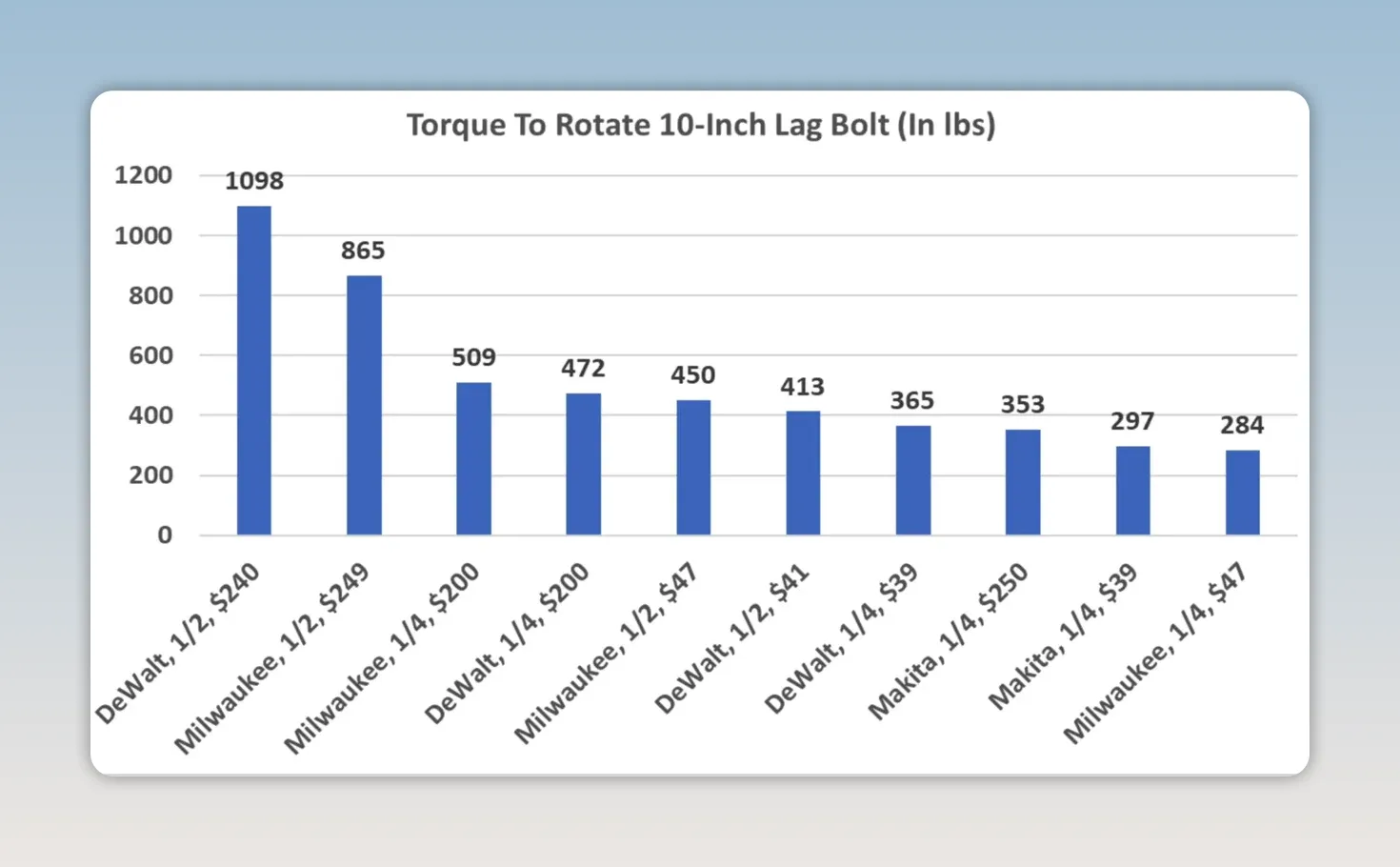
After each attempt, I measured how much torque was required to begin rotating the bolt. Test durations varied, with some tools quickly stopping their progress and the strongest tools fully seating the bolt.
Impact Drivers: None Fully Seated the Bolt
- Counterfeit Milwaukee: 284 inch-pounds required to rotate the bolt afterward.
- Genuine Milwaukee: 509 inch-pounds after approximately 30 seconds of driving.
- Counterfeit DeWalt: 365 inch-pounds after it stopped progressing at approximately 1 minute, 22 seconds.
- Genuine DeWalt: 472 inch-pounds after approximately one minute of total driving.
- Counterfeit Makita: 297 inch-pounds after approximately 30 seconds.
- Genuine Makita: 353 inch-pounds.
The counterfeit DeWalt driver was smoking by the end of its attempt. The genuine DeWalt driver punished the socket adapter hard enough to break it at around 50 seconds. After replacing the adapter, I continued until the tool stopped making progress.
The genuine Milwaukee produced the strongest result among the quarter-inch drivers. The genuine Makita wasn't advertised as a torque monster, and this oversized fastener quickly brought it to a stop.
Impact Wrenches: Only the Genuine Tools Finished
- Counterfeit Milwaukee: stopped progressing after approximately 36 seconds; 450 inch-pounds required to rotate the bolt afterward.
- Genuine Milwaukee: fully seated the bolt in approximately 1 minute, 47 seconds; 865 inch-pounds required afterward.
- Counterfeit DeWalt: stopped progressing after approximately 46 seconds; 413 inch-pounds required afterward.
- Genuine DeWalt Atomic: fully seated the bolt in approximately 1 minute, 17 seconds; 1,098 inch-pounds required afterward.
The genuine Milwaukee maintained strong hammer blows and drove the bolt all the way against the washer. It was hot afterward, but it wasn't smoking.
The counterfeit DeWalt had another problem: a piece of its exterior branding came off during the attempt. Apparently, the lag bolt was too much for both the tool and its badge.
The genuine DeWalt Atomic had a setting specifically intended for lag bolts and was the most efficient wrench in this test. It fully seated the bolt about 30 seconds faster than the genuine Milwaukee.
Load-Cell Testing: Comparing Tightening Performance
For a more controlled comparison, I used a bolt-and-load-cell setup. Applying 100 foot-pounds with a torque wrench produced 6,586 pounds of clamp load in this fixture. I then compared the clamp load produced by each impact tool after five seconds of tightening.
The torque figures below are the approximate equivalents calculated from that fixture's calibration. They describe this five-second test, not a direct certification of the manufacturers' advertised torque ratings.
Quarter-Inch Impact Drivers
- Genuine Milwaukee: 17,197 pounds of clamp load, approximately 261 foot-pounds.
- Genuine DeWalt: 13,097 pounds, approximately 199 foot-pounds.
- Genuine Makita: 12,813 pounds, approximately 195 foot-pounds.
- Counterfeit DeWalt: 11,791 pounds, approximately 179 foot-pounds.
- Counterfeit Makita: 7,187 pounds, approximately 109 foot-pounds.
- Counterfeit Milwaukee: 6,839 pounds, approximately 104 foot-pounds.
The genuine Milwaukee hit hard and fast, finishing well ahead of every other impact driver. The counterfeit DeWalt was the strongest fake driver, but all three genuine drivers beat all three counterfeits.
Half-Inch Impact Wrenches
- Genuine DeWalt Atomic: 13,145 pounds of clamp load, approximately 200 foot-pounds.
- Genuine Milwaukee: 13,093 pounds, approximately 199 foot-pounds.
- Counterfeit Milwaukee: 9,295 pounds, approximately 141 foot-pounds.
- Counterfeit DeWalt: 8,572 pounds, approximately 130 foot-pounds.
The two genuine wrenches were essentially tied in this test, and both comfortably outperformed the counterfeits.
Notice how the results change with the application. The genuine Milwaukee driver led the five-second load-cell test, while the genuine half-inch wrenches were the only tools to finish the 10-inch lag bolt. One torque figure doesn't tell the whole story.
Inside the Milwaukee Wrenches: The Differences Are Obvious
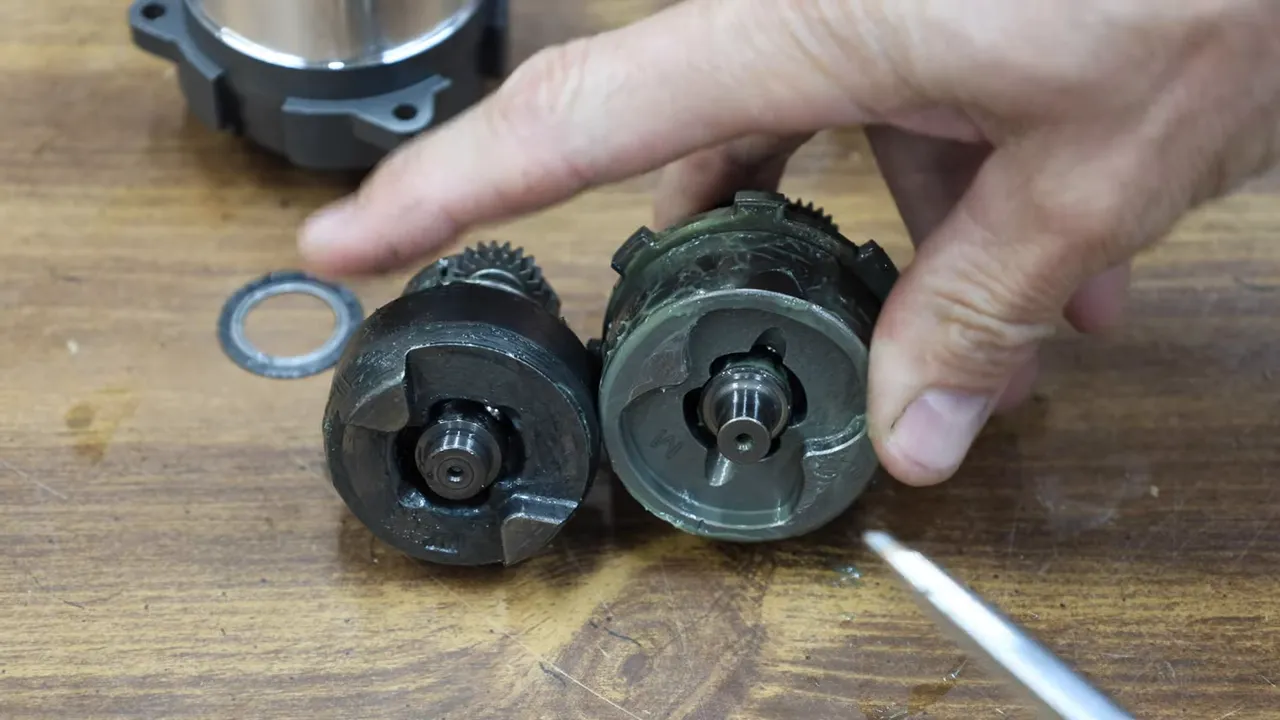
The genuine and counterfeit Milwaukee impact wrenches looked different outside. Opening them up revealed completely different internal components.
The counterfeit hammer assembly weighed 248.87 grams. The genuine assembly weighed 312.71 grams. That's approximately 20% less mass in the counterfeit assembly relative to the genuine one.
The shapes and construction were visibly different, too. These weren't identical mechanisms wearing slightly different housings.
The motor comparison was just as revealing. There was visibly less copper in the counterfeit brushless motor windings than in the genuine Milwaukee.
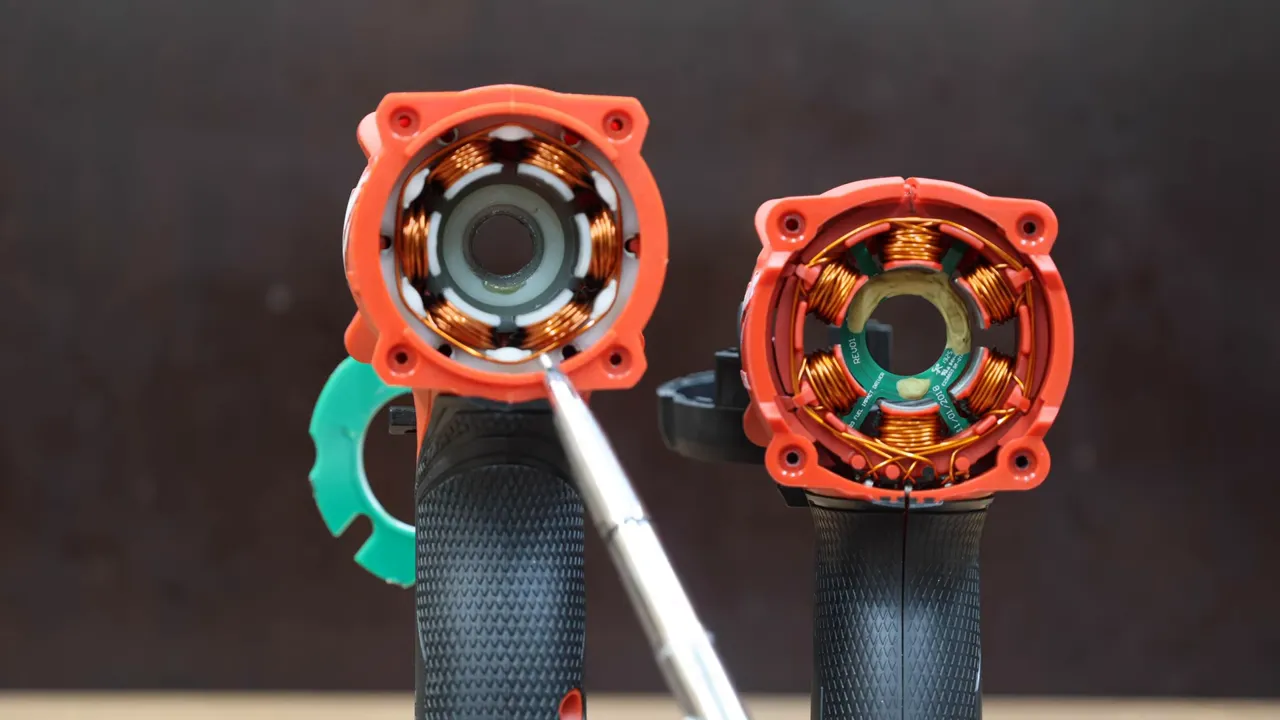
A brushless label, the right battery connection, and familiar colors weren't enough to make these the same tool.
Overall Results: Are Counterfeit Tools Worth the Savings?
For the overall comparison, I converted the working-test results into finishing positions and averaged those rankings. Basic measurements such as weight, no-load RPM, and end play weren't included in the overall score.
Comparing impact drivers with impact wrenches is an apples-to-oranges exercise, but one result was clear: every genuine tool finished ahead of every counterfeit in the overall ranking.
- Genuine Milwaukee quarter-inch impact driver: first overall, with an average finish of 1.8.
- Genuine DeWalt Atomic half-inch impact wrench: second overall, with an average finish of 2.0.
- Genuine DeWalt quarter-inch impact driver: third overall, with an average finish of 2.5.
The counterfeit Milwaukee and DeWalt half-inch wrenches each averaged a 5.6 finishing position. Considering their sub-$50 prices, they performed better than I expected in some individual tasks. The counterfeit impact drivers, on the other hand, really struggled, especially with sustained lag-bolt work and heat.
My recommendation is to spend the extra money up front for a genuine, more capable tool. The genuine Milwaukee driver was especially impressive for fast driving and short-duration tightening performance. The genuine DeWalt Atomic was the standout wrench for lag-bolt installation, removal, and the oversized-fastener test.
If you have a friend who never returns borrowed tools, a counterfeit might finally make them less enthusiastic about borrowing yours. Otherwise, I'll take the genuine product.


