A good impact driver is a very nice thing to have for a big project, but the bit matters just as much. A poor-fitting or worn-out Phillips bit can turn a simple fastening job into a battle with slipping tips and damaged screws.
I tested 10 brands of Phillips #2 bits, ranging from a 19-cent Harbor Freight Warrior to a $1.20 Wiha. Milwaukee makes the biggest promise, claiming up to 50 times longer life. That sounds impressive, but I wanted to see how the bits actually performed after driving screws, how well they resisted cam out, and how much torque it took to break them.
Milwaukee Shockwave was my overall pick, and Bauer was the standout budget option. However, the individual tests revealed some important differences between a bit that grips well when new, one that holds its shape, and one that survives high torque.
Key Takeaways
- Milwaukee delivered the best overall combination of wear resistance, used-bit grip, and breaking strength.
- Bauer offered excellent value, finishing second in cam-out resistance after driving 100 screws.
- Wiha led new-bit grip and tied Milwaukee for the highest breaking torque.
- Firm downward pressure and stopping before withdrawal help reduce driver-bit wear.
How I Tested the Phillips #2 Driver Bits
The comparison covered four areas:
- Driving wear: Drive 100 screws with each brand, then compare a new and used bit under magnification.
- Tip hardness: Use a Mohs scratch test to look for differences between the metals.
- Cam-out resistance: Measure the twisting force required to make new and used bits slip out of a screw head.
- Breaking strength: Apply enough downward force to keep the bits engaged, then increase torque until they snap.
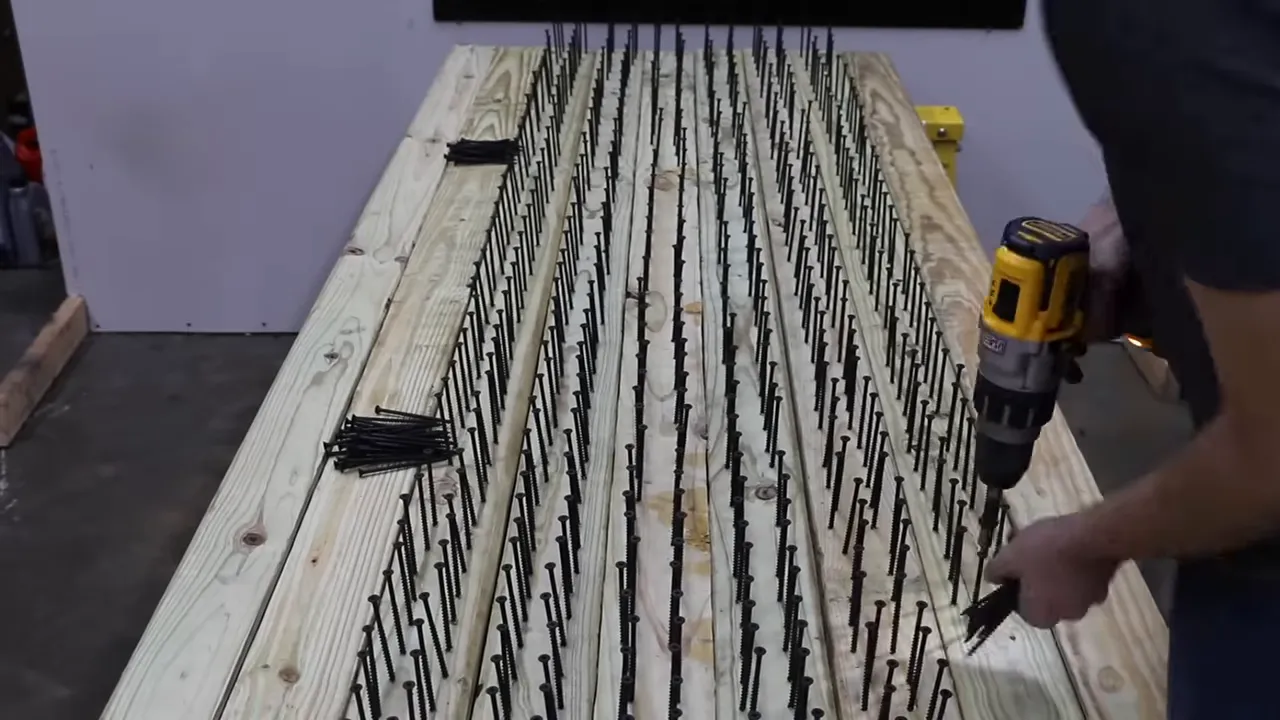
Driving drywall screws into pressure-treated 4x4s puts a tremendous load on both the screws and the bit. To make the driving test as consistent as possible, I started all 1,000 screws approximately 1/4 inch into the lumber before testing the bits.
All the 4x4s came from the same stack, were purchased on the same day, and spent a couple of weeks in a dry environment before testing. That helped reduce differences in the test material.
The 10 Brands: Price, Claims, and Driving Performance
These are the prices for the packages tested, expressed as a cost per bit or piece. The Warrior is the exception in this group: it is not impact-rated. I included it to investigate the idea that ordinary bits might last as well as impact-rated ones.
Harbor Freight Warrior: 19 Cents per Piece
The $5.99 Warrior 32-piece set works out to about 19 cents per piece. These chrome vanadium bits are made in China and are not designed for impact-driver use.
The Warrior had quite a bit of wobble in the screw head, but it did survive all 100 screws. Under magnification, however, the contact surfaces showed substantial wear, with displaced metal raised along the edges. Surviving the driving test was encouraging, but it did not tell the whole story about strength.
Bauer: 43 Cents per Bit
Bauer’s impact-rated bits are made in Taiwan from hardened S2 tool steel. The manufacturer advertises precision tolerances, a shock-absorbing zone, reduced stripping, and corrosion resistance.
Compared with the Warrior, the Bauer fit much better and had very little wobble. That tight engagement made driving the screws very easy. After 100 screws, the leading edges of the flutes showed very little wear. Very impressive for one of the least expensive impact-rated options.
Hercules: 45 Cents per Bit
Also sold at Harbor Freight, Hercules costs just 2 cents more per bit than Bauer. These Taiwan-made, hardened S2 steel bits advertise a special bit-fit design intended to improve engagement and reduce stripping.
Unfortunately, the tested Hercules did not fit the screw nearly as well as the Bauer. There was noticeably more wobble while driving. The microscope inspection also showed considerably more wear, consistent with that looser engagement.
Craftsman: 50 Cents per Bit
The Vietnam-made Craftsman uses S2 shock-resistant tool steel, an optimized torsion zone, and a CNC-machined tip intended to improve fit and reduce cam out.
The initial fit felt tighter than the first three brands, although it did not seem to grip as well as Bauer during actual driving. After use, the flutes near the tip appeared considerably narrower from wear, and the tip looked slightly twisted. A tight initial fit did not prevent damage in this test.
Irwin: 52 Cents per Bit
Irwin advertises a forged tip for improved fit, reduced stripping, and three times the life. Made in China, the bits use heavy-duty, cold-forged, high-grade steel intended to withstand high torque.
The fit was reasonably good, but there was definitely some wobble, and I could feel it while driving. The used tip showed wear along the leading edges, though it appeared less worn than Craftsman.
Bosch: 53 Cents per Bit
Bosch claims 10 times the life of standard impact bits, with an extended torsion zone, precision-engineered tips, and heat treatment for strength. The tested bits were made in Vietnam.
The Bosch started with a very tight fit, similar to Craftsman. It performed well initially, but engagement seemed to deteriorate quite a bit toward the end of the 100 screws. It was the lightest bit in the group, and the microscope inspection revealed substantial damage to its flutes.
DeWalt Max Fit: 53 Cents per Bit
At the same price as Bosch, the China-made DeWalt Max Fit advertises optimized tip geometry, CNC manufacturing, and a torsion zone intended to extend life in wood and metal fastening.
I really liked the DeWalt’s fit. It engaged the screw tightly with very little wobble and performed well during driving. The used bit had visible wear along the leading edges, but it was clearly in better condition than Bosch.
Makita Gold: 66 Cents per Bit
Made in Japan, Makita Gold is designed for high-torque impact drivers. Makita advertises a precision-fit tip to prevent cam out and stripping, along with 10 times the life of standard insert bits.
The fit was pretty good, but there was more movement than with some competitors. It did fairly well driving screws without feeling as secure as the best-fitting brands. Under magnification, the leading edges showed some rounding, although the wear was less severe than on several other bits.
Milwaukee Shockwave: 66 Cents per Bit
Milwaukee’s China-made Shockwave uses a Wear Guard tip and a proprietary Alloy76 steel. Its claim of up to 50 times longer life than other impact bits was the most ambitious of the group.
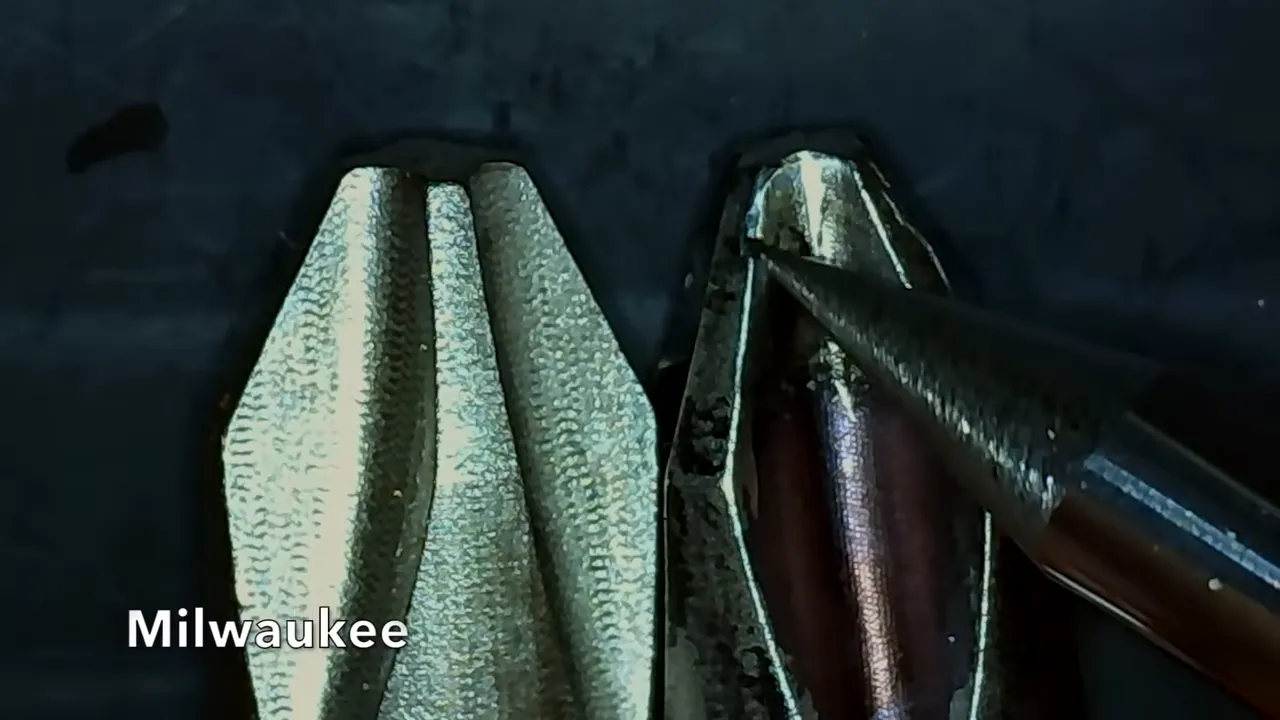
The fit was very good, with very little wobble. I was especially impressed by how consistent it felt throughout the driving test. It seemed nearly as good at the end as at the beginning. Under magnification, there was only a very small amount of wear along the leading edges.
Wiha: $1.20 per Bit
Wiha was almost twice the price of the next most expensive options. Engineered in Germany and manufactured in Vietnam, it advertises 30 times the performance of standard bits, an energy-absorbing dual-material design, precision heat treatment, and premium chrome vanadium tool steel.
The Wiha had a little more wobble than some competitors, but it still did a terrific job driving screws and remained in good condition. Its wear performance was not quite as good as Milwaukee’s, despite the higher price.
Did Harder Tips Perform Better?
The Mohs scratch test is not the gold standard for measuring metal hardness, but it provided a useful comparative check.
- Approximately 7: Irwin, Makita, Milwaukee, and Wiha.
- Approximately 6: Warrior, Bauer, Hercules, Craftsman, Bosch, and DeWalt.
The four harder bits would eventually occupy the top positions in the breaking-strength test. However, hardness alone did not explain every result. Bauer, for example, showed very little driving wear despite being in the lower-hardness group.
Cam-Out Resistance: New Bits Versus Used Bits
Cam out happens when the bit loses its grip and climbs out of the screw recess. Tip geometry, metal hardness, and coating can all affect the result. To compare the bits fairly, I needed consistent downward pressure rather than relying on hand pressure.
I used a drill press to apply force through a torque adapter and the driver bit. The drive belt was removed to keep it from affecting the measurement. A wheel attached to the drill-press lever, combined with a 5-pound hanging weight, produced 27.2 pounds of downward force at the bit.
For the screw fixture, I drilled a pilot hole in cured Osage orange, also called hedge apple. Each test used a fresh screw. The original drywall screws, along with several alternatives, proved too brittle and broke, so I switched to a different screw brand for this test.
How the New Bits Compared
Higher torque means the bit resisted cam out longer under the same downward force. Results are in inch-pounds:
- Wiha: 107 in-lb.
- Bauer: 102 in-lb.
- Hercules: 101 in-lb.
- DeWalt Max Fit: 101 in-lb.
- Irwin: 96 in-lb.
- Makita Gold: 96 in-lb.
- Craftsman: 95 in-lb.
- Bosch: 94 in-lb.
- Milwaukee Shockwave: 91 in-lb.
The new Warrior broke at 93 in-lb instead of camming out. That is a failure torque, not a successful cam-out result. It exposed the weakness of using this non-impact-rated bit for high-torque work, even though it had survived driving 100 screws.
Wiha had the strongest grip when new. Bauer, Hercules, and DeWalt were close behind. Milwaukee, surprisingly, slipped sooner than every other impact-rated bit tested. But the ranking changed after use.
How the Bits Compared After 100 Screws
- Milwaukee Shockwave: 84 in-lb.
- Bauer: 81 in-lb.
- Wiha: 75 in-lb.
- Warrior: 71 in-lb.
- DeWalt Max Fit: 67 in-lb.
- Craftsman: 64 in-lb.
- Irwin: 62 in-lb.
- Bosch: 62 in-lb.
- Makita Gold: 56 in-lb.
- Hercules: 53 in-lb.
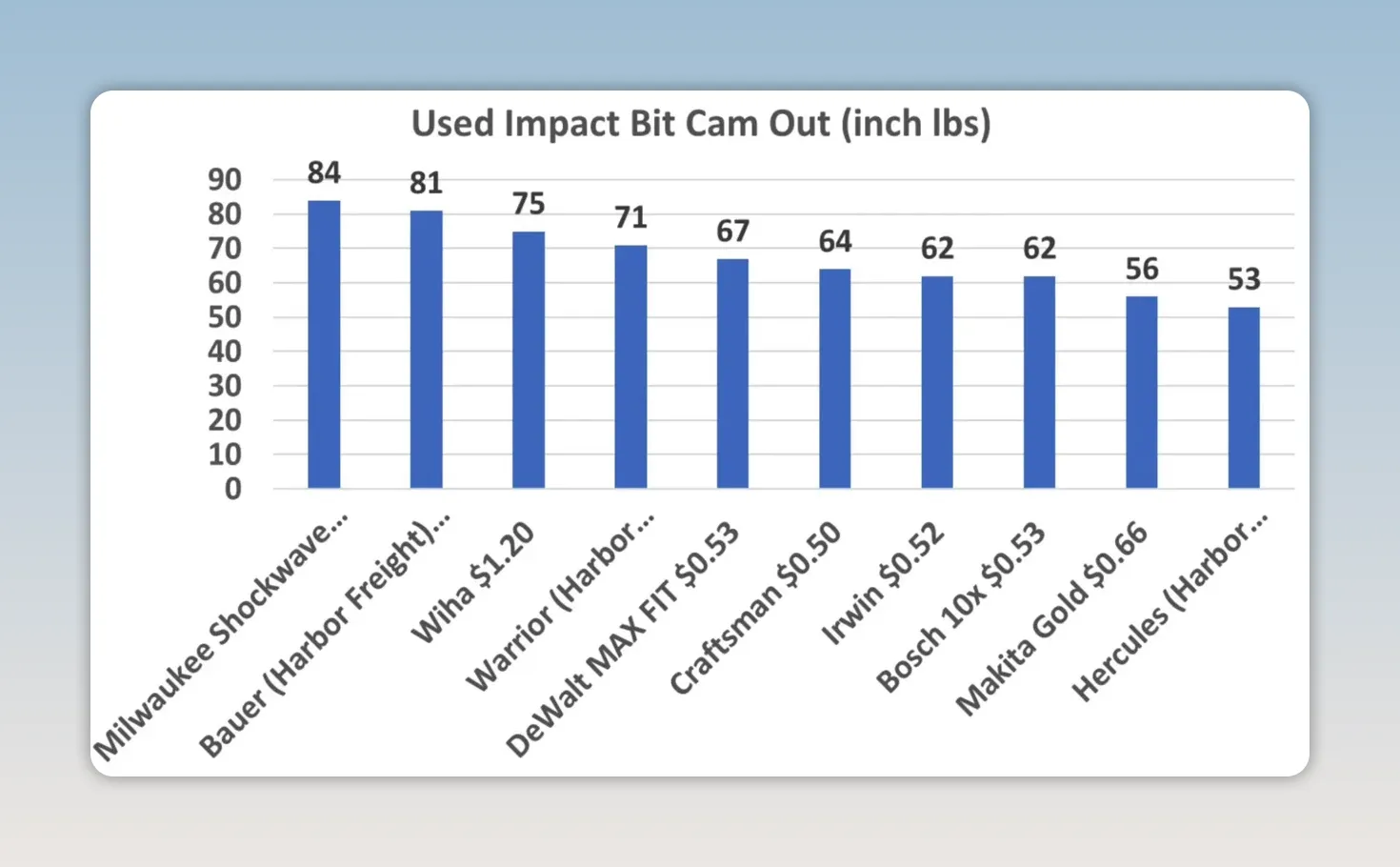
Milwaukee’s used result was nearly as good as its new result. Bauer also did very well, finishing second, with Wiha third. Hercules fell from 101 to 53 in-lb, matching the substantial wear visible on its tip.
The used Warrior’s 71 in-lb result was respectable, but it does not erase the brittleness demonstrated by the new sample. Resistance to wear and resistance to breaking are different qualities.
Which Driver Bit Took the Most Torque to Break?
The cam-out test compared grip under a moderate downward load. The final test focused on strength.
I used self-tapping steel screws and increased downward force to 200 pounds to keep the bits from slipping before they broke. Warrior was not tested again because it had already snapped at 93 in-lb.
Here are the breaking-torque results, from highest to lowest:
- Milwaukee Shockwave: 157 in-lb.
- Wiha: 157 in-lb.
- Irwin: 149 in-lb.
- Makita Gold: 149 in-lb.
- Hercules: 148 in-lb.
- Bosch: 146 in-lb.
- Bauer: 144 in-lb.
- Craftsman: 143 in-lb.
- DeWalt Max Fit: 140 in-lb.
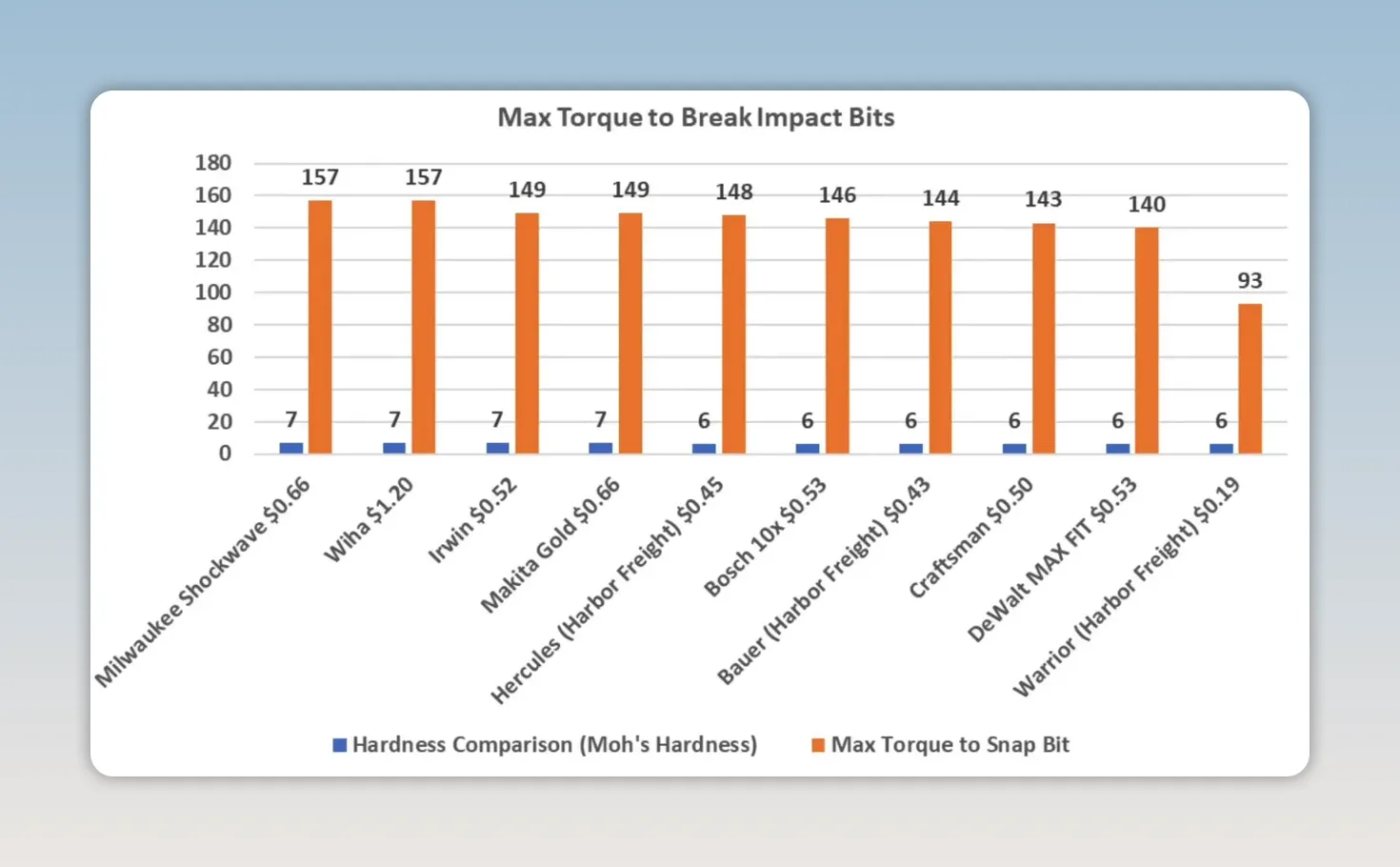
Makita flexed and twisted more noticeably than the other brands before breaking. It even began to cam out despite the heavy downward load, but still reached an impressive 149 in-lb.
For maximum torque capability, Milwaukee and Wiha showed the most strength. Irwin and Makita were close behind, and Hercules was only another inch-pound back. The four hardest bits also had the four highest breaking-torque results, although several of the softer bits were not far behind.
Two Habits That Help Driver Bits Last Longer
Brand makes a big difference, but technique matters too. I have quickly destroyed very good bits by getting in a hurry. Two changes have made a huge difference in how long my bits last.
- Apply enough downward pressure. A bit does not have to slip completely out of the screw head to suffer damage. Excessive movement while it remains engaged creates friction and wears the flutes.
- Stop the driver before pulling the bit out. Removing the bit while it is still turning wears the leading edges, especially near the tip.
A better bit helps, but it cannot fully compensate for loose engagement and pulling away while the tool is still moving.
My Picks: Milwaukee Overall, Bauer for Value
Milwaukee Shockwave was the best overall bit in this comparison. It showed very little wear, had the highest used-bit cam-out torque, and tied Wiha for the highest breaking strength. At 66 cents per bit in the tested package, it also cost substantially less than Wiha.
I am not convinced these results establish Milwaukee’s claim of up to 50 times longer life. What I can say is that I used a Milwaukee bit to remove almost all 1,000 screws afterward. Three screws broke during removal, leaving 997 successfully removed. That additional work reinforced my favorable impression of the bit.
Bauer was the value standout. At 43 cents per bit, it provided a good fit, very little visible wear, and the second-highest cam-out torque after 100 screws. Its 144 in-lb breaking strength was also respectable.
Wiha deserves credit for the highest new-bit cam-out resistance and a tie for the strongest bit. But at $1.20 each, its higher price did not deliver better overall results than Milwaukee in these tests.
If I were choosing from this group, I would take Milwaukee for the strongest all-around performance and give Bauer serious consideration when price is the priority.


