If your lawn mower is working harder than it used to and the grass tips are turning brown, there’s a good chance the blade needs sharpening. A badly dulled blade can push grass over and tear it rather than make a clean cut.
But which sharpening option actually works best? A $10 drill attachment is certainly tempting compared with a dedicated machine costing more than $300. To find out what that extra money buys, I tested six options on new blades, blades with simulated rock chips, and extremely dull, worn blades.
The All American Model 5000 was the standout. It removed metal quickly and made it easy to produce a straight, consistent edge. The Oregon also performed very well. The less expensive options had much more difficulty once the job involved repairing damage or reshaping a badly worn edge.
Key Takeaways
- The All American Model 5000 sharpened fastest and produced a straight, consistent edge.
- The Oregon delivered controlled sharpening but cost more, worked slower, and occupied more space.
- Funvolution, Smith’s, and Work Sharp could not properly restore the severely worn blades within 15 minutes.
- Check blade balance after sharpening to help reduce mower vibration.
The Six Sharpening Options
I bought all the products tested to keep the comparison independent. Prices below are the prices at the time of testing, not current quotes.
- Funvolution, $10: A set of four drill-mounted grinding wheels with plastic guides.
- Smith’s, $20: A manual pull-through mower blade sharpener with a cleaning brush stored in the handle.
- Work Sharp Knife & Tool Sharpener, $80: A compact powered belt sharpener.
- All American Model 5000, $235: A blade-clamping fixture and guide system used with an angle grinder.
- Oregon 88-025, $309: A dedicated mower blade grinder with an adjustable grinding angle.
- Bench grinder, approximately $50 for an affordable model: The conventional freehand alternative.
Funvolution: A Drill Attachment With a Plastic Angle Guide
The Funvolution is made in China, weighs about 70 grams, and attaches to a power drill. There were no instructions included with the set I bought, but its operation appeared straightforward. With the mower blade secured in a vise or clamp, the plastic guide rides along the grass side while the stone grinds the bevel.
Keeping that guide parallel with the grass side is intended to produce an edge around 30 degrees. As the later tests showed, however, having a guide does not guarantee the correct angle on every blade.
Smith’s: Manual Metal Removal
The Chinese-made Smith’s works differently from an abrasive wheel. Its cutting insert scrapes or peels away metal as you pull it over the edge.
The instructions call for cleaning the blade with the included wire brush if needed, securing it in a vise with the cutting edge exposed, and pulling the sharpener along the edge while applying downward pressure. Follow the blade’s contours and repeat until sharp. Harder steel may require additional passes.
One limitation became apparent immediately: the factory bevel on the test blade was about half an inch wide, and the Smith’s only worked across roughly half of that width. It did a good job working the top bevel without grinding the grass side, but that limited reach mattered when substantial reshaping was needed.
Work Sharp: Versatile, but Small for This Job
The Work Sharp comes with an 80-grit coarse belt, a 220-grit medium belt, and a 6,000-grit fine belt. It is marketed for knives and a range of tools, including mower blades, pruners, shears, shovels, and scrapers, and carries a one-year warranty.
For mower blade sharpening, I removed the knife guide, installed the coarse green belt, and moved the sharpening cassette to grinding position B. Belt replacement involves depressing and quarter-turning the tensioner to lock it, centering the belt on the three pulleys, and releasing the tensioner. A red adjustment knob controls belt tracking.
This is not a heavy-duty grinder. Its instructions limit operation to 20 minutes within one hour. It also produced a convex bevel, meaning the sharpened surface was rounded rather than flat.
All American Model 5000: A Guided Angle Grinder
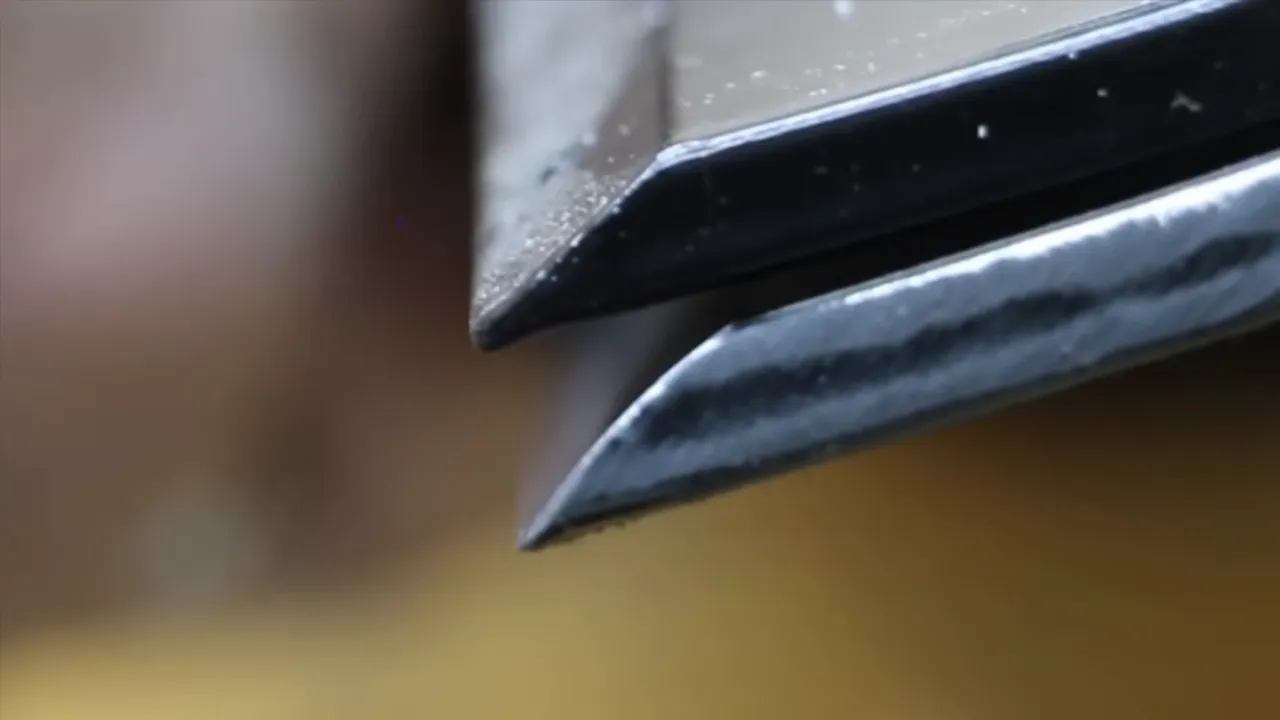
The American-made Model 5000 has a 30-degree standard sharpening position and a 15-degree position for mulching blades. It works with a compatible 4- to 5-inch angle grinder, and the kit included four guide-pin options to accommodate different grinder handle threads.
With the grinder unplugged, select the correct pin and snug its locknut into place. The fixture can be mounted to a bench, bolted down, or clamped. Its four clamping pins hold the blade near the center, with the cutting edge facing upward and the blade positioned as straight and square as possible.
The grinder’s guide pin slides into the pivot bushing. The guide arm belongs alongside the grinder, not out in front. During sharpening, use light, consistent pushing passes while maintaining slight pressure to keep the pin against the bushing.
All American recommends a 36- to 60-grit flap disc. A hard grinding disc can also be used, although it is easier to gouge the blade. In testing, the flap disc cut quickly but left a slightly convex bevel; a hard disc is an option when a flatter bevel is the priority.
Oregon 88-025: A Dedicated Blade Grinder
The Oregon is made in Taiwan and uses an 8-inch grinding stone driven by a 1,750 RPM, one-third-horsepower motor. It is designed to sharpen cutting edges of any length.
Setup takes more work than attaching a drill-mounted stone. The small guards mount beneath the stone guard and should remain no more than one-quarter inch from the stone. The larger T-shaped guard and the adjustable table plate also need installation.
To set the grinding angle, rest the blade’s grass side flat on the table plate. Loosen the adjustment locknuts, then use the top adjuster to raise or lower the wheel until it matches the intended bevel. Tighten the locknuts afterward. Once the angle and height are set, slide the table plate to within one-eighth inch of the stone and secure it.
During sharpening, hold the opposite end of the blade with both hands, keep the grass side flat on the table, and move the cutting edge steadily back and forth across the wheel. The cutting edge and grinding surface should remain parallel.
Test 1: Resurfacing a New Blade
The first test was a relatively light job: remove the paint and resurface the factory-ground bevel, including its deeper grinding marks. This established how quickly each option could work on an edge that was already formed.
- All American: 8 seconds.
- Bench grinder: About 30 seconds.
- Oregon: About 35 seconds, rounded to 30 seconds in the results comparison.
- Smith’s: About 60 seconds.
- Funvolution: About 90 seconds.
- Work Sharp: About 270 seconds, or four and a half minutes.
The All American was extremely fast. The Oregon and bench grinder also removed the factory surface quickly. A flap disc on the bench grinder appeared to provide a better result in this initial test.
The Smith’s did reasonably well on time, but its narrow working area meant it did not resurface the full width of the original bevel. Under magnification, its scraping action was clearly different from the scratch pattern left by an abrasive.
The Work Sharp was the slowest by a considerable margin, and its flexible belt left a rounded bevel. That does not make the tool useless, but it was already showing the limitations of a small belt sharpener on a large mower blade.
Test 2: Repairing Simulated Rock Chips
A new blade is one thing. A blade with impact damage is a much tougher challenge. For the second test, I added dings to the cutting edges to simulate rock chips and allowed up to five minutes of sharpening. I also weighed the blades before and after to assess metal removal.
This test exposed an important difference: cleaning up the bevel is not the same as removing the damaged edge. A blade can have a freshly worked surface and still retain deep notches or protrusions on the grass side.
Funvolution and Smith’s Struggled With the Damage
The rock chips made the Funvolution grab and jerk, which made smooth passes difficult. After five minutes, the edge measured about 27 degrees, but plenty of chips remained. The blade did not look substantially sharper.
The attachment also did not address the damaged material on the very bottom of the blade. A separate grinder or file would be needed to correct those imperfections.
The Smith’s made more progress toward a cutting edge than the Funvolution, but it also struggled with the chips. It removed just 1 gram in five minutes, and the edge remained near its original 30-degree angle. Damage was still clearly present, especially on the grass side.
Work Sharp Made Better Progress, but Needed More Time
With the Work Sharp, I first sanded the grass side to address protruding damage, then worked the top bevel. That approach made a substantial improvement within five minutes.
The blade stayed close to 30 degrees, and the tool removed 2 grams, reducing the blade from 1,087 to 1,085 grams. Some chips remained, but another five or ten minutes appeared likely to remove them. The bevel was still convex.
All American Removed All the Chips in Four Minutes
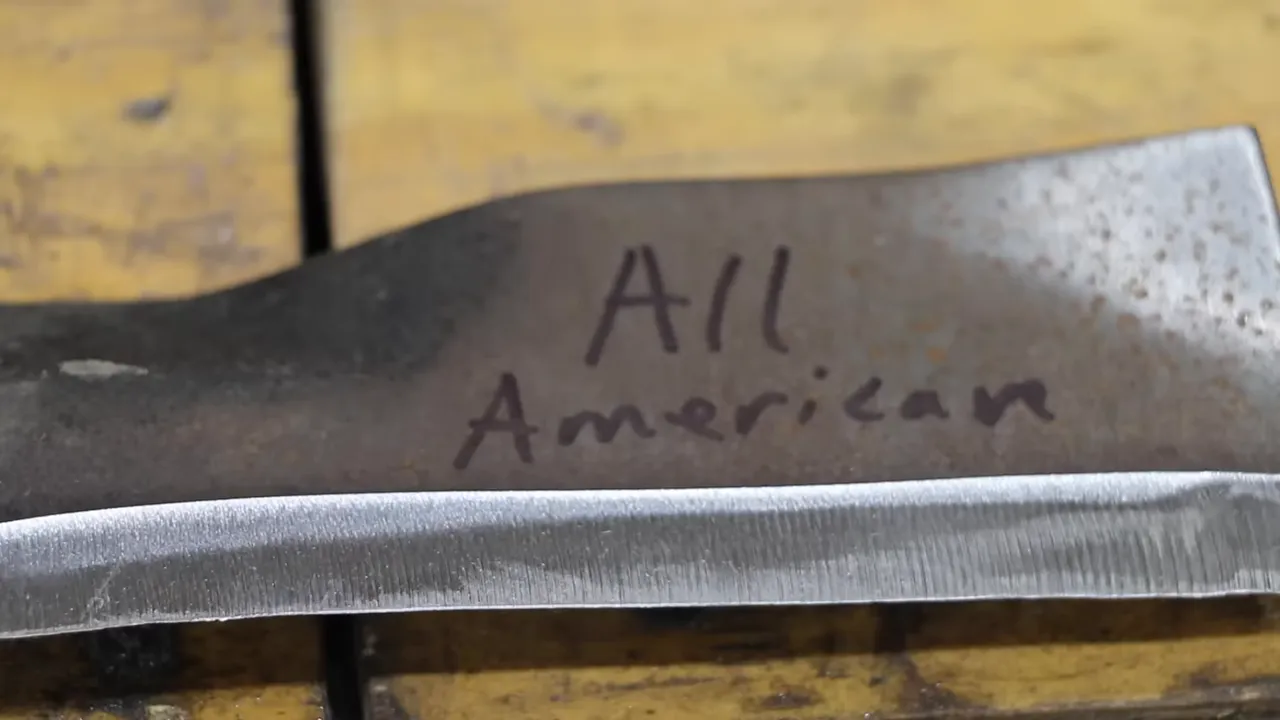
The All American made the biggest improvement. Even taking my time on my first use of the fixture, I needed only four of the available five minutes to produce a very straight edge and remove all the chips.
The blade angle was close to 30 degrees. Its weight dropped from 1,095 to 1,074 grams, a loss of 21 grams in four minutes. Sharpening also left a burr on the back side.
Oregon Was Consistent, but Slower
The Oregon’s motor had plenty of power, and finding the correct angle was much easier than freehand sharpening on the bench grinder. My setting produced about a 29-degree bevel, close to the 30-degree target.
It removed 8 grams in five minutes, taking the blade from 1,096 to 1,088 grams. The result was very good, but a few chips remained. I estimated about two more minutes would finish the repair without overheating the blade.
The Bench Grinder Worked, but Angle Control Was Harder
For the bench grinder, I first removed the protrusions from the grass side, then ground back the leading edge to work out the chips.
It removed 8 grams during the five-minute test and made a substantial improvement. However, I did not maintain the target 30-degree angle nearly as well as I did with the guided systems. The Oregon produced a noticeably more consistent bevel, and the All American was both faster and easier to control.
The clear result was that the All American combined rapid metal removal with good edge consistency. The Oregon followed with a controlled, repeatable grind. The bench grinder could remove material effectively, but the finished geometry depended much more on my freehand technique.
Test 3: Sharpening an Extremely Dull, Worn Blade
The final sharpening test involved blades with heavily rounded, worn edges. Each option had up to 15 minutes to form a usable cutting bevel. This was where the difference between touching up an edge and rebuilding one became especially obvious.
Funvolution: Guide Wear and Defective Replacement Wheels
The first Funvolution wheel worked for about 12 minutes before metal filings wore through the plastic guide. I stopped to replace it, but the replacement stone was not properly attached. The other two replacement wheels had the same problem. Only one of the four wheels in the set worked properly.
The tool did improve the edge and removed 4 grams, reducing the blade from 841 to 837 grams. However, the sharpening angle was around 40 degrees, and several areas still needed substantial work. It did not complete the job.
Smith’s: Too Narrow for Major Reshaping
After 15 minutes of trying to carve away enough steel, I had substantially worn the Smith’s cutting insert. Its narrow working area also carved a localized section into the blade rather than properly reshaping the full bevel.
The resulting angle was about 54 degrees. Blade weight dropped from 871 to 870 grams, just 1 gram removed, and the edge still needed considerable work.
Work Sharp: Reasonable Angle, Insufficient Removal Speed
The Work Sharp kept the angle close to the target, but it was simply undersized for this much reshaping. After 15 minutes, it had removed 3 grams, taking the blade from 829 to 826 grams, and the edge was still very dull.
It seems like a useful tool for other sharpening work, but a badly rounded mower blade demands more metal-removal capacity than it provided here.
All American: Finished in Three Minutes
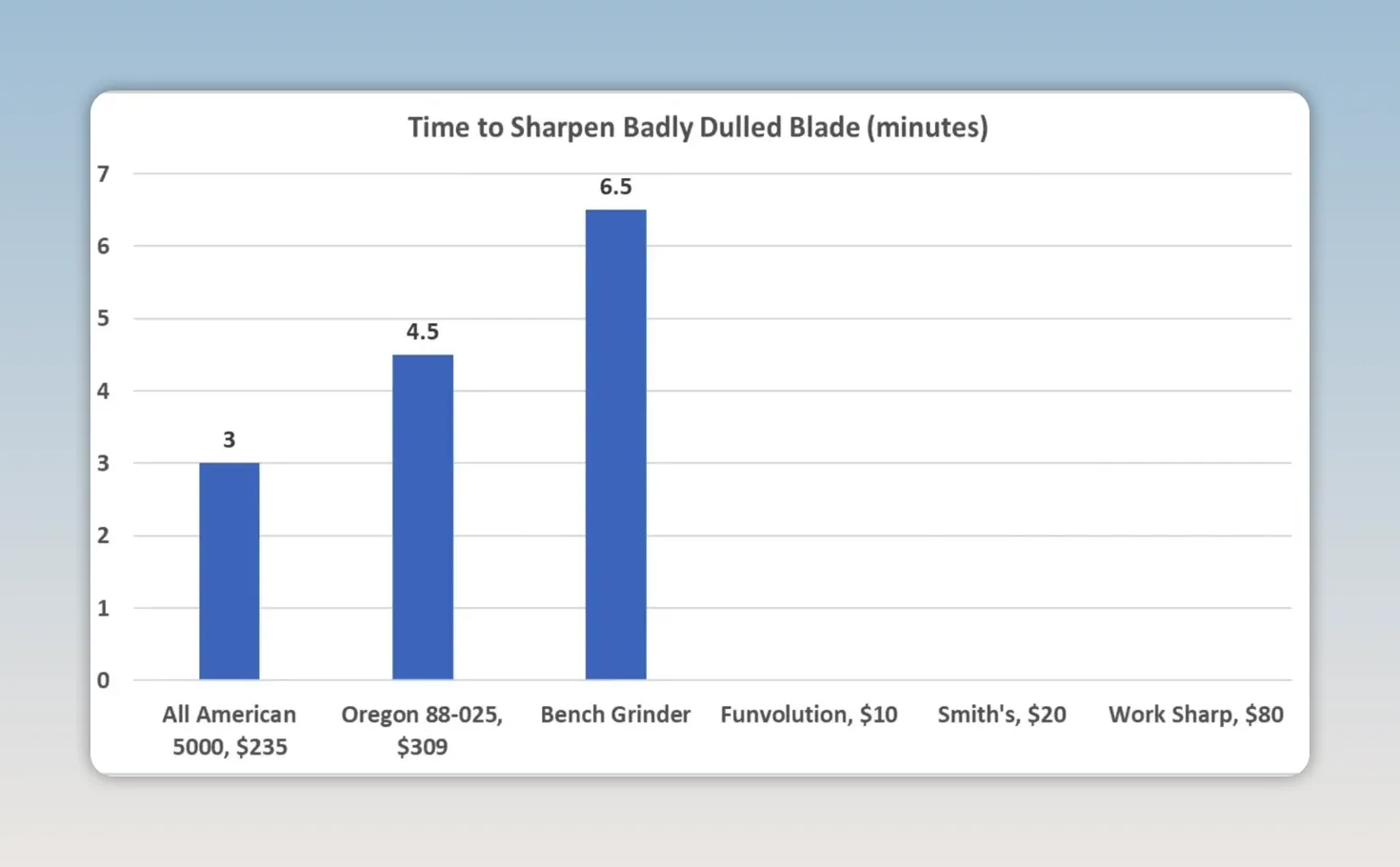
The All American made quick, easy work of the worn edge. It formed a smooth, consistent bevel close to 30 degrees in just three minutes.
The blade went from 837 to 818 grams, a loss of 19 grams. Very impressive performance, especially compared with the smaller tools that had much longer to work.
Oregon: Finished in Four and a Half Minutes
The Oregon was not quite as fast as the All American, but it still sharpened the blade in only four and a half minutes. My angle adjustment was not precisely 30 degrees, although it was close.
It removed 11 grams, reducing the blade from 870 to 859 grams.
Bench Grinder: Six and a Half Minutes, With More Refinement Needed
The bench grinder took six and a half minutes and removed 7 grams, reducing the blade from 826 to 819 grams. It sharpened the edge, but the process was less precise than either dedicated system.
I would have needed another couple of minutes to bring the bevel closer to 30 degrees. So, while it reached a sharpened condition, it did not match the guided systems’ finished angle.
Do Not Skip Blade Balancing
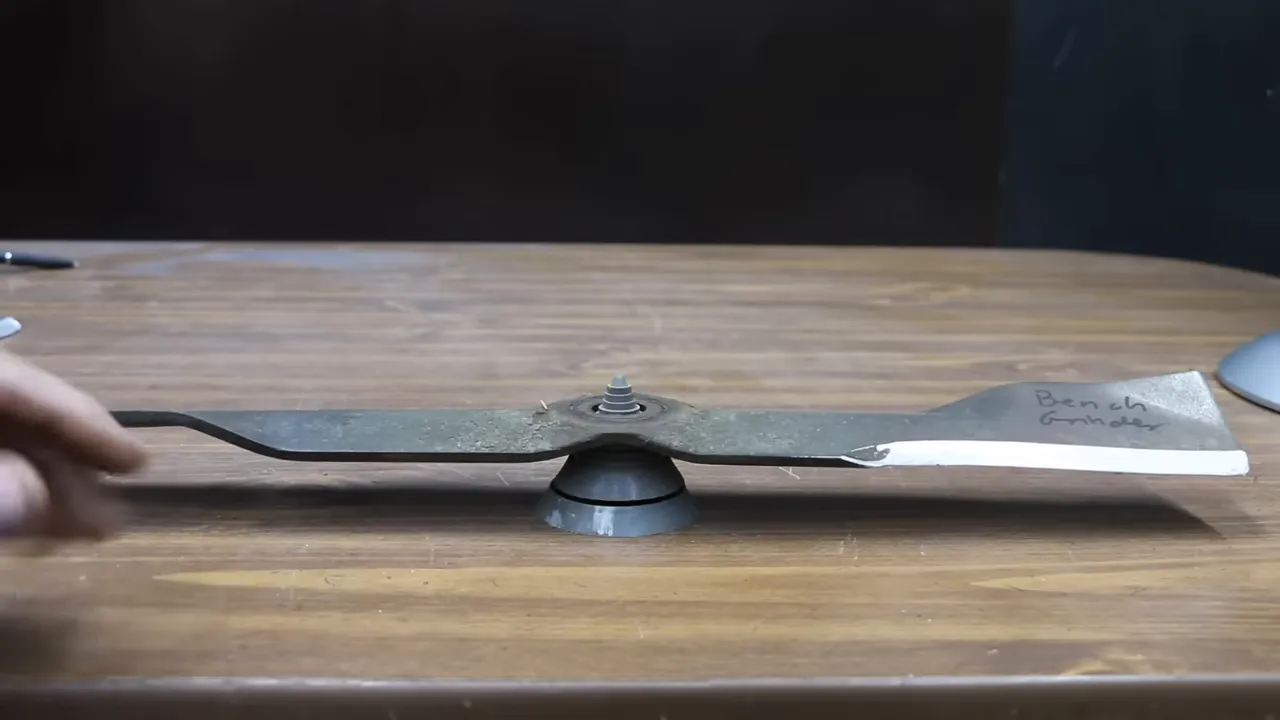
Sharpening is only part of the job. Balancing the mower blade helps reduce vibration. A simple blade balancer costs only a few dollars.
- Center the blade on the balancer.
- Check whether the blade sits level.
- If one end hangs lower, remove metal from that lower, heavier side.
- Check again until the blade balances level.
Which Lawn Mower Blade Sharpener Would I Choose?
I really like the All American Model 5000. It is expensive compared with a drill attachment or manual sharpener, but it was the fastest option in every test. It also made it easy to produce a straight, consistent cutting edge, even on my first use. Its compact design saves shop space, which is another advantage.
The Oregon 88-025 is also a very good sharpener. It has enough power, supports the blade well, and makes angle control much easier than a freehand bench grinder. Its main disadvantages compared with the All American are slower sharpening, a higher purchase price, and a larger footprint.
A bench grinder remains a workable lower-cost alternative, particularly if you already own one. It removed metal effectively, but matching a consistent bevel took more care and additional refinement.
The Work Sharp made useful progress on chipped edges but was too slow for major mower blade restoration. The Smith’s and Funvolution showed more serious limitations involving reach, angle control, metal removal, or durability.
For the blades tested here, the extra money bought much more than speed. The best systems made it easier to restore the blade’s shape instead of simply polishing a worn or damaged edge.


