An impact driver can be an expensive purchase, and the torque rating on the box only tells part of the story. How hard does it actually hit? How quickly does it respond to the trigger? And what happens when the job gets a whole lot tougher than it should?
I tested four impact drivers from Milwaukee, DeWalt, Makita, and Bauer to find out. The comparison included speed measurements, forward and reverse clamp-load tests, oversized lag bolts, lug-nut removal, sustained resistance, and a 10-foot drop onto concrete. Finally, I took the tools apart to compare their impact assemblies and investigate a failure.
Milwaukee came out comfortably ahead overall. However, Makita had some very impressive advantages in weight and trigger response, while DeWalt stayed competitive in several strength tests. Bauer cost much less, but this showdown proved too much for it.
Key Takeaways
- Milwaukee delivered the strongest overall performance across clamp-load, heavy-driving, and removal tests.
- Makita combined the lowest weight with the quickest trigger response and a narrow overall advantage over DeWalt.
- Bauer offered the cheapest complete kit but failed during the extreme lag-bolt test.
- All three brushless drivers remained operational after the 10-foot concrete drop.
The Impact Drivers, Prices, and Test Setup
The tools tested were the Milwaukee 2853-20 M18 Fuel, DeWalt DCF888B, Makita XDT16Z, and Bauer 20V Hypermax Lithium impact driver. Prices below are what I paid for this comparison, not current price quotes.
There is an important difference in the purchase prices: the $69.99 Bauer included a battery and charger. The other three prices were for the tool only.
For testing, Milwaukee, DeWalt, and Makita used 5 Ah batteries. Bauer used a 3 Ah battery, the largest available for that platform at the time of testing, rather than the 1.5 Ah battery supplied with the kit. Batteries were fully charged before each test. That makes this a comparison of these particular tool-and-battery combinations, not an identical-battery experiment.
Bauer: The Lowest Entry Price
The Harbor Freight Bauer was the only brushed-motor tool in the group. Its advertised specifications were 1,300 inch-pounds of maximum torque, 2,900 RPM, and 3,300 impacts per minute.
- Price: $69.99 for the kit.
- Weight without battery: 1,151 grams.
- Weight with the tested 3 Ah battery: 1,789 grams.
- Controls: Variable-speed trigger with one forward and reverse speed range, without a separate mode-selection pad.
- Warranty: 90 days.
- Manufacturing: Made in China.
The included battery identified its cells as made in Korea or Malaysia, with further processing in China. Despite using a smaller-capacity test battery than the other brands, the Bauer was the heaviest complete setup.
Milwaukee M18 Fuel: Compact and Powerful
The Milwaukee cost $115.83 and used a brushless motor rated at 1,800 inch-pounds of torque. It offered three regular drive modes plus a self-tapping screw setting designed to reduce stripping, screw breakage, and damage to sheet-metal work surfaces.
- Weight without battery: 989 grams.
- Weight with 5 Ah battery: 1,721 grams.
- Advertised speeds: Up to 1,900, 2,800, and 3,600 RPM across the three regular modes.
- Advertised impact rates: Up to 1,200, 3,400, and 4,300 impacts per minute.
- Warranty: Five years, the longest in this comparison.
- Manufacturing: Made in Vietnam.
The Milwaukee weighed 68 grams less than the Bauer with their respective test batteries installed, even though the Milwaukee carried a 5 Ah pack.
DeWalt DCF888B: Bluetooth Features and Competitive Torque
At $150.87, the brushless DeWalt was rated for 1,825 inch-pounds of maximum torque, 3,250 RPM, and 3,800 impacts per minute. It was marked as made in the USA with global materials.
- Weight without battery: 953 grams.
- Weight with 5 Ah battery: 1,583 grams.
- Controls: Three numbered modes and a home setting for Tool Connect configuration.
- Warranty: Three years.
Tool Connect adds Bluetooth inventory management, identification and locating features, diagnostics, and customizable settings, including the RPM range. I used the app to disable the tool, confirmed that it would no longer run, and then re-enabled it. The app could also report temperature status and illuminate the tool’s lights to help identify it among similar tools.
Makita XDT16Z: The Lightest of the Group
The $167.03 Makita was the most expensive tool tested. This 18V LXT brushless impact driver was rated for 1,600 inch-pounds of torque and 3,600 RPM.
- Weight without battery: 881 grams.
- Weight with 5 Ah battery: 1,501 grams.
- Controls: Four speed selections plus application-specific modes.
- Warranty: Three years.
- Manufacturing: Made in China.
Its wood-assist mode helps prevent trouble when starting a screw. Reverse auto-stop stops rotation once a nut or bolt begins moving freely, and T mode is intended for self-drilling screws in thin metal.
The Makita was 288 grams lighter than the Bauer with the tested batteries installed. That is a substantial difference before either tool has driven a single fastener.
Speed, Low-Speed Control, and Working in Tight Spaces
Maximum RPM matters, but so does the ability to turn slowly when starting a nut or bolt. All four tools had variable-speed triggers. I measured their minimum and maximum no-load speeds, using high-impact mode on the tools with selectable modes.
- Bauer: Forward ranged from 130 to 2,795 RPM. Reverse ranged from 155 to 2,815 RPM.
- Milwaukee: Forward ranged from 75 to 3,577 RPM. Reverse ranged from 75 to 3,550 RPM.
- DeWalt: Forward ranged from 150 to 3,305 RPM. Reverse ranged from 150 to 3,304 RPM.
- Makita: Forward ranged from 99 to 3,413 RPM. Reverse ranged from 109 to 3,476 RPM.
Milwaukee offered both the lowest minimum speed and the highest maximum speed in these measurements. Its forward maximum was very close to its 3,600 RPM rating. DeWalt slightly exceeded its 3,250 RPM rating, while Bauer and Makita fell short of their advertised maximum speeds.
Those minimum-speed results apply to the settings tested. They are not a complete assessment of every lower-speed or application-specific mode available.
Head Length and Work Lights
A powerful driver is not much help if it will not fit into the space available. The DeWalt measured 135.5 millimeters, or about 5.3 inches, from front to rear. Milwaukee was shorter at approximately 117 millimeters, or 4.6 inches, and Makita was nearly the same length as Milwaukee.
Bauer was about 6.5 inches long. That made it over an inch longer than DeWalt and roughly two inches longer than Milwaukee and Makita.
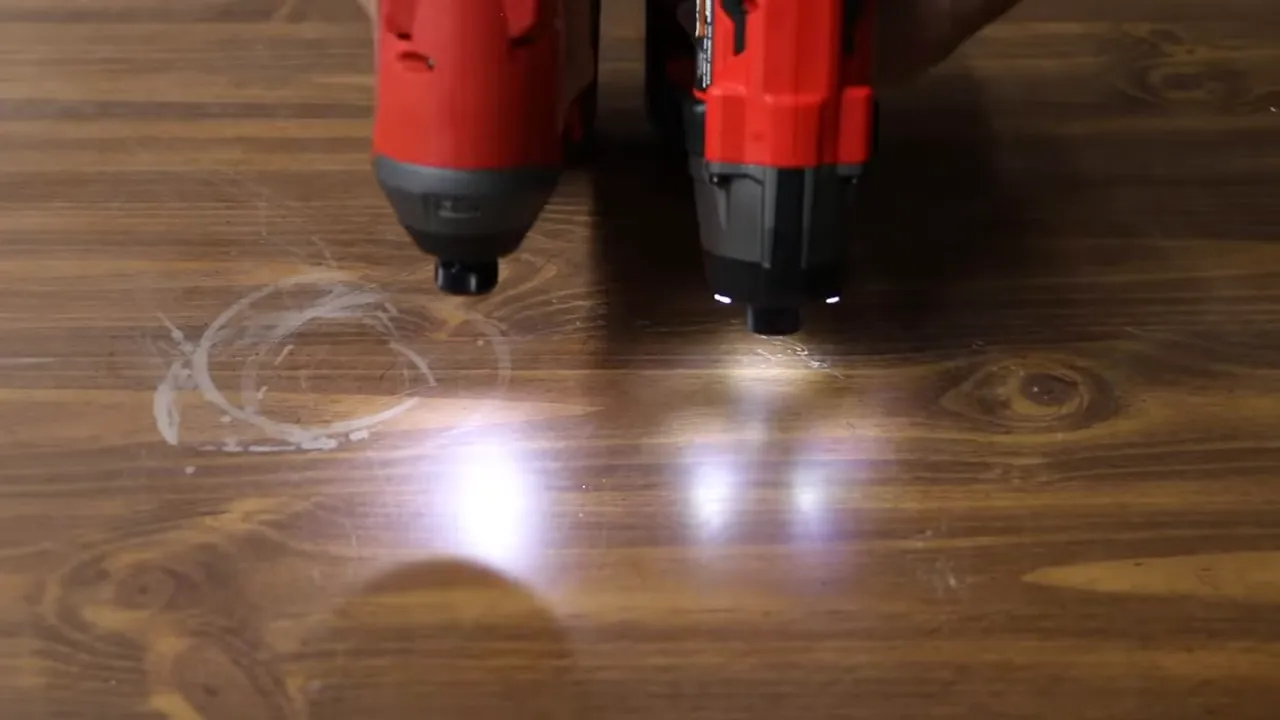
For illumination, DeWalt appeared to produce more light than Makita in a side-by-side comparison. Milwaukee’s single light also appeared brighter than Bauer’s three lights. More LEDs did not automatically mean better illumination.
Forward and Reverse Strength: Measuring Clamp Load
To compare tightening performance, I built a fixture with two 20-ton hydraulic rams between thick steel plates. Tightening the fastener generated clamp load, which registered as hydraulic pressure on the gauge. I used premium synthetic grease throughout the testing and allowed approximately 15 seconds per run.
These PSI readings are comparative results from this fixture, not direct torque measurements in inch-pounds. They let us compare the tools under the same test conditions without treating the gauge as a calibrated torque wrench.
Forward-Rotation Results
- Milwaukee: 1,600 PSI.
- DeWalt: 1,450 PSI.
- Makita: 1,450 PSI.
- Bauer: 900 PSI.
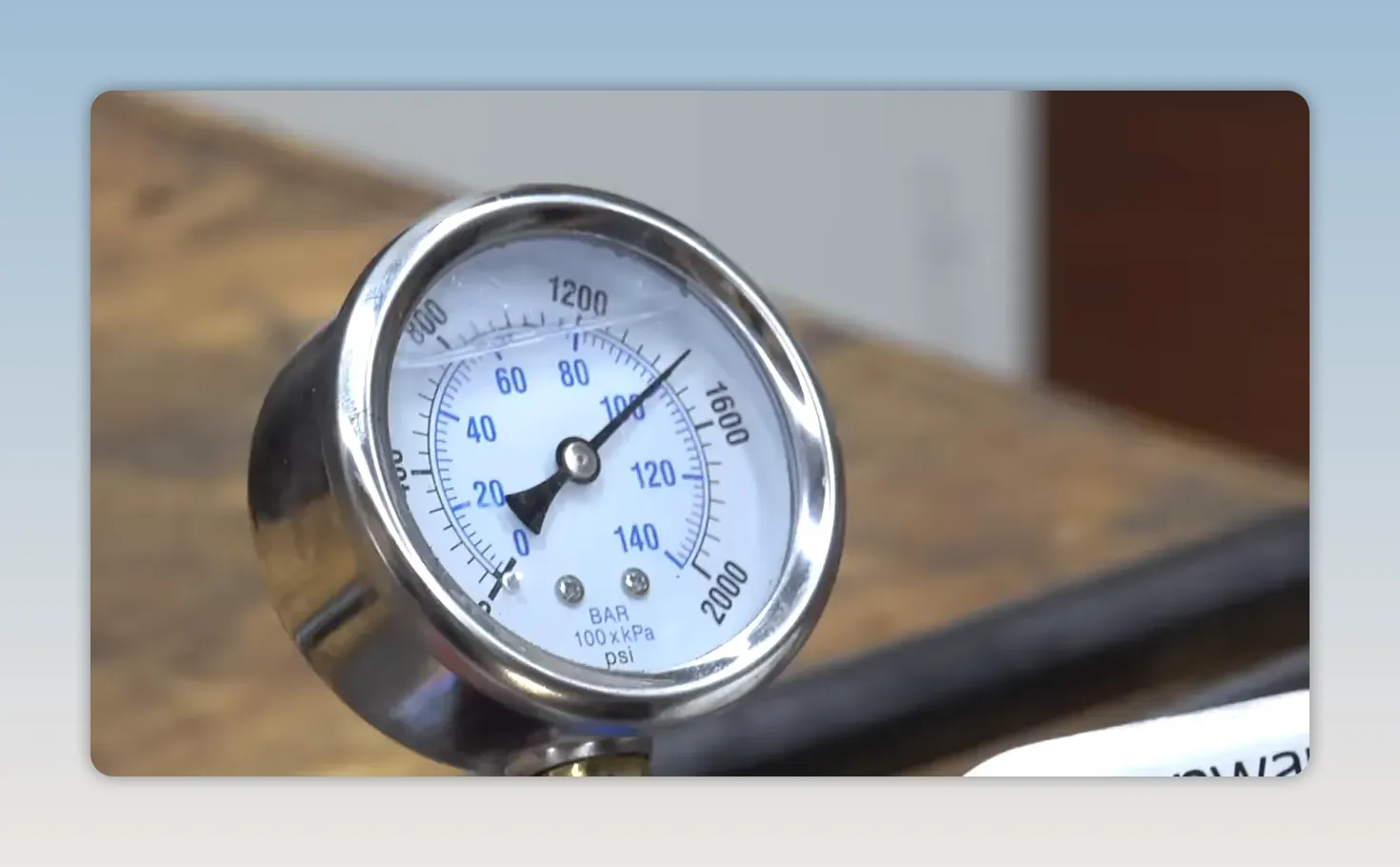
Milwaukee blasted past Bauer’s result and finished with a clear lead. DeWalt’s advertised torque rating was slightly higher than Milwaukee’s, but that did not translate into a win here. Makita tied DeWalt despite its lower advertised torque rating.
Reverse-Rotation Results
I then installed a left-hand-threaded bolt to load the fixture while operating each tool in reverse. This tests strength in the reverse direction rather than measuring the breakaway torque of a previously tightened nut.
- Milwaukee: 1,750 PSI.
- DeWalt: 1,675 PSI.
- Makita: 1,600 PSI.
- Bauer: 1,375 PSI.
Every tool produced a higher reading in reverse. Bauer improved considerably, but Milwaukee still took first place, followed by DeWalt and Makita.
The 7-Inch Lag-Bolt Test: A Very Tough Assignment
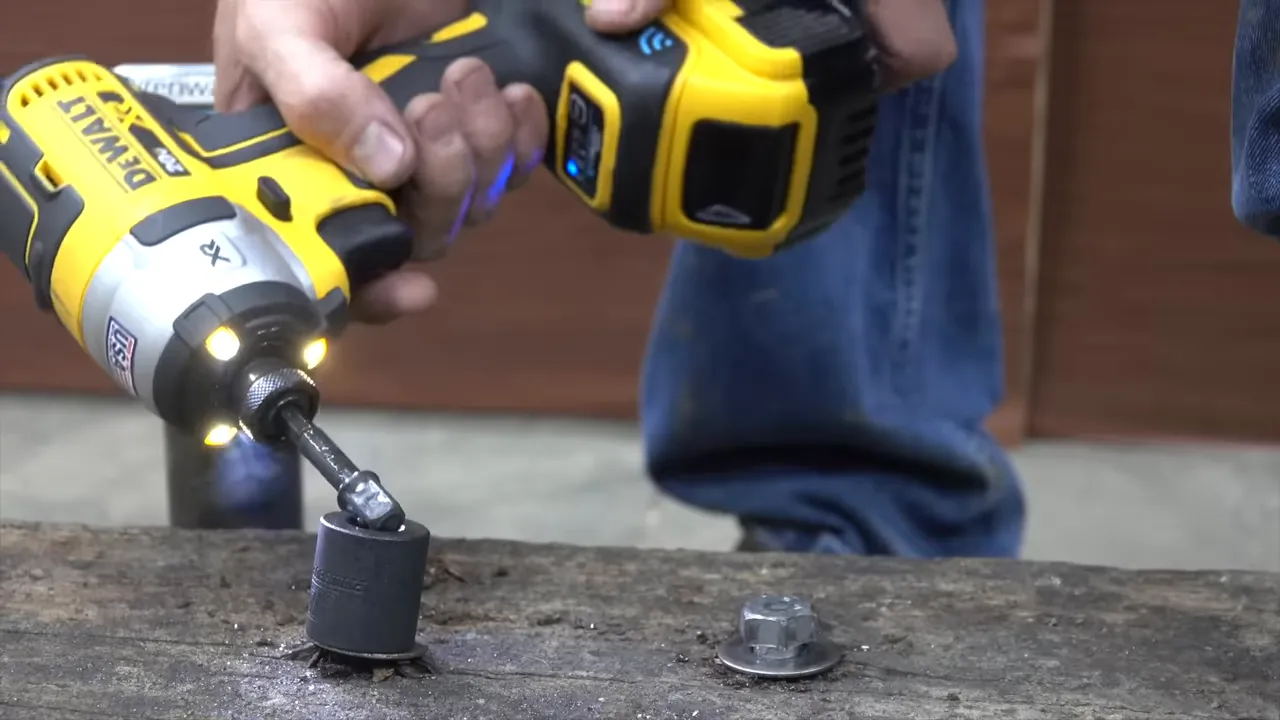
I do not recommend using an impact driver to drive a 7-inch lag bolt into a railroad tie. This was an extreme showdown test, not a recommended application. There was no time limit as long as the tool continued making progress.
Makita vs DeWalt
Makita and DeWalt initially advanced at about the same pace, but Makita gradually pulled ahead. About one minute into the test, DeWalt began smoking and its grip became very hot. By roughly a minute and a half, it was producing more smoke and appeared to be leaking grease around the chuck.
At two minutes, DeWalt’s smoking and leakage had worsened, and Makita had begun smoking too. Makita’s socket contacted the washer at about two and a half minutes. DeWalt reached that point at approximately three and a half minutes.
The DeWalt handle reached approximately 250°F, with grease running down onto the adapter. Interestingly, the Tool Connect app still reported that the tool’s temperature status was okay. That status did not reflect how hot the handle had become.
Milwaukee vs Bauer
Milwaukee made much faster progress than Bauer and was also faster than Makita and DeWalt. However, Milwaukee intermittently shut off, requiring me to release and squeeze the trigger again. I could not confirm why it was doing that.
Even with those interruptions, Milwaukee finished first. Bauer initially made respectable progress, but its hammering slowed considerably. At about a minute and a half, it was smoking badly and no longer advancing.
Bauer reached approximately 300°F and stopped functioning. Only one of its three work lights remained operational. The battery still indicated charge afterward, and the later teardown revealed damage inside the motor.
Direct Strength and Trigger Response Tell Different Stories
DeWalt and Makita were close enough in the earlier tests to warrant a direct comparison. With their outputs coupled together, DeWalt overpowered Makita. Milwaukee then beat DeWalt in the same type of head-to-head contest.
So DeWalt had the advantage in that direct strength matchup, while Makita had driven the oversized lag bolt faster. Different tasks were already producing different answers.
Which Tool Starts Fastest?
Trigger lag is the delay between squeezing the trigger and the tool responding. It may not seem important for a single fastener, but repeated delays can slow down a job involving many fasteners.
Milwaukee responded a little faster than DeWalt. Makita then responded noticeably faster than Milwaukee, producing this order:
- Makita: Quickest trigger response.
- Milwaukee: Second.
- DeWalt: Third.
Bauer was no longer functioning and could not participate in these later performance comparisons.
Lug-Nut Removal: Quick Response vs Harder Hits
For the removal test, I tightened all the lug nuts to 110 foot-pounds. This gave trigger response and impact strength a chance to work together.
Makita beat DeWalt in three consecutive rounds. In slow motion, Makita delivered three blows before DeWalt began impacting, and Makita needed seven blows to loosen the nut in that comparison. Its quick response gave it a useful head start.
Against Milwaukee, Makita again began impacting first, by about two blows. But Milwaukee hit harder and needed fewer impacts to get the lug nuts moving. Milwaukee won all three rounds, including after I switched the tools’ left and right positions.
Makita was quickest off the line, but Milwaukee’s harder hits won the removal contest. Trigger response matters, but it cannot tell the whole story by itself.
Sustained Resistance: Turning an Engine Against Its Brake
A nut with galled or cross-threaded threads may resist rotation long after it first breaks loose. To compare performance against continued resistance, I used a lawnmower engine with its brake applied and spark plug installed. The brake and engine compression opposed rotation.
Each tool had 30 seconds to turn the engine. A green rope marker made it possible to count revolutions.
- DeWalt: Just over three revolutions.
- Makita: Four and three-quarter revolutions.
- Milwaukee: Seven revolutions.
Milwaukee was very impressive here. It began powering down about 16 seconds into the test, but had already completed five revolutions. It added two more before time expired and still finished well ahead.
This was a sustained-resistance comparison intended to illustrate a difficult removal task. It was not an actual test on damaged threads.
10-Foot Concrete Drop Test
For the final durability test, each driver fell 10 feet onto concrete with a socket adapter and socket attached to the chuck. A pipe-guided arrangement helped keep the impact angle consistent.
- Bauer: The battery detached on impact, but there was no visible structural damage. Its motor had already failed, so continued operation could not be evaluated.
- DeWalt: The handle flexed slightly, but there was no visible structural damage and the tool still worked.
- Milwaukee: Handle flex appeared similar to DeWalt’s. There was no visible damage, and it continued working normally.
- Makita: The handle flexed more noticeably than Milwaukee’s or DeWalt’s, but did not break. The driver still worked.
All three brushless tools remained operational after the drop. Makita’s greater visible handle flex did not result in a broken handle in this test.
Inside the Tools: Impact Assemblies and Bauer’s Failure
After testing, I disassembled the tools and weighed their impact assemblies:
- Bauer: 261 grams.
- Milwaukee: 255 grams.
- DeWalt: 228 grams.
- Makita: 226 grams.
Milwaukee had the heaviest impact assembly among the three brushless tools. Bauer’s assembly was heavier still, which also shows why assembly weight alone is not enough to predict overall performance or durability.
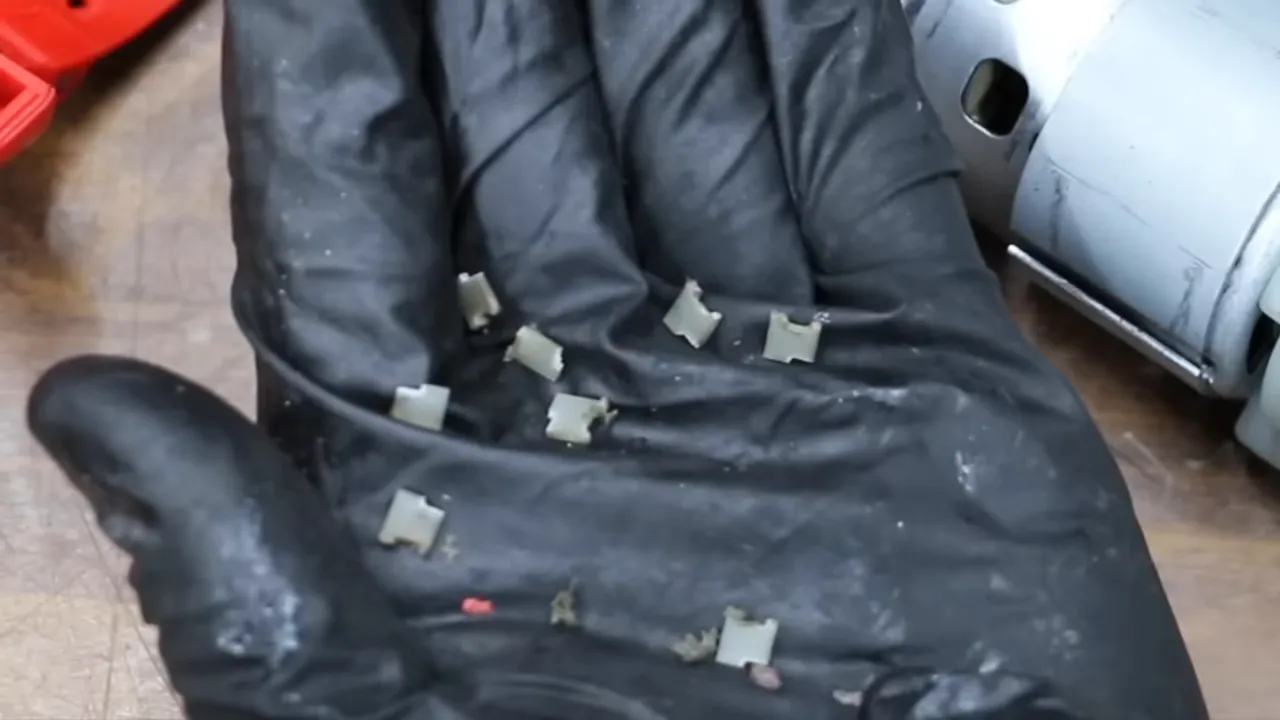
Inside Bauer, the bracket holding the motor brushes appeared to have failed. The brushes shifted and destroyed the fan blades on the armature assembly. That explained why it stopped working during the lag-bolt test. It had effectively become “brushless,” but certainly not in the useful sense.
DeWalt’s teardown was less dramatic than its smoking and grease leakage might have suggested. There was still plenty of grease inside, and it did not appear badly cooked.
Which Impact Driver Won?
In my opinion, Milwaukee ran away with this comparison. It led both clamp-load tests, drove the oversized lag bolt fastest, won the direct strength matchup against DeWalt, removed the 110 foot-pound lug nuts fastest, and completed the most engine revolutions against sustained resistance. It also remained operational after the concrete drop.
Milwaukee was not perfect. It intermittently shut off during the lag-bolt test and powered down during the engine test. Those interruptions deserve mention, even though they did not prevent it from winning.
Makita takes second place overall, with DeWalt close behind. Makita combined the lowest weight, a compact head, the fastest trigger response, and better results than DeWalt in the lag-bolt, lug-nut, and sustained-resistance tests. DeWalt countered with stronger reverse clamp-load performance and a win over Makita in the directly coupled strength test.
Bauer’s $69.99 kit price was dramatically lower, especially with a battery and charger included. It also produced a respectable reverse clamp-load result for the price. But it was the longest and heaviest setup tested, and it did not survive the extreme lag-bolt assignment.
The biggest lesson is simple: do not choose an impact driver by its advertised torque rating alone. These tests separated quick response from hard hits, compact size from low cost, and short-burst strength from performance under prolonged load. For the particular tools and battery combinations tested here, Milwaukee delivered the strongest overall result.


