A fuel stabilizer can help protect an engine during storage. But can it keep gasoline fresh for years? And is preventing stale fuel the same thing as preventing corrosion? After roughly five years of testing, those turned out to be very different questions.
I compared Sta-Bil, Star Tron, K100, SeaFoam, Yamalube, Marvel Mystery Oil, a 40:1 gasoline and two-stroke oil premix, and untreated E10 gasoline. The testing included three years of exposure for metal and rubber parts, followed by a separate batch of fuel stored for another 20 months and tested in a fuel-injected generator.
Sta-Bil would be my overall choice, especially for corrosion protection. However, none of these treatments kept the stored fuel entirely fresh. Star Tron also delivered a very good result in the generator, despite struggling in the corrosion test.
There’s also a long-term headlight restoration update: seven kits, one year of sunlight and weather, and a clear difference in how well their repairs lasted.
Quick Summary
- Sta-Bil delivered the best corrosion protection in the three-year water-contaminated E10 test.
- None of the treatments kept the second batch of gasoline entirely fresh after 20 months.
- Sta-Bil and Star Tron tied for the best generator performance with aged fuel.
- Sylvania narrowly beat Cerakote for headlight restoration durability after one year outdoors.
Table of Contents
- How I Tested Long-Term Fuel Storage
- The Fuel Treatments: Prices, Claims, and Ingredients
- Three Years Later: Which Treatment Prevented Corrosion?
- Did the Additives Keep Rubber Fuel Hose Softer?
- A New Batch: Was the Gasoline Still Fresh After 20 Months?
- Could a Generator Run on the 20-Month-Old Fuel?
- Headlight Restoration Kits After One Year Outdoors
- My Final Choice for Stored Fuel
How I Tested Long-Term Fuel Storage
I purchased the fuel treatments and testing products myself. The comparison involved two separate storage experiments, not one batch of gasoline sitting for five years.
- Three-year test: E10 gasoline, containing 10% ethanol, was treated with the different additives. I added a small amount of water and pieces of pot metal to evaluate corrosion. Rubber fuel hose samples were stored in separate containers.
- 20-month test: A new batch of treated and untreated gasoline was stored in a temperature- and humidity-controlled environment, then evaluated for ignition behavior and generator performance.
The water in the first experiment was intentional. Some products claim to address water-related fuel problems, and moisture can be particularly hard on carburetor materials.
Pot metal is an inexpensive, easily cast zinc-based alloy that can contain other metals, including aluminum, copper, tin, lead, or magnesium. It is used in many carburetors. Unfortunately, moisture and long-term exposure to ethanol-blended gasoline can leave it badly corroded.
These results describe the samples and conditions tested. The corrosion, ignition, and engine-performance ratings are subjective comparisons, not standardized laboratory certifications. The substantial evaporation in the three-year samples is also important when interpreting the results.
The Fuel Treatments: Prices, Claims, and Ingredients
Before examining the stored samples, I compared the products’ claims and safety data sheets. Prices below are the bottle prices quoted during testing, not current shopping prices.
- Sta-Bil Storage, $6 for 8 ounces: Claims compatibility with ethanol-blended fuels. The safety data sheet reviewed listed approximately 95% hydrotreated light petroleum distillates and 5% isopropylated phenol.
- Star Tron, $7 for 8 ounces: The bottle claims to treat up to 48 gallons, stabilize gasoline, improve performance, and clean the fuel system. Its listed composition was almost entirely hydrotreated light petroleum distillates.
- K100, $12 for 8 ounces: Claims to treat up to 16 gallons and stabilize fuel for up to two years. Its listed ingredients included ethylene glycol and alcohol-based components.
- SeaFoam, $10 for 16 ounces: Lists fuel stabilization among its uses. Its safety data sheet included petroleum distillates, a hydrocarbon solvent, and alcohol.
- Marvel Mystery Oil, $14 for 32 ounces: This product did not claim fuel-stabilizing capability, but I included it as an additional comparison. The listed ingredients included hydrotreated light petroleum distillates, a phosphorus-containing compound, and dichlorobenzenes.
- Yamalube Fuel Stabilizer & Conditioner Plus, $20 for 32 ounces: Its listed composition was approximately 99.9% petroleum distillates.
- 40:1 premix: Gasoline mixed with two-stroke oil, included to see whether the oil offered useful storage protection.
Sta-Bil, Star Tron, K100, and SeaFoam were identified as made in the USA.
I also compared how readily the additives themselves ignited. K100 and SeaFoam were noticeably easier to ignite than the predominantly petroleum-distillate products. But an additive’s ability to burn by itself did not predict how well it protected stored gasoline. The long-term results were much more useful than that initial check.
Three Years Later: Which Treatment Prevented Corrosion?
Untreated E10: A Bad Starting Point
The water-contaminated, untreated E10 sample caused tremendous corrosion. The metal was covered with deposits, and the container held plenty of nasty residue. It looked very much like the damage I have found inside carburetors that sat with old ethanol-blended fuel.
Fresh gasoline ignited readily in the comparison check. The remaining three-year-old untreated liquid did not behave anything like fresh fuel.
Sta-Bil: Outstanding Metal Protection
The Sta-Bil sample was a completely different story. Some liquid remained, and the pot metal showed no visible corrosion. There was no obvious corrosion residue inside the container either. Very impressive!
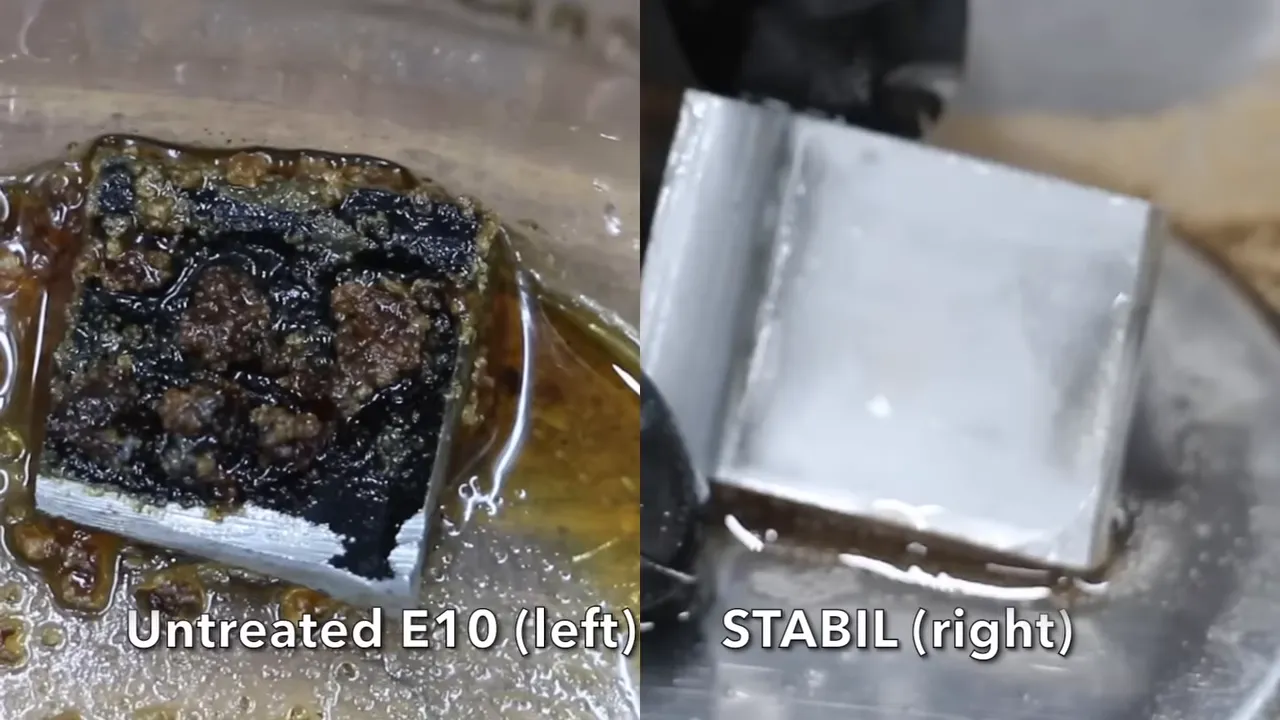
Sta-Bil appeared to help reduce evaporation compared with the untreated sample. However, the remaining liquid still failed the ignition check. Protecting the metal did not mean the gasoline remained usable.
K100: Second Best for Corrosion
K100 also did a pretty good job. There were some deposits and a small amount of apparent corrosion, but the metal looked far better than the untreated sample or the Star Tron sample.
The remaining liquid would not ignite in the check. Once again, corrosion protection and fuel freshness were separate outcomes.
The Remaining Treatments
- Star Tron: Considerable corrosion, visible deposits, and apparent pitting. The remaining liquid did not ignite.
- SeaFoam: Heavy corrosion and substantial deposits on the metal. The remaining fuel mixture did not ignite readily.
- Marvel Mystery Oil: Plenty of corrosion, although the metal looked better than the SeaFoam sample. Remember, this product did not claim to be a fuel stabilizer.
- Yamalube: The liquid became very dark, almost like used motor oil. The metal experienced corrosion, though less than the untreated sample.
- 40:1 premix: The two-stroke oil did not prevent corrosion, and the metal showed considerable damage.
On my subjective scale, with 1 indicating excellent corrosion resistance and 5 indicating poor resistance, the results were:
- Sta-Bil: 1
- K100: 2
- Star Tron: 4
- Marvel Mystery Oil and Yamalube: 4.5
- SeaFoam, untreated E10, and premix: 5
Sta-Bil was by far the strongest corrosion inhibitor in this particular water-contaminated E10 test.
Did the Additives Keep Rubber Fuel Hose Softer?
Ethanol is a polar solvent and can extract plasticizers, oils, and other compounds from rubber. To compare the samples, I removed the fuel hose from each container, dried its surface, and measured hardness with a durometer.
The hardness readings after three years were:
- Sta-Bil: 48.5
- K100: 51
- Yamalube: 52
- SeaFoam: 52.5
- Marvel Mystery Oil: 52.5
- Untreated E10: 52.5
- 40:1 premix: 52.5
- Star Tron: 55.5
Sta-Bil produced the softest hose sample, while Star Tron produced the hardest. Overall, though, none of the additives made a large difference in this measurement.
This was a hardness comparison. It should not be treated as a complete evaluation of hose condition or service life.
A New Batch: Was the Gasoline Still Fresh After 20 Months?
After three years, most of the original gasoline had evaporated, and none of the remaining fuel samples performed well. So I started another batch and stored it for 20 months in a climate-controlled environment.
I used a new pipette for each sample during the ignition checks to avoid carrying one treatment into another.
The untreated E10 was very stale. Star Tron, K100, SeaFoam, Yamalube, Marvel Mystery Oil, and the premix also failed to ignite readily. Sta-Bil showed a little more willingness to ignite, but it was still a long way from fresh gasoline.
On a subjective scale of 1 for excellent ignition behavior to 5 for poor, Sta-Bil earned a 4.5. Every other sample received a 5.
None of the treatments kept this batch of gasoline fresh for 20 months under the tested storage conditions. However, the next test showed why a small open-sample ignition check does not tell the whole story.
Could a Generator Run on the 20-Month-Old Fuel?
A fuel-injected generator provided a more practical test. I removed its original fuel tank and installed a separate fuel cell so I could feed it each sample.
To give each fuel a fair opportunity, I used a fully charged oversized starting battery and a new spark plug for each comparison. Between samples, I ran fresh gasoline through the engine for about 10 minutes, then allowed approximately an hour for cooling.
Once the engine was running, I connected four halogen lights drawing approximately 2,000 watts total. I then inspected the spark plug after the sample ran out.
Safety note: These were experimental tests, not a recommended method for using stale gasoline or repeatedly applying starting fluid. Follow the equipment manufacturer’s instructions. Portable generators must be operated outdoors, away from openings, because of carbon monoxide hazards; the CPSC’s generator safety guidance provides additional information.
Untreated E10: It Ran, but Needed Help
After about 19 seconds of cranking, the generator still would not run on the untreated gasoline. The spark plug became wet, and starting fluid was needed to get combustion going.
After two applications of starting fluid and enough warming, the engine finally ran on the old fuel without additional assistance. It powered the lights, but it did not run especially smoothly.
The new spark plug accumulated quite a bit of carbon during the short run. This fuel clearly did not burn cleanly.
SeaFoam: The Most Difficult Sample to Keep Running
The SeaFoam-treated gasoline was a real struggle. The engine produced more smoke than with untreated E10 and repeatedly tried to quit.
It took 21 applications of starting fluid before the engine became warm enough to sustain operation on the sample. It eventually powered the four lights for a few seconds before running out of fuel.
The plug had substantial carbon deposits. In fairness to SeaFoam, I could not determine how much came from poor combustion and how much might have resulted from cleaning existing deposits inside the engine.
Star Tron: A Dramatic Improvement
Star Tron fired up in about 2.5 seconds without starting fluid. The generator was ready to power the lights almost immediately, and it ran noticeably smoother than with the previous samples.
The spark plug also looked quite clean afterward. Considering its poor performance in the earlier ignition check, this was a very good result.
K100: Needed Starting Assistance, Then Kept Going
K100 needed an initial application of starting fluid. Once running, however, the engine continued without additional help.
It sounded a little rough, but the spark plug looked very good afterward, about as clean as the Star Tron plug.
Sta-Bil: Quick Starting and a Very Clean Plug
The Sta-Bil-treated sample started the engine in approximately 2.5 seconds without starting fluid, matching Star Tron. The engine ran smoothly, and the spark plug looked almost new after the run.
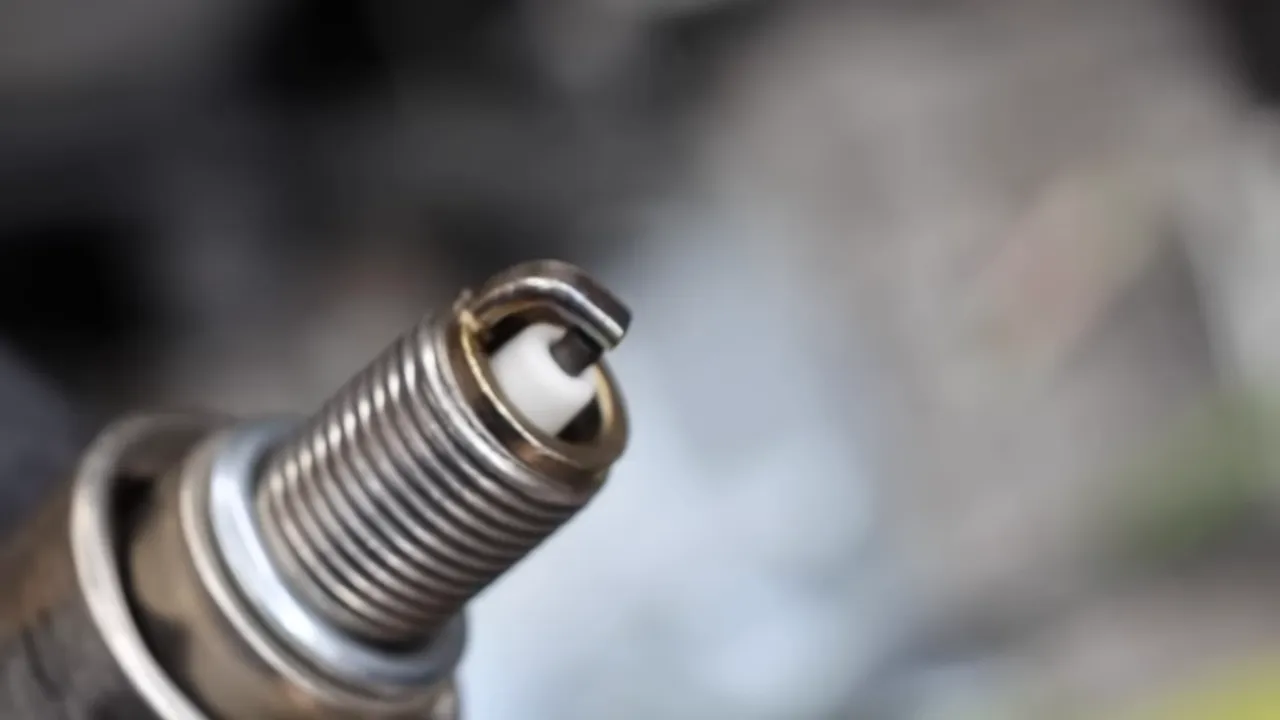
There is a product-identification detail worth keeping clear: the initial bottle introduction showed Sta-Bil Storage, while I referred to the generator sample as Sta-Bil 360 during testing. These results should not be read as proof that every Sta-Bil formulation is interchangeable.
Yamalube, Marvel Mystery Oil, and Premix
- Yamalube: Needed starting fluid initially, then continued running without more assistance. The plug looked reasonably good, though not as clean as Sta-Bil’s.
- Marvel Mystery Oil: Needed starting fluid and produced a large puff of smoke. It kept running afterward, but the plug accumulated considerable carbon.
- 40:1 premix: Needed starting fluid, produced substantial two-stroke smoke, and ran roughly enough to nearly stall. It recovered and powered the lights, but the plug had heavy carbon buildup.
I saved the premix for last because I expected it to leave more oil-related deposits inside the combustion chamber.
Generator Performance Rankings
Using a subjective scale of 1 for excellent performance and 5 for poor performance:
- Sta-Bil and Star Tron: 3, tied for best
- K100: 3.5
- Yamalube: 4
- Marvel Mystery Oil and untreated E10: 4.5
- SeaFoam and premix: 5
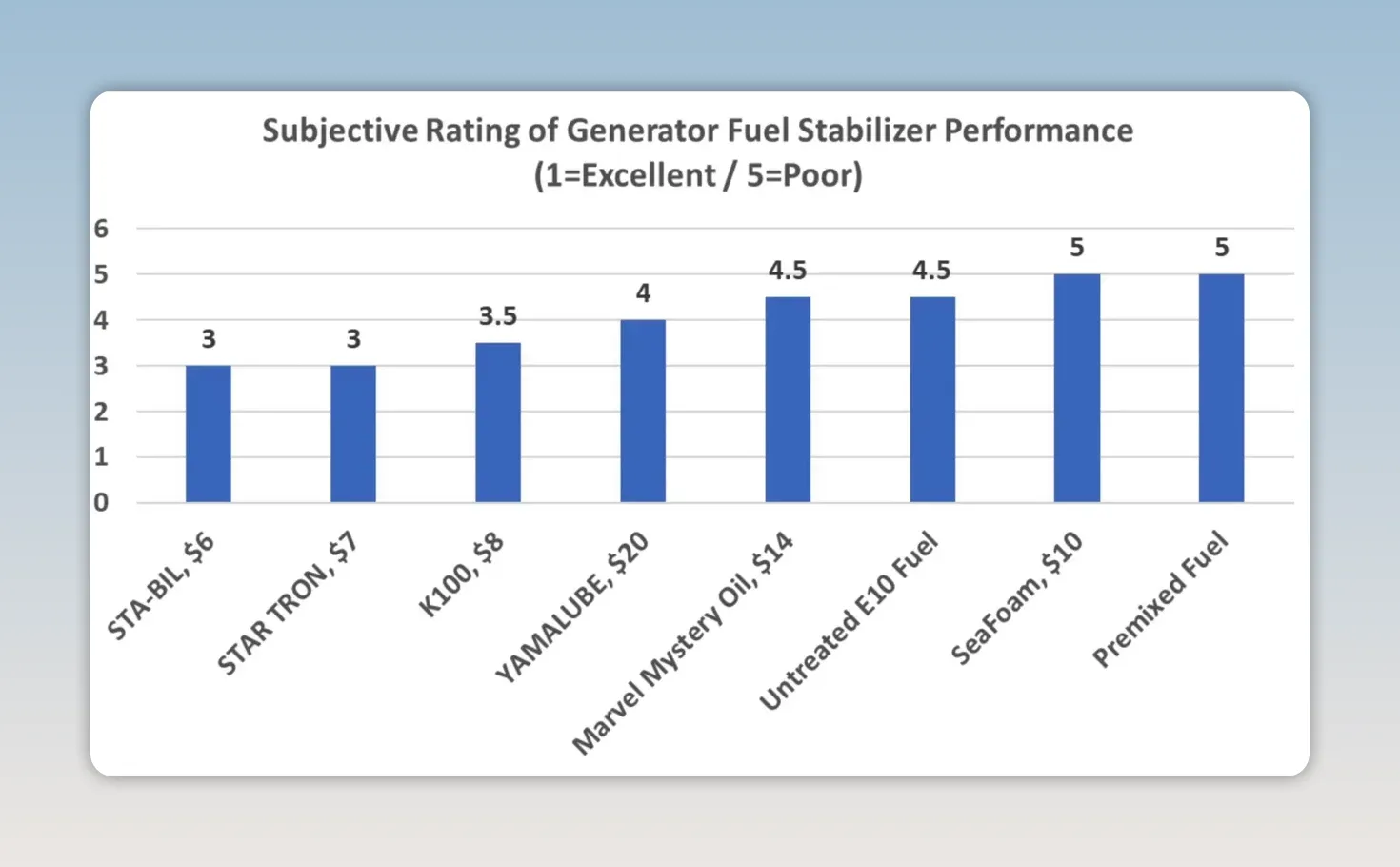
The practical distinction is important: fuel can be stale and still run an engine, especially once the engine is warm. Running successfully does not mean it retained fresh-fuel characteristics.
Headlight Restoration Kits After One Year Outdoors
A freshly restored headlight can look great on the workbench. The tougher question is how it looks after a full year of sunlight and weather.
I revisited seven kits used on badly oxidized headlights. Each headlight had a restored section and an untreated section for comparison. The follow-up rankings were based on appearance, so these are subjective results rather than measurements of light output.
Rust-Oleum: The Repair Needed More Staying Power
The Rust-Oleum kit included a polishing pad, protective wipe, gloves, and a microfiber towel. After wetting the lens, I worked both sides of the pad against the oxidation, then applied the protective coating.
The pad was used up before all the oxidation was removed. The process took about 11 minutes, and the kit finished fifth in the original comparison. Its coating did not look as smooth or transparent as some competitors.
After a year, the lens had oxidized considerably and was ready for another restoration. Rust-Oleum remained in fifth place.
Armor All: Easy Wipes, Limited Correction
Armor All supplied four oxidation-removal wipes and two UV-protection wipes. I cleaned and dried the lens, used two removal wipes for close to five minutes, applied the protective coating, and allowed 24 hours for curing.
The wipes struggled to remove the damaged material, although the topcoat reduced its visible appearance. It originally finished sixth.
After a year, the protective layer appeared worn, and the headlight needed restoring again. The treated section still looked better than the untreated section, which put Armor All fourth in the long-term ranking.
3M: Excellent Sanding, but No Protective Coating in This Kit
The 3M kit required a drill and included a disc holder, several abrasive grits, and rubbing compound. After cleaning the headlight, I progressively sanded away the oxidation and refined the scratches before applying compound.
It took about 10 minutes and did a fantastic job removing the damaged surface. It tied Rain-X for third place initially.
Unfortunately, the particular 3M kit tested did not include a protective coating. After a year, the lens had oxidized badly again. It still finished third in the follow-up, slightly ahead of Armor All, but it needed another restoration.
Cerakote: Good Initial Clarity and Good Long-Term Protection
Cerakote included oxidation-removal wipes, a surface-preparation tool, sanding materials, ceramic clear-coat wipes, and gloves.
After washing the lens, I used four oxidation-removal wipes on the test section, scrubbed with water and the preparation tool, completed the sanding, dried the surface, and applied the ceramic coating.
The process took approximately 15 minutes. Cerakote originally finished second because it produced a much clearer finish than most of the competition.
One year later, it still looked pretty good. It could benefit from another restoration, but the required correction would be much easier this time. Cerakote retained second place.
Rain-X: Quick Improvement That Did Not Last
Rain-X included drill-driven sanding and polishing attachments, buffing polish, and protective wipes. I sanded until the yellowed coating was removed, polished the lens, removed the residue, and applied the protective treatment.
At about nine minutes, it was a quick process. Rain-X tied 3M for third initially, and its coating helped the finished appearance.
After a year, however, it was difficult to distinguish the restored section from the untreated section. The protection did not last well enough, and Rain-X dropped to sixth.
Meguiar’s: Not Enough Correction for These Lenses
The Meguiar’s kit supplied cleaning pads, cleaning solution, and a headlight coating. I worked the lens to a uniform frosted appearance, dried it, applied the coating, waited three minutes, and applied a second coat.
The included cleaning system did not remove all the existing oxidation from this heavily damaged headlight. It finished seventh initially.
A year later, both sections looked poor, and identifying the restored section was difficult. Meguiar’s remained seventh.
Sylvania: More Work, Best Long-Term Result
Sylvania included surface activator, sandpaper, clarifying compound, towels, and a UV-blocking clear coat.
The restoration involved several distinct steps:
- Apply the surface activator, wait 30 seconds, and rinse.
- Wet-sand the lens until the surface has a uniform white, hazy appearance.
- Thoroughly work in the clarifying compound.
- Reapply the activator and rinse thoroughly.
- Apply the UV-blocking clear coat with the supplied towel.
At approximately 21 minutes, Sylvania took longer than most competitors. But it finished first initially, and after a year, its restored section still looked noticeably better than the untreated section.
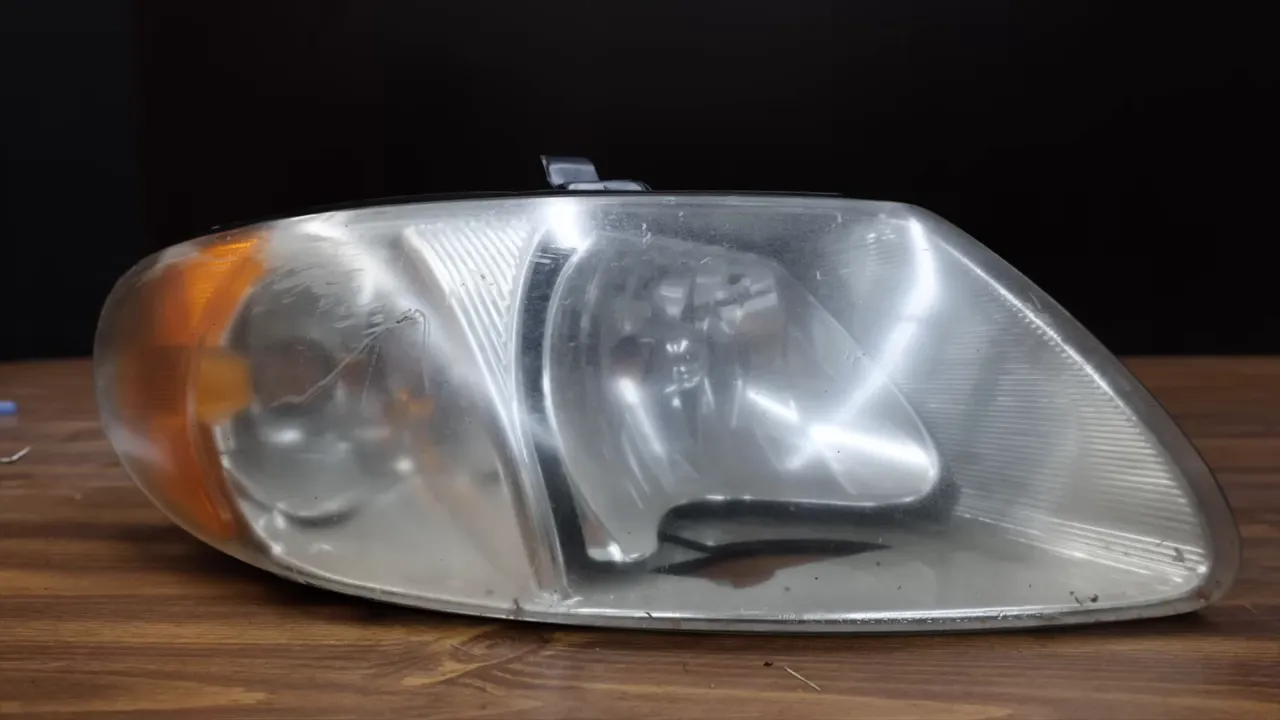
Final Headlight Restoration Rankings
- Sylvania: Best overall after one year, with a small advantage over Cerakote.
- Cerakote: Good retained clarity and effective protection compared with most competitors.
- 3M: Strong oxidation removal, but the tested kit lacked a protective coating.
- Armor All: Some visible benefit remained, but another restoration was needed.
- Rust-Oleum: Marginally better retained appearance than Rain-X.
- Rain-X: Little visible difference between restored and untreated sections.
- Meguiar’s: Both sections were in poor condition.
For badly oxidized polycarbonate, my takeaway is straightforward: the kit needs enough abrasive action to remove the damaged material, followed by protection that actually lasts. A topcoat can improve appearance without fully correcting the surface underneath it.
Sylvania and Cerakote were the strongest long-term performers in this comparison. These are affiliate links, and I earn from qualifying purchases.
My Final Choice for Stored Fuel
Five years is a long time for a product comparison. In my opinion, none of the fuel stabilizers performed especially well at keeping gasoline fresh over these extended storage periods.
However, if I had to choose one brand from this comparison, I would choose Sta-Bil. It had the lowest quoted bottle price, delivered outstanding corrosion protection, produced the softest rubber sample, and tied Star Tron for the best generator performance.
Star Tron deserves credit for its quick starting and smooth generator operation. K100 also performed well enough to stand out for corrosion protection and relatively clean combustion. But neither matched Sta-Bil’s overall combination of results here.
Do I still use fuel stabilizer when storing gasoline? Absolutely. I believe it helps. I just do not expect it to keep gasoline entirely fresh indefinitely. The most convincing benefit in this testing was the metal that came out clean instead of covered in corrosion.


