Growing up, one of my favorite TV shows was MacGyver. It seemed like just about any problem could be solved with duct tape, sometimes with a little bubble gum or baling wire thrown in. But duct tape was always the tool of choice.
That raises a practical question: does the brand of duct tape really make much difference?
Previous tests of threadlockers and epoxies have shown that lesser-known brands can outperform the familiar names. I wanted to give these all-purpose tapes the same opportunity, using three tests: adhesion, lengthwise strength, and resistance to tearing across the width.
The differences turned out to be substantial. T-Rex led the adhesion test, Gorilla delivered the highest lengthwise strength, and 3M took first place in the lateral tear test. No single tape won everything.
Key Takeaways
- T-Rex led the laminate adhesion test, holding more than twice the next-highest load.
- Gorilla recorded the highest lengthwise strength and placed in the top three throughout testing.
- 3M resisted the greatest lateral tearing force despite lower rankings in the other tests.
- Adhesion, elasticity, and breaking strength are different properties that deserve separate comparisons.
The Six Duct Tape Brands Tested
The lineup included:
- 3M
- Duck
- Fasten
- Gorilla
- Scotch
- T-Rex
These results apply to the particular rolls tested, including the camouflage-pattern Duck and Scotch tapes. They should not be treated as a rating of every tape each company makes.
Rather than judging the rolls by appearance or how strong they felt coming off the roll, I built fixtures to compare three different properties. A tape can have a strong backing but a relatively weak adhesive bond. It can also stretch quite a bit before breaking without necessarily carrying the greatest load. Those differences are worth separating.
Test 1: How Well Does Each Tape Stick?
Giving Every Tape the Same Start
For the adhesion test, I used the artificial laminate surface of an old table. It offered a consistent surface that adhesive products could stick to. The shop temperature stayed between 70 and 75 degrees Fahrenheit, since temperature can make a significant difference in how well tape adheres.
Simply pressing each strip down by hand would introduce another variable. One strip might get considerably more pressure than another.
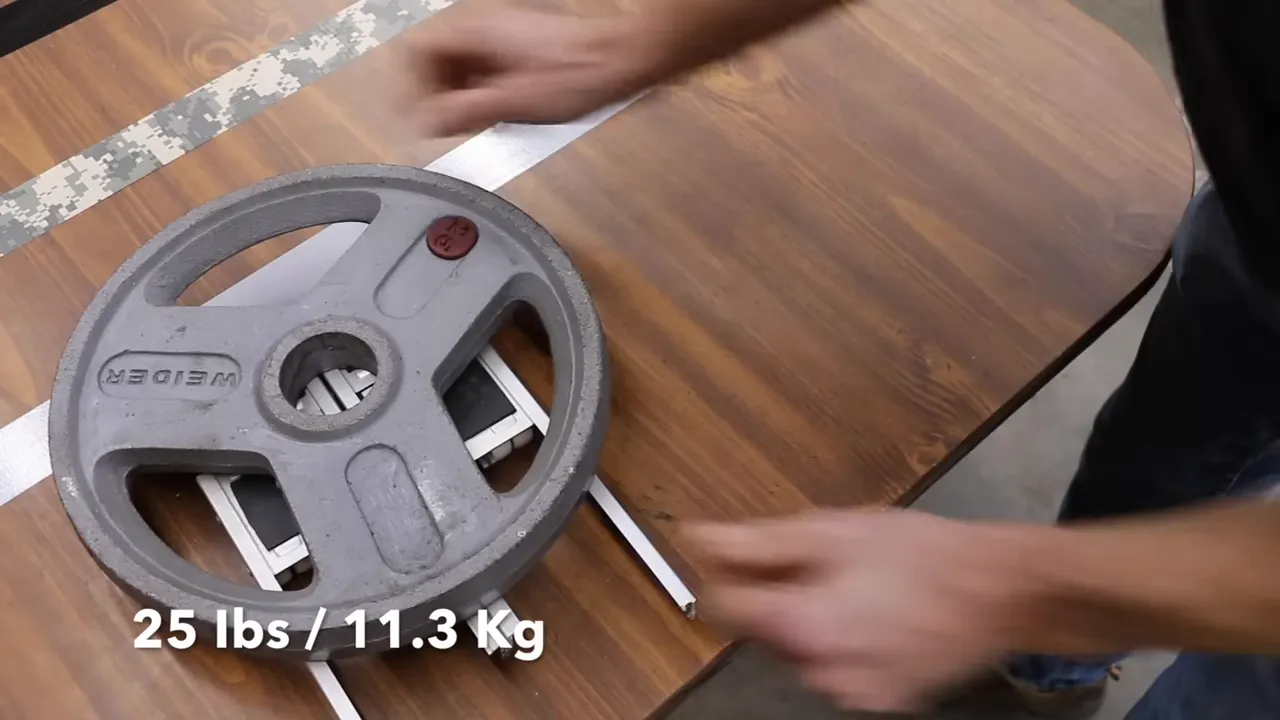
To keep application pressure consistent, I modified a set of appliance-dolly wheels and placed a 25-pound weight on top. I rolled the assembly across the strips several times, giving each tape the same treatment.
With the tabletop positioned upright, I attached a container and funnel to each tape in turn. Water was added gradually until the tape began to let go. Weighing the suspended load provided a straightforward comparison of holding ability in this setup.
Adhesion Results
- T-Rex: 10.15 pounds
- Gorilla: 5.00 pounds
- Duck: 4.48 pounds
- 3M: 3.68 pounds
- Fasten: 3.30 pounds
- Scotch: 2.30 pounds
T-Rex was the clear leader in this test, holding more than twice the load recorded for Gorilla. It took more than water alone to reach its limit. I added wrenches and clips, then weighed the components separately because the scale could only handle about five pounds at a time.
Gorilla finished second, followed by Duck. Scotch held the lowest load on this laminate surface.
The important distinction here is that this test measured the tape's ability to remain attached under the particular loading arrangement. It did not measure how much force the tape backing itself could withstand before breaking. That came next.
Test 2: Lengthwise Strength
A Hinged-Pipe Fixture Applies the Load
To compare lengthwise strength, I built a fixture using two pipes connected by a freely moving hinge. A single continuous wrap of tape went around both pipes. The tape held the movable pipe against the fixed pipe as weight pulled downward.
The first loading position was marked six inches from the pivot. Additional marks along the pipe made it possible to increase leverage by moving the weight farther out.
That leverage matters. A 25-pound plate hanging from the pipe does not mean the tape is experiencing only 25 pounds of force. The pipe itself also contributes weight. Before comparing tapes, I checked the downward force produced at the different loading positions so the results would account for the fixture's mechanical advantage.
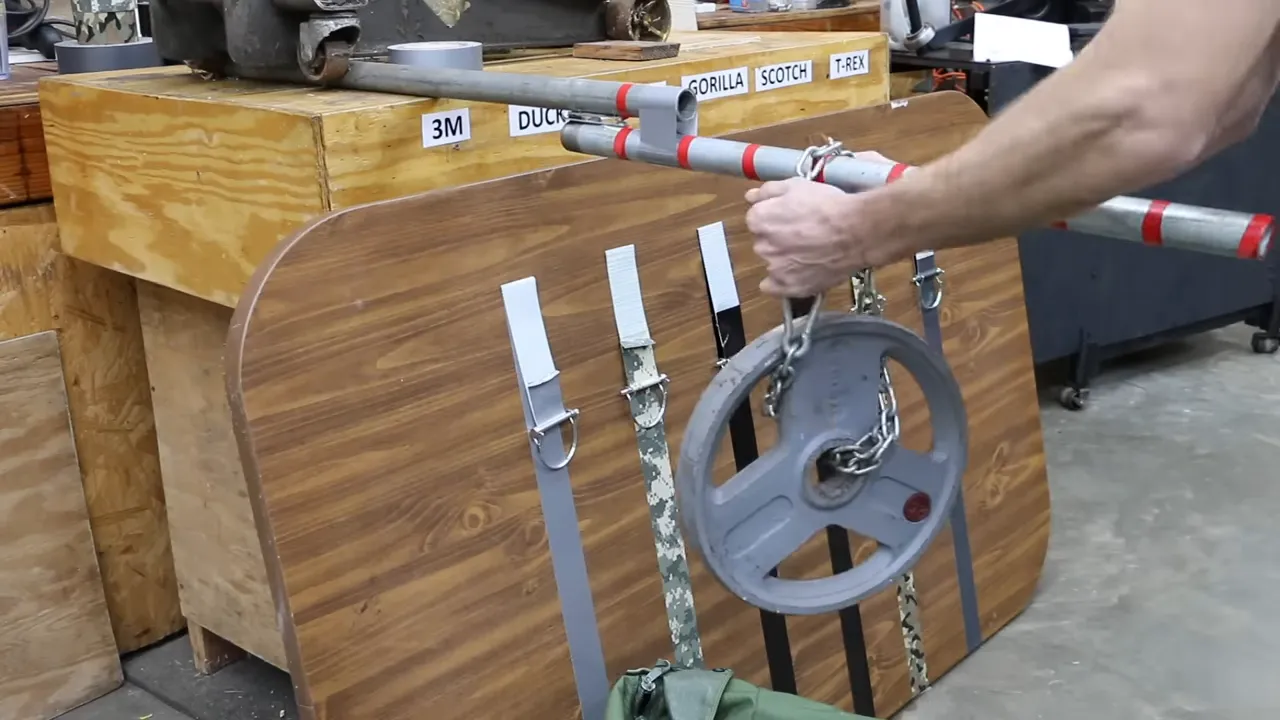
Each tape was loaded until it broke. Close-up slow-motion footage also made it possible to examine how the material stretched and separated.
Lengthwise Strength Results
- Gorilla: 141.8 pounds
- T-Rex: 131.2 pounds
- 3M: 75.2 pounds, tied for third
- Duck: 75.2 pounds, tied for third
- Fasten: 75.2 pounds, tied for third
- Scotch: 62.4 pounds
Gorilla took first place, with T-Rex finishing second. Both handled considerably more force than the remaining tapes in this fixture.
3M, Duck, and Fasten all recorded the same result at the test's loading increments. Scotch finished last.
Stretch and Strength Are Different Properties
The close-ups revealed something that a final number alone cannot show: the tapes did not all fail the same way.
Duck showed considerable elasticity before separating. Scotch also stretched substantially, but it broke at the lowest load in this test. A tape that stretches more is not automatically a stronger tape.
That is why it helps to compare both behavior and failure load. Elasticity tells you something about how a tape responds as it is pulled. Breaking force tells you how much load it resisted in the test. They are related observations, but they are not interchangeable.
Test 3: Widthwise Tear Resistance
So far, the tests had compared surface adhesion and strength along the tape's length. The third test examined a different failure mode: how much force it took to tear the tape laterally.
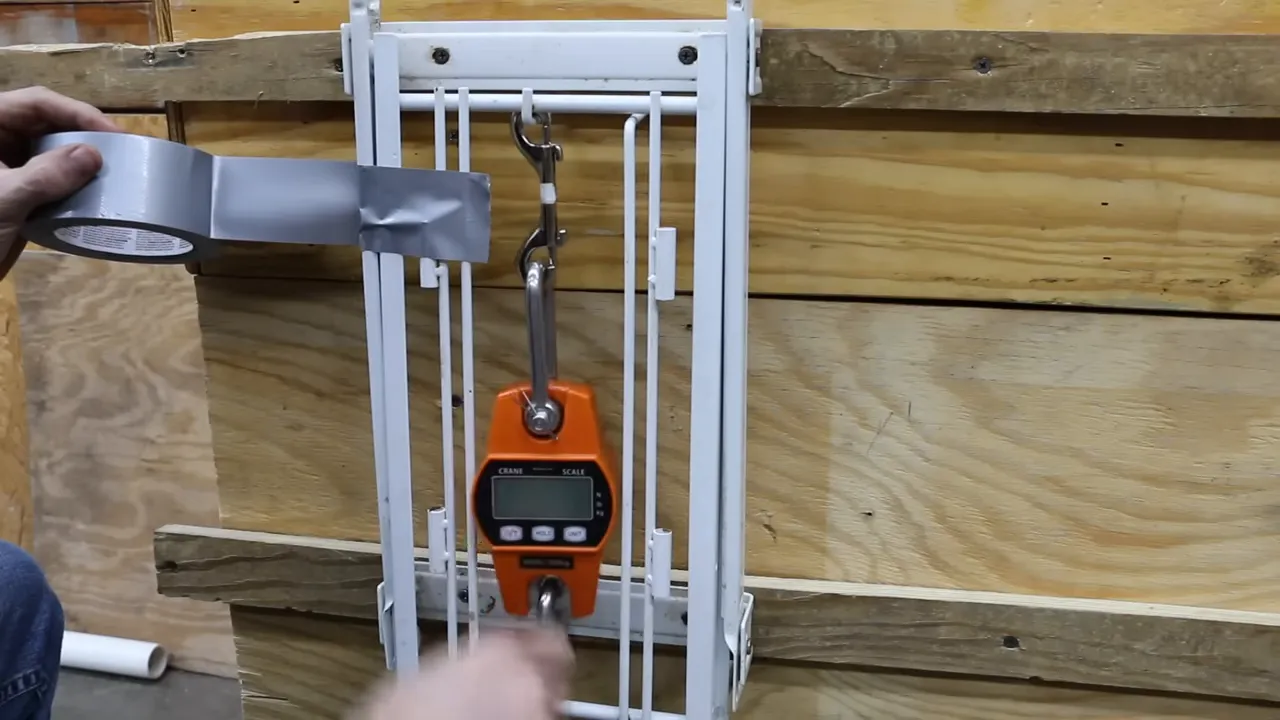
I used a separate fixture that applied a downward force across a gap. An inline digital scale measured the force as the moving part of the fixture pulled against the tape. Increasing the load eventually caused the tape to rip.
Widthwise Strength Results
- 3M: 35.8 pounds
- Gorilla: 30.2 pounds
- T-Rex: 29.1 pounds
- Scotch: 17.7 pounds
- Fasten: 14.5 pounds
- Duck: 12.1 pounds
3M moved to the top in this test. It had placed fourth in adhesion and tied for third in lengthwise strength, but it resisted the greatest lateral tearing force.
Gorilla and T-Rex finished second and third, respectively, with relatively little separation between them.
The lower half of the rankings changed, too. Scotch, which finished last in the first two tests, outperformed Fasten and Duck in lateral tear resistance. Duck went from third in adhesion to last in this test.
That change in order is a good reason not to judge an all-purpose tape by a single strength measurement.
So, Which Duct Tape Is Best?
The answer depends on which property matters most for the job. Here is what these tests established:
- Highest adhesion on the tested laminate: T-Rex. Its 10.15-pound result was more than double the next-highest result.
- Highest lengthwise strength: Gorilla. It led at 141.8 pounds, followed by T-Rex at 131.2 pounds.
- Highest lateral tear resistance: 3M. It took first place at 35.8 pounds.
- Consistently high placement: Gorilla and T-Rex. Both finished in the top three in every test.
These are comparative shop tests, not safe working-load ratings. The adhesion result is specific to the laminate surface, room temperature, application method, and loading arrangement used here. Likewise, the strength figures describe performance in these fixtures, not a guaranteed capacity for a repair.
I learned a lot from the differences in tackiness, elasticity, and strength. The brand mattered much more than I expected, but there was no universal winner across all three categories.
Better Information, Not a Sales Pitch
I am not sponsored by any of these tape companies. My goal is to provide useful comparisons, not tell you which roll you have to buy.
Most people do not have the time or resources to buy six products and test them side by side. It is easy to keep reaching for a familiar brand without knowing whether another product performs better in the property that matters.
Comparisons also give manufacturers a reason to improve. When performance differences are clear, an underperforming product has to get better or risk losing customers.
Choose based on the kind of failure you need to resist, not just the name on the roll. Adhesion, lengthwise strength, and lateral tear resistance produced three different winners here. That is much more useful than assuming all duct tape is about the same.


