Sharpening a chainsaw chain is one of my least favorite parts of using a saw. But a good sharpener can make the job easier, and the right technique can make a used chain cut remarkably well. Can it actually cut faster than a brand-new chain? That’s worth testing.
I compared manual files, bar-mounted guides, portable 12-volt grinders, and electric bench sharpeners from Stihl, Granberg, Chicago Electric, and Oregon. The goal was to find out how long sharpening takes, how well each system restores cutting performance, and whether spending more money produces a better result.
The Granberg manual filing system produced the fastest cut after careful sharpening, followed by the Granberg 12-volt system and the Stihl 2-in-1. All three beat the best time from a new chain. However, the first round of results looked quite different, and that turned out to be one of the most useful lessons of the comparison.
Quick Summary
- The Granberg manual filing system produced the fastest final cutting time at 7.74 seconds.
- Both Granberg systems and the Stihl 2-in-1 outperformed the new chain’s best cutting time.
- Careful setup and sharpening technique substantially changed the results between test rounds.
- Bench grinders remain a strong option for damaged chains requiring substantial material removal.
How I Tested the Chainsaw Sharpeners
I purchased 10 identical Oregon semi-chisel chains to keep the comparison as consistent as possible. These were 56-drive-link chains with a 3/8-inch low-profile pitch and a .043-inch gauge.
Getting the chains dull took about two and a half days. Rather than cutting only clean wood, I worked through dirty logs that had been lying on the ground, an old hedge apple fence post, and some trees that needed to come down. That fence post was probably 40 years old. Dry hedge apple is very tough material, and it definitely gave the chains some work to do.
Before sharpening, I removed oil with brake parts cleaner, then used a roughly 15-minute lye soak to remove sap and other organic buildup. Afterward, I rinsed the chains thoroughly with water. This was test preparation, not a comparison of chain-cleaning products.
For the cutting tests, I used a Makita lithium-powered chainsaw that runs on two batteries. I had eight batteries available and returned batteries to the quick charger after each test.
- Test material: A bundle of six 4x4s.
- Cutting load: The saw’s weight plus an additional 2.5 pounds applied at the front.
- Operator pressure: No additional downward pressure.
- Performance measurement: Time to cut through the bundle, with lower times indicating faster cutting.
There were two sharpening rounds. The first measured results from my initial work with each tool. For the second, I spent substantially more time sharpening and inspected the cutters under a microscope. I also removed the saw’s felling spikes before the second round to eliminate possible interference.
That change matters when interpreting improvements between rounds. The second test included both more careful sharpening and a change to the saw setup, so the entire improvement cannot be attributed to sharpening alone.
Two Details That Matter: Cutter Angle and Depth Gauges
A sharp-looking edge is only part of the job. Cutter geometry and depth-gauge height also affect how the chain cuts.
For this particular chain, I used a 5/32-inch round file and a 30-degree sharpening angle. Those settings were specific to the chain being tested. The correct file size and angles should come from the chain manufacturer’s instructions, not pitch alone.
The depth gauge, often called a raker, controls how deeply the cutter bites into the wood. As sharpening removes material from the cutter, the depth gauge may also need attention. With the Oregon hand-file kit in the first round, the depth-gauge tool showed that no reduction was needed. After the more aggressive Chicago Electric grinding, I filed the depth gauges.
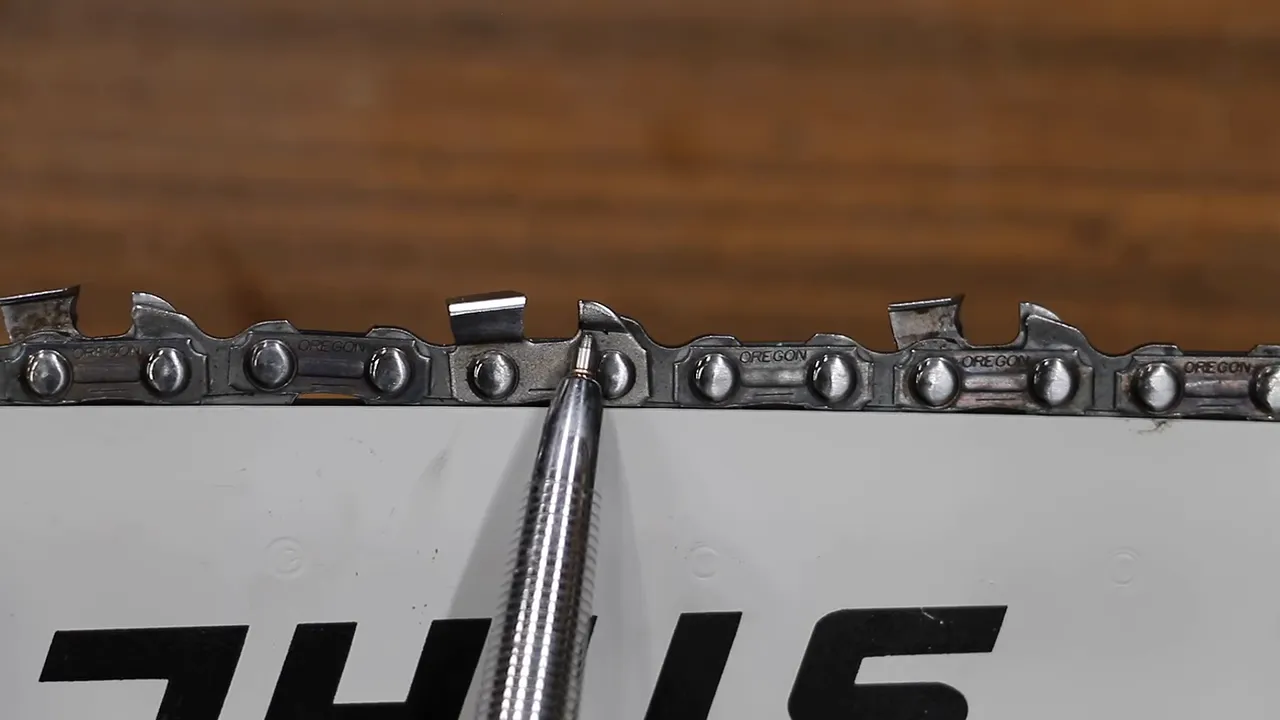
The important point is to check rather than assume. Removing material from the cutting edge and setting the depth gauges are related tasks, but they are not the same task.
The Sharpeners: Setup, Sharpening Time, and Initial Results
The prices below are what I paid for the products at the time of testing. Sharpening times are approximate, and tools requiring assembly, mounting, or extensive adjustment have additional setup considerations.
Oregon Field Sharpening Kit: $18.99
The least expensive system was Oregon’s field sharpening kit, made in China. It included a file frame, handle, three round files, one flat file, and a depth-gauge tool.
I installed the 5/32-inch file and used the guide’s reference marks to maintain the 30-degree angle. To keep track of progress, I started at the gold chain link, sharpened the cutters facing one direction, then turned the saw around to work on the opposite side. Because the chain was quite dull, I began with five file passes per cutter.
The guide provides useful reference points, but it does not mechanically control the entire filing motion. Results depend quite a bit on the person using it.
- Initial sharpening time: About 7 minutes.
- Initial cutting time: 13.48 seconds.
The cutters looked much better afterward, and the depth gauges did not need filing at this stage. The later retest would show that this inexpensive kit had considerably more potential than its first result suggested.
Chicago Electric Bench Sharpener: $29.99
The Chicago Electric sharpener, sold by Harbor Freight and made in China, was only about $11 more than the basic hand-file kit.
This system holds the chain off the saw in an adjustable vise. I set the clamping tension so the chain would stay put during grinding, adjusted the sharpening angle, and positioned the first right-hand cutter against the chain stop. The stop determines how much material the wheel removes, while a separate depth adjustment limits how far the wheel enters the gullet.
I attached a bread tie to mark the starting point. After finishing the right-hand cutters, I changed the vise angle to sharpen the left-hand cutters.
- Initial sharpening time: About 5.5 minutes.
- Initial cutting time: 12.33 seconds.
The Chicago Electric was definitely more aggressive than a round file. It produced a sharp edge, but it also changed the cutter geometry slightly. I filed the depth gauges after grinding. Its first cutting result was 1.15 seconds quicker than the Oregon field kit.
Oregon Sure Sharp 12-Volt Sharpener: $30.48
The Oregon Sure Sharp is a handheld electric sharpener made in China. It included 3/16-inch, 5/32-inch, and 7/32-inch sharpening stones, along with a vehicle power adapter and an alligator-clip adapter.
Installing a stone involved locking the motor shaft, loosening the retaining nut, inserting the stone, and tightening the nut. I then adjusted the guide plate to establish the correct stone height. To make the 30-degree alignment easier to see during use, I added a reference mark.
- Initial sharpening time: About 4 minutes.
- Initial cutting time: 10.82 seconds.
The Sure Sharp put a very sharp-looking edge on the cutters and moved into the lead at that point. It also had the shortest reported initial sharpening time of the systems compared here.
Stihl 2-in-1 Filing Guide: $36
The German-made Stihl 2-in-1 is a very innovative design. It uses a flat file to work on the depth gauges while the round file sharpens the cutters. That combines two maintenance operations into the same filing process.
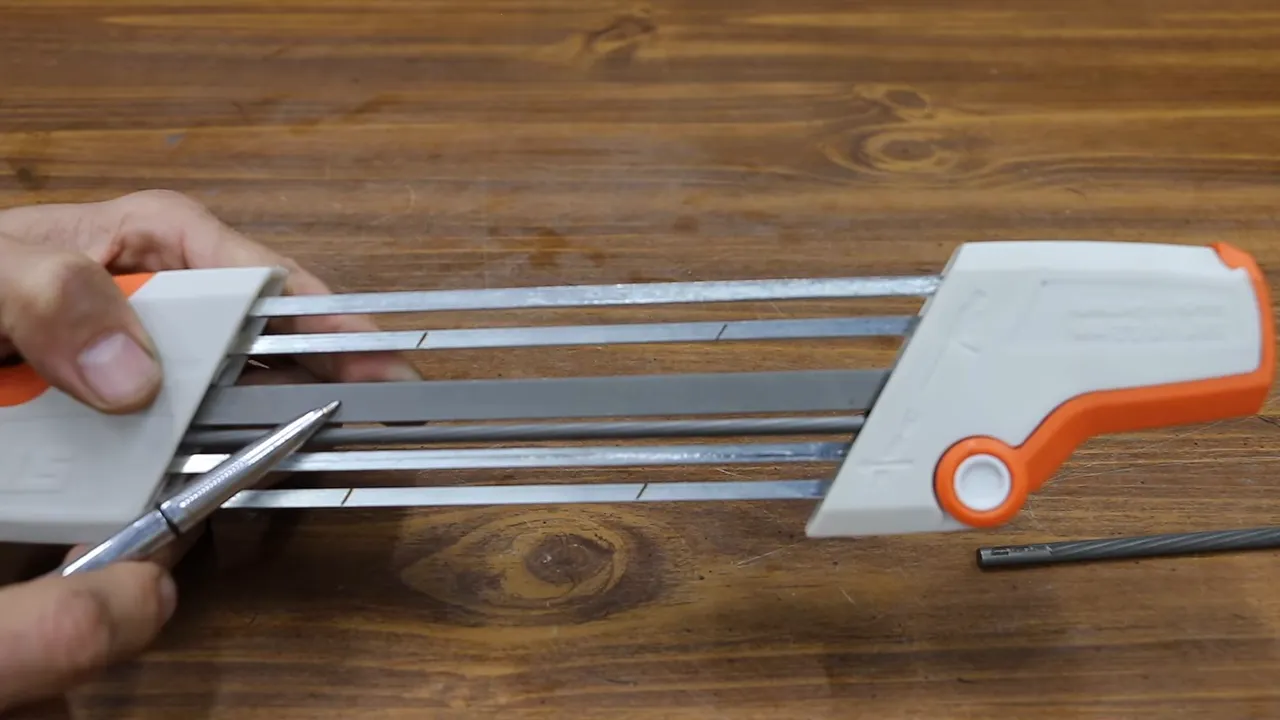
The round file supplied with my unit did not fit the test chain, so I replaced it with a 5/32-inch file. I secured the saw’s bar in a vise and used the tool’s alignment marks to maintain the filing angle. After finishing one side, I rotated the saw and sharpened the other.
- Initial sharpening time: About 5.5 minutes.
- Initial cutting time: 10.20 seconds.
The chain looked extremely sharp under magnification, and it delivered the fastest cut so far. The combination of cutter sharpening and depth-gauge filing is what makes this tool especially interesting.
Granberg Bar-Mounted Filing System: $41.49
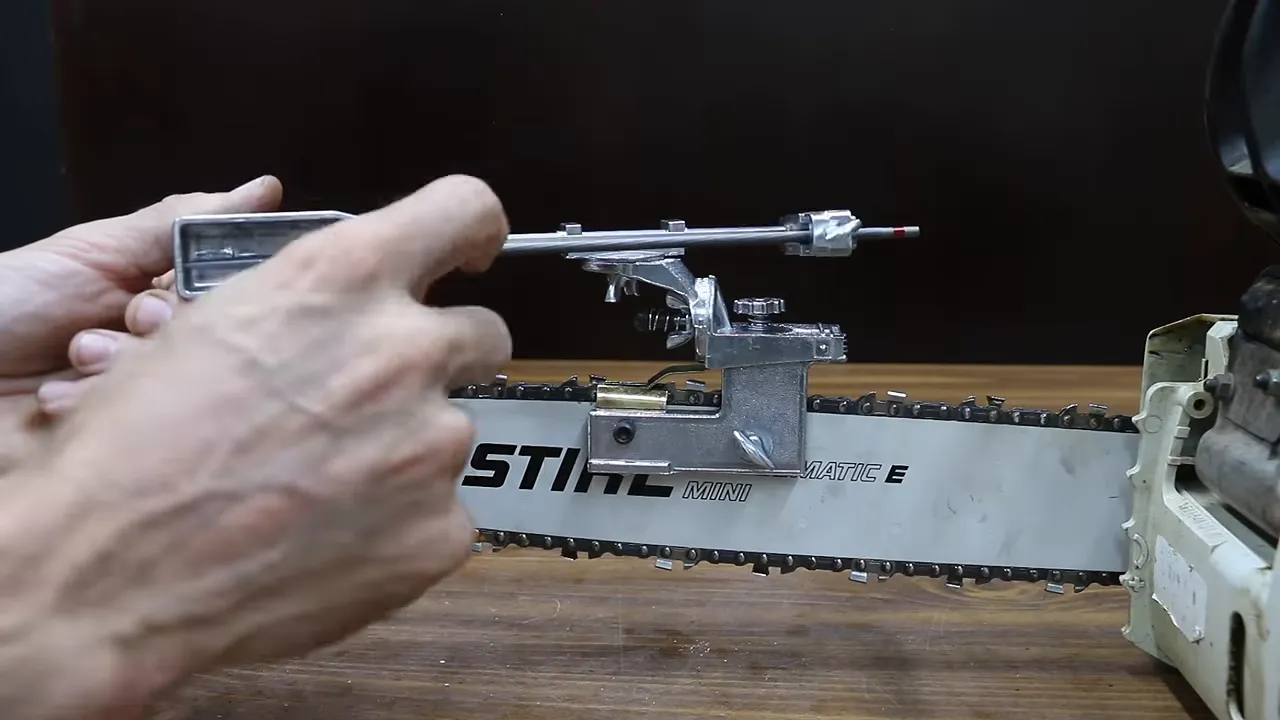
The American-made Granberg File-N-Joint clamps to the guide bar and controls the file’s position. It is designed to sharpen cutters and can also be set up to lower depth gauges. A file was not included, so I installed a 5/32-inch file.
Setup took some time. The base needed to sit parallel to the bar, with the chain able to move snugly but freely. I positioned the cutter against the chain stop, set the file height, selected zero tilt for this application, and adjusted the horizontal filing angle.
The setup instructions called for approximately one-tenth to one-fifth of the file diameter to remain above the cutter. That height adjustment is one of the ways this system controls the resulting cutter shape.
- Initial sharpening time: A little over 6 minutes once adjusted.
- Initial cutting time: 11.24 seconds.
Once properly set up, this seemed like the best-designed manual system for precise, consistent results. The first cutting time was respectable, although it did not beat the Stihl 2-in-1. The second round would be a different story.
Stihl Portable 12-Volt Sharpener: $83.99
The Stihl portable grinder clips to a vehicle battery and has an 8-foot cord. Sharpening stones were not included; those cost just under $6 extra.
I installed the appropriate stone using the two wrenches attached to the cord. An included setting gauge establishes the height plate’s position relative to the stone. During sharpening, that plate rests on top of the cutter, and the 30-degree reference mark aligns parallel with the bar.
The instructions call for gently moving the grinder back and forth until the cutter is sharp. Both left-hand and right-hand cutters can be sharpened from the same side of the bar.
- Initial sharpening time: About 6 minutes.
- Initial cutting time: 12.96 seconds.
The sharpened edge looked good, but cutting performance was noticeably behind the much less expensive Stihl 2-in-1.
Granberg 12-Volt Precision Grinder: $95.33
The American-made Granberg precision grinder combines a bar-mounted guide with a battery-powered sharpening stone. It runs from a car or truck battery and included three sharpening stones.
Like the manual Granberg, the base clamps over the chain rivets and must be aligned parallel with the bar. The chain should move through the fixture snugly but freely, with each cutter positioned against the stop.
I set the tilt and sharpening angles, then adjusted the stone height so approximately one-tenth to one-fifth of its diameter extended above the cutter.
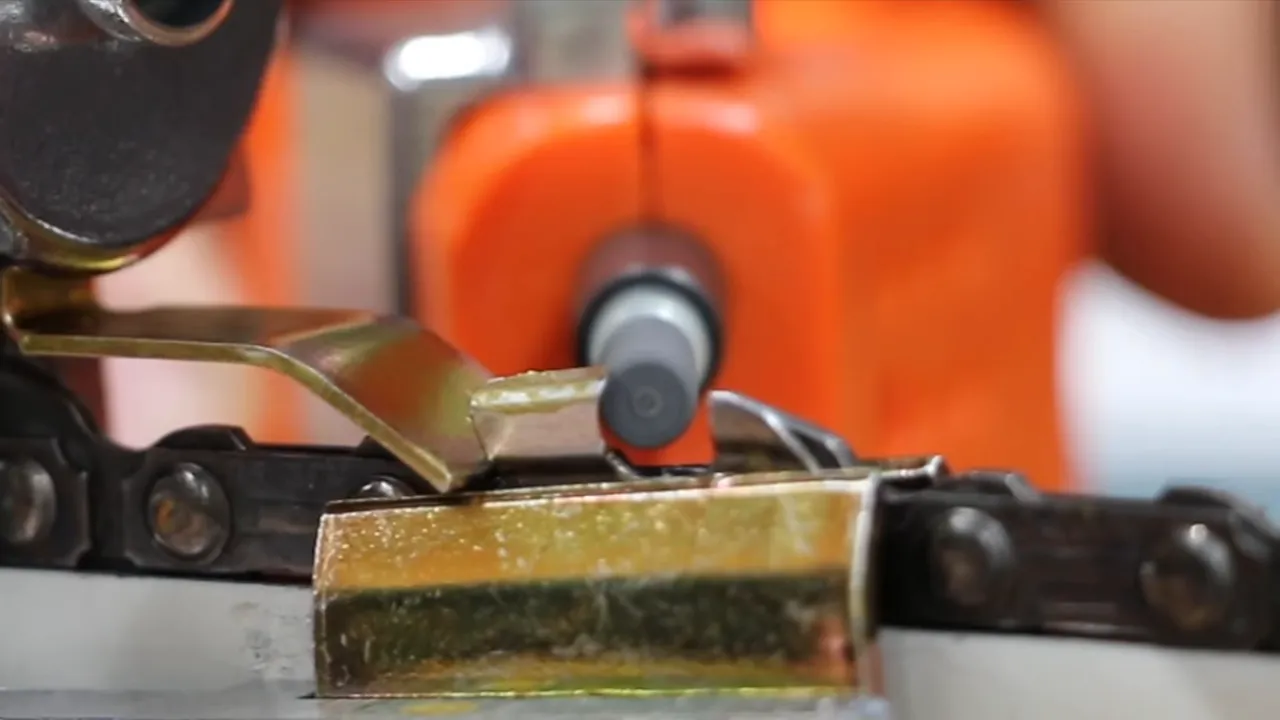
The sharpened chain looked very sharp, and its 9.78-second initial cutting time moved it into first place. It was the only system to break 10 seconds during the first round. I did not report a separate sharpening-duration figure for this tool.
Oregon Bench Grinder: $194.99
The Oregon was the most expensive sharpener tested. Made in China, it had a 220-watt motor, three grinding wheels, and required some assembly and mounting.
The manual provided chain-specific setup information. For the test chain, I selected a 55-degree head tilt and a 30-degree sharpening angle. I adjusted the chain stop to remove only the material needed and set the grinding depth to reach into the gullet without reaching the chain link. A clamping lever held the chain during grinding.
After completing the right-hand cutters, I changed the setup for the left-hand cutters.
- Initial sharpening time: About 4.5 minutes.
- Initial cutting time: 16.20 seconds.
The cutters looked sharp, although the geometry appeared to have changed slightly. That cutting result was the slowest of the group, but I was confident the machine was more capable than my initial work demonstrated.
The Retest: More Careful Sharpening Changes the Results
There is definitely a learning curve with these tools, and I did not do my best work with every sharpener on the first attempt. It would not have been fair to call the initial results the final answer.
I planned to spend about twice as much time on each chain and check the work under a microscope. In total, that additional sharpening session took about three and a half hours. With the felling spikes also removed from the saw, I repeated the cutting tests.
Here are the second-round results, ranked from fastest to slowest:
- Granberg manual filing system: 7.74 seconds, compared with 11.24 seconds initially.
- Granberg 12-volt precision grinder: 8.00 seconds, compared with 9.78 seconds initially.
- Stihl 2-in-1: 8.26 seconds, compared with 10.20 seconds initially.
- Oregon field sharpening kit: 8.89 seconds, compared with 13.48 seconds initially.
- Chicago Electric bench sharpener: 9.10 seconds, compared with 12.33 seconds initially.
- Oregon bench grinder: 9.26 seconds, compared with 16.20 seconds initially.
- Stihl portable 12-volt sharpener: 10.56 seconds, compared with 12.96 seconds initially.
- Oregon Sure Sharp: 11.34 seconds, compared with 10.82 seconds initially.
Very impressive results from both Granbergs and the Stihl 2-in-1. The inexpensive Oregon field kit also performed very well after I spent more time on the chain.
The Oregon bench grinder’s improvement was particularly large. It went from the slowest initial result to a much more competitive time. Meanwhile, the Sure Sharp was slightly slower in the second round. More time spent does not automatically guarantee a faster-cutting chain.
These are results from my sharpening work on this chain and test setup, not absolute limits for each machine. The difference between rounds makes it clear that setup and technique deserve just as much attention as the tool itself.
Can a Sharpened Chain Beat a Brand-New Chain?
To give the new chain a fair opportunity, I made three cuts:
- First cut: 8.89 seconds.
- Second cut: 8.48 seconds.
- Third cut: 8.42 seconds.
The new chain’s times were fairly close, with 8.42 seconds its best result. Three sharpened chains beat that benchmark:
- Granberg manual filing system: 7.74 seconds.
- Granberg 12-volt precision grinder: 8.00 seconds.
- Stihl 2-in-1: 8.26 seconds.
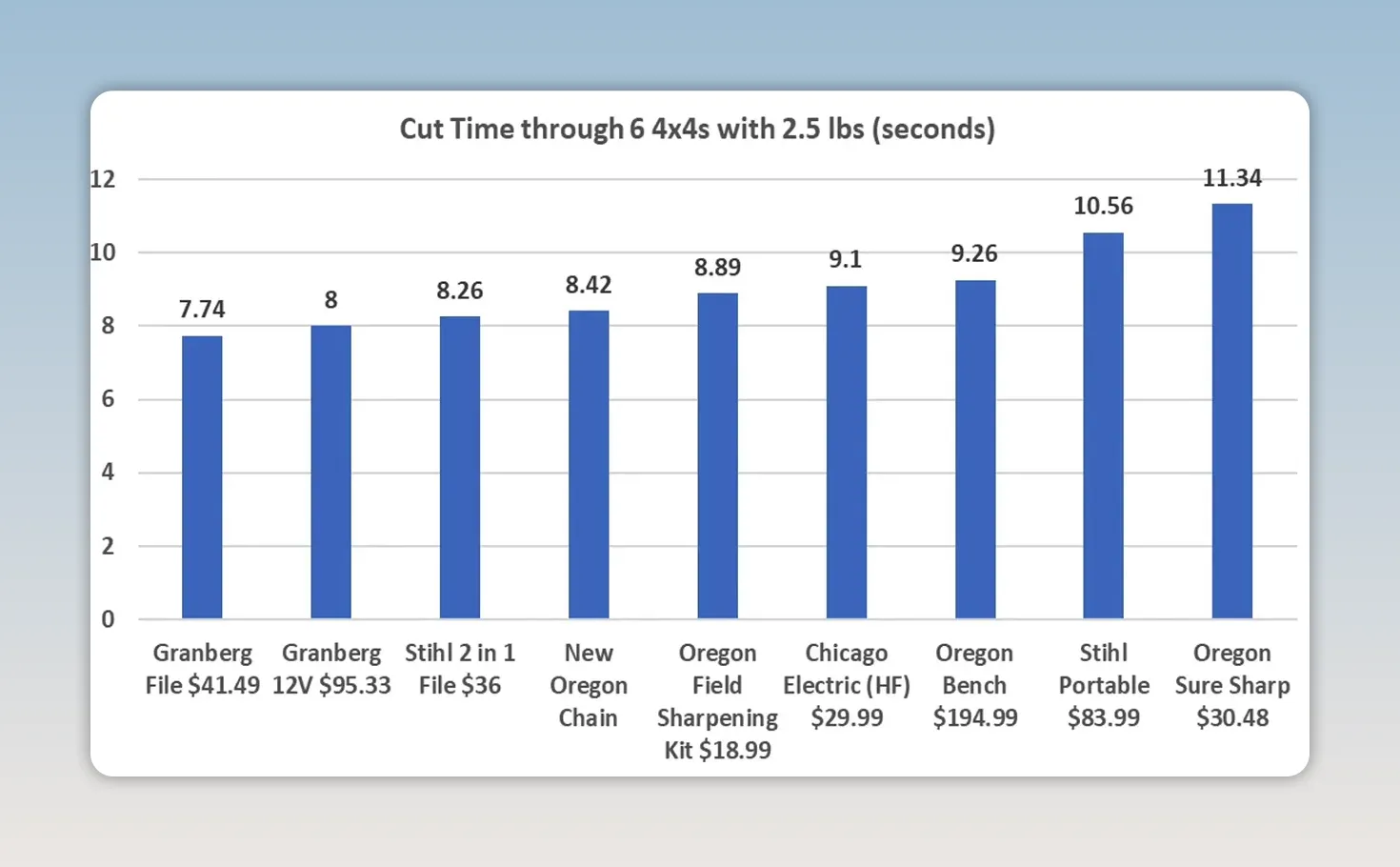
The Oregon field kit came close at 8.89 seconds, followed by the Chicago Electric at 9.10 seconds and the Oregon bench grinder at 9.26 seconds.
So, yes: a carefully sharpened used chain can cut faster than a brand-new chain in this test. That is a cutting-performance result, rather than a separate measurement of edge sharpness or long-term durability.
Which Chainsaw Sharpener Would I Choose?
In my opinion, both Granberg systems are very impressive and hard to beat. The manual filing system delivered the fastest final cut, and the 12-volt precision grinder was close behind. They take some adjustment, but their control over the file or stone position paid off.
I also really like the Stihl 2-in-1. It combines cutter sharpening with depth-gauge filing, performed well in both rounds, and beat the new chain after the more careful sharpening session. At the tested price of $36, that is a very strong showing.
For badly damaged chains that need a lot of material removed, a bench grinder is difficult to beat. That is a different job from a routine touch-up, and the Chicago Electric’s aggressive material removal was obvious during testing. At $29.99, it did a fairly good job for the money.
The inexpensive Oregon field kit also deserves credit. It did not control the filing motion as closely as the Granberg, but careful work brought its cutting time down to 8.89 seconds. A basic file kit can produce very good results.
The biggest lesson is that buying a sharpener is only part of the solution. Correct setup, suitable file or stone size, consistent cutter geometry, and attention to the depth gauges make a real difference. The most expensive tool did not win, and a manual file was certainly not a disadvantage.


