When did car batteries get so expensive? If a replacement is going to cost well over $100, and sometimes more than $200, it ought to deliver. But does spending more actually buy a better battery?
I purchased six car batteries and compared their cranking amps, internal resistance, performance after a heavy load, charging response, and cold-weather starting capability. Four were conventional flooded lead-acid batteries, and two were absorbed glass mat, or AGM, batteries.
The Walmart EverStart turned out to be a very strong value. It held up well after a sustained drain, delivered the highest reading in the first freezer test, and tied for first in the colder test. The AGM batteries had advantages, too, but they did not win everything.
Key Takeaways
- EverStart offered strong value, leading the first freezer test and tying Duralast in the colder test.
- DieHard led warm-weather cranking output, but finished last in both cold comparisons.
- Both AGM batteries showed larger charging voltage increases than the flooded batteries.
- Choose the battery type suited to your vehicle, then compare price, warranty, and climate-specific performance.
The Six Car Batteries Tested
These prices, warranties, and manufacturer identifications apply to the batteries purchased for this comparison, rather than current offerings.
- EverStart Maxx, Walmart: $119.76. A Johnson Controls flooded lead-acid battery, group size 27, rated at 810 cold cranking amps and 1,000 cranking amps. Its five-year warranty program included three years of free replacement.
- Duralast Gold, AutoZone: $159.99. A Johnson Controls flooded battery, group size 27, rated at 810 cold cranking amps and 930 cranking amps.
- SuperStart Premium, O’Reilly: $139.99. An East Penn Manufacturing flooded battery, group size 27, rated at 840 cold cranking amps and 1,035 cranking amps.
- AutoCraft Silver, Advance Auto Parts: $139.99. A Johnson Controls flooded battery, group size 34/78, rated at 800 cold cranking amps and 1,000 cranking amps. It included a two-year full replacement warranty.
- Optima RedTop: $224.99. A Johnson Controls AGM battery, group size 34/78, rated at 800 cold cranking amps and 1,000 cranking amps. It included a three-year free replacement warranty.
- DieHard Advanced Gold: $189.99. An EnerSys AGM battery, group size 34/78, listed at 775 cold cranking amps in the comparison. It included a three-year free replacement warranty. EnerSys also manufactured Odyssey AGM batteries.
The group sizes were not identical across all six batteries. I could not find the AGM models in group size 27, so I selected a group 34/78 AutoCraft to compare with the two AGMs. That makes this a comparison of these particular batteries, not a perfectly matched test of battery chemistry alone.
The EverStart and Duralast cases looked almost identical apart from their labels. Both were made by Johnson Controls, but their published cranking-amp ratings differed, and so did their measured performance. A shared manufacturer is worth knowing about, but the results still matter.
How I Prepared the Batteries
I bought all six batteries on the same day. Every one needed some charging before testing, so I topped them off with a 750 mA trickle charger suitable for both flooded lead-acid and AGM batteries. After charging, I disconnected them and allowed them to sit for several hours before taking the initial measurements.
The testing covered four main questions:
- Which battery delivered the highest cranking-amp reading at 75°F?
- How well did each battery recover after a heavy, 30-minute electrical load?
- How much did voltage increase after one hour on a charger set to 10 amps?
- Which batteries performed best after two progressively colder freezer tests?
These tests compare starting capability and short-term performance. They do not establish how many years each battery will last.
Cranking Amps at 75°F: DieHard Takes the Lead
Cranking amps and cold cranking amps are not interchangeable. The battery labels list cranking amps at 32°F and cold cranking amps at 0°F. For this first comparison, I used the tester’s cranking-amp setting with all the batteries at 75°F.
I also measured internal resistance. In practical terms, this helps describe how readily a battery can deliver high current on demand. Lower resistance is generally desirable, and all six batteries started below 5 milliohms.
- DieHard Advanced Gold: 1,148 cranking amps, 13.04 volts, and 2.69 mΩ internal resistance.
- SuperStart Premium: 1,133 cranking amps, 12.78 volts, and 3.42 mΩ.
- Optima RedTop: 1,125 cranking amps, 12.84 volts, and 2.76 mΩ.
- EverStart Maxx: 1,115 cranking amps, 12.88 volts, and 3.48 mΩ.
- AutoCraft Silver: 1,083 cranking amps, 12.78 volts, and 3.60 mΩ.
- Duralast Gold: 1,022 cranking amps, 12.80 volts, and 3.84 mΩ.
The DieHard was off to a very good start. It produced the highest cranking-amp reading and had the lowest internal resistance. The Optima was close behind on resistance, giving both AGM batteries an advantage over the flooded batteries on that measurement.
Among the flooded batteries, the SuperStart delivered the most cranking amps and the lowest resistance. The EverStart also performed well. Paying about $40 more for the Duralast did not produce better numbers in this test.
A Heavy Load for 30 Minutes
A quick starting-power measurement is useful, but I also wanted to see how the batteries handled a sustained drain. Each battery powered a work light through an inverter for 30 minutes, with an estimated battery load of roughly 42 to 44 amps. A Kill A Watt meter monitored the light’s energy consumption, while the inverter displayed battery voltage.
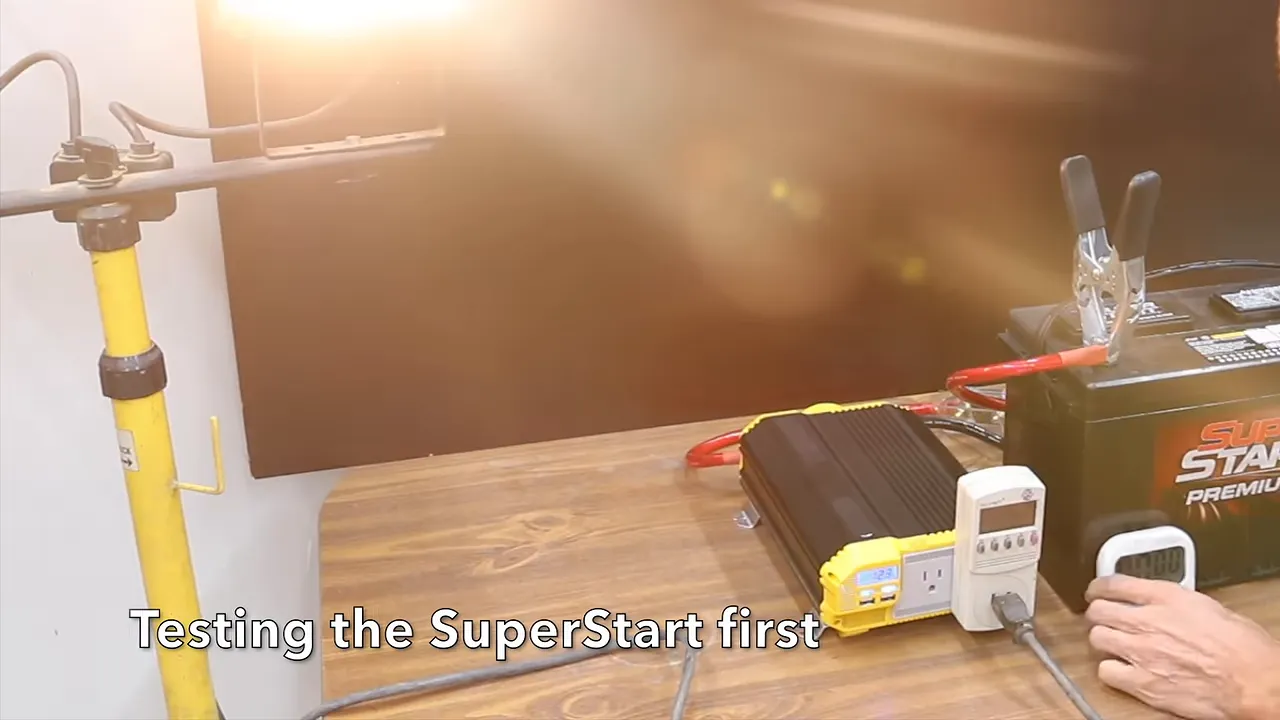
That is a pretty tough load for a starting battery. Fortunately, all six completed the test without triggering the inverter’s low-voltage alarm.
I then let the batteries sit overnight before measuring them again. As a general guide used in this comparison, a conventional 12-volt car battery above 12.6 volts is considered fully charged. At about 12.4 volts it still has charge, but below that level it needs recharging.
- EverStart Maxx: 12.59 volts and 999 cranking amps.
- Duralast Gold: 12.53 volts and 919 cranking amps.
- DieHard Advanced Gold: 12.49 volts and 1,032 cranking amps.
- SuperStart Premium: 12.47 volts and 1,044 cranking amps.
- AutoCraft Silver: 12.34 volts and 920 cranking amps.
- Optima RedTop: 12.26 volts and 964 cranking amps.
The EverStart finished with the highest resting voltage, just shy of 12.6 volts. That was an excellent result for the least expensive battery tested.
The SuperStart retained the highest cranking-amp reading, with the DieHard close behind. The AutoCraft and Optima both dropped below 12.4 volts and needed charging. The Optima’s premium price did not give it an advantage in this sustained-load comparison.
Do AGM Batteries Charge Faster?
With their lower internal resistance, would the AGM batteries recover more quickly? I connected each battery to the same charger, one at a time, for one hour at the 10-amp setting. Then I compared the voltage increase.
- DieHard Advanced Gold: 12.49 to 13.01 volts, an increase of 0.52 volts.
- Optima RedTop: 12.26 to 12.72 volts, an increase of 0.46 volts.
- AutoCraft Silver: 12.34 to 12.72 volts, an increase of 0.38 volts.
- SuperStart Premium: 12.47 to 12.78 volts, an increase of 0.31 volts.
- Duralast Gold: 12.53 to 12.81 volts, an increase of 0.28 volts.
- EverStart Maxx: 12.59 to 12.83 volts, an increase of 0.24 volts.
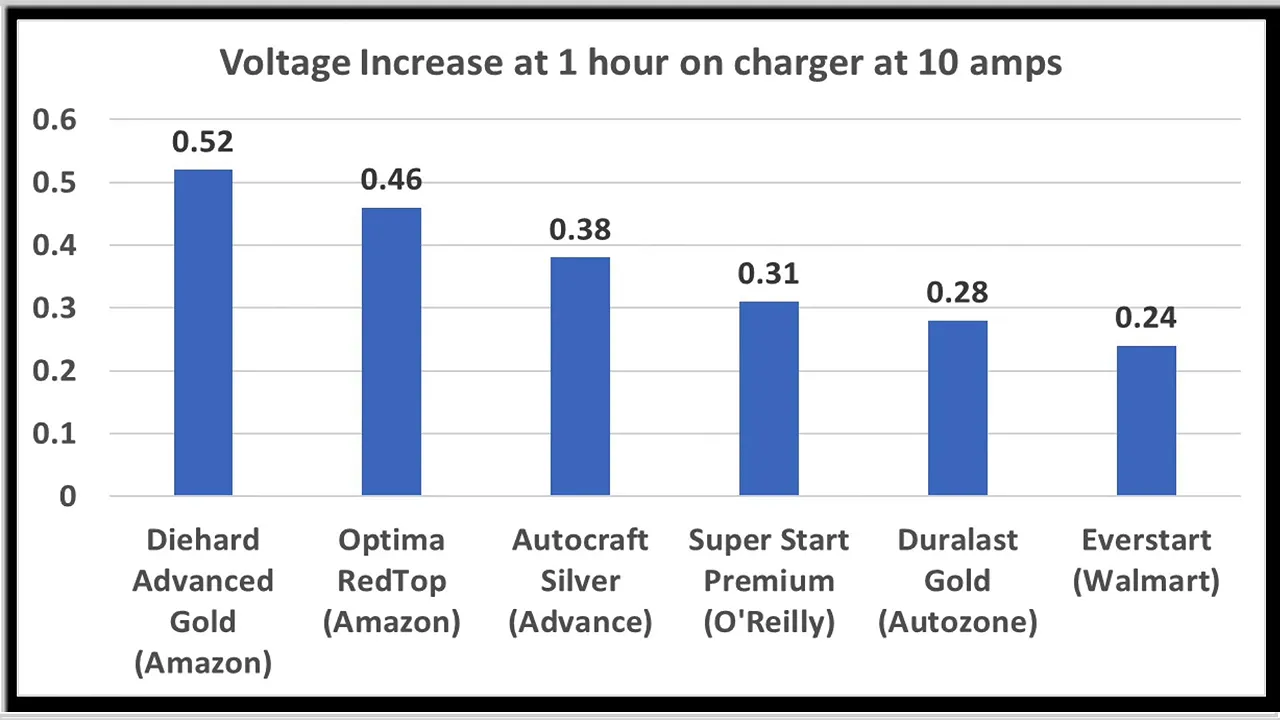
Both AGM batteries showed a larger voltage increase than any of the flooded batteries. The DieHard led this test, followed by the Optima.
However, the starting voltages were different. The EverStart had the smallest increase, but it began closest to fully charged and finished at a higher voltage than every battery except the DieHard. A smaller voltage increase does not automatically mean a worse result. This test measured voltage recovery over a fixed time, not the total energy restored to each battery.
First Freezer Test: EverStart Delivers the Highest Reading
Before the cold tests, I topped off every battery again using the same style of AGM-compatible trickle charger. Then I placed all six in a freezer for 24 hours.
The first cold comparison was labeled as the 0°F test. The measured freezer temperature was approximately −14°C, or about 7°F, so it was somewhat warmer than the nominal test temperature. These are comparative handheld-tester readings under those conditions.
Here are the results, ranked from highest to lowest:
- EverStart Maxx: 766 amps, compared with an 810 CCA rating.
- Duralast Gold: 753 amps, compared with an 810 CCA rating.
- Optima RedTop: 751 amps, compared with an 800 CCA rating.
- SuperStart Premium: 745 amps, compared with an 840 CCA rating.
- AutoCraft Silver: 725 amps, compared with an 800 CCA rating.
- DieHard Advanced Gold: 697 amps, compared with a 775 CCA rating.
The EverStart won on measured output. It also finished closest to its advertised CCA rating, falling short by 44 amps. The Optima was next closest to its rating at 49 amps below, followed by the Duralast at 57 amps below.
The SuperStart had the highest advertised CCA rating of the group, but it finished fourth in measured output and 95 amps below its rating. A larger number on the label did not guarantee the best result.
Colder Freezer Test: EverStart and Duralast Tie
Next, the batteries went back into the freezer for another 24 hours at a lower temperature. This comparison was labeled as the −20°F test. The measured freezer temperature was approximately −27°C, or about −17°F.
Here is how the batteries performed:
- EverStart Maxx: 708 amps and 4.45 mΩ internal resistance.
- Duralast Gold: 708 amps and 4.45 mΩ.
- SuperStart Premium: 683 amps and 4.60 mΩ.
- AutoCraft Silver: 651 amps and 4.82 mΩ.
- Optima RedTop: 629 amps and 4.16 mΩ.
- DieHard Advanced Gold: 580 amps and approximately 4.50 mΩ.
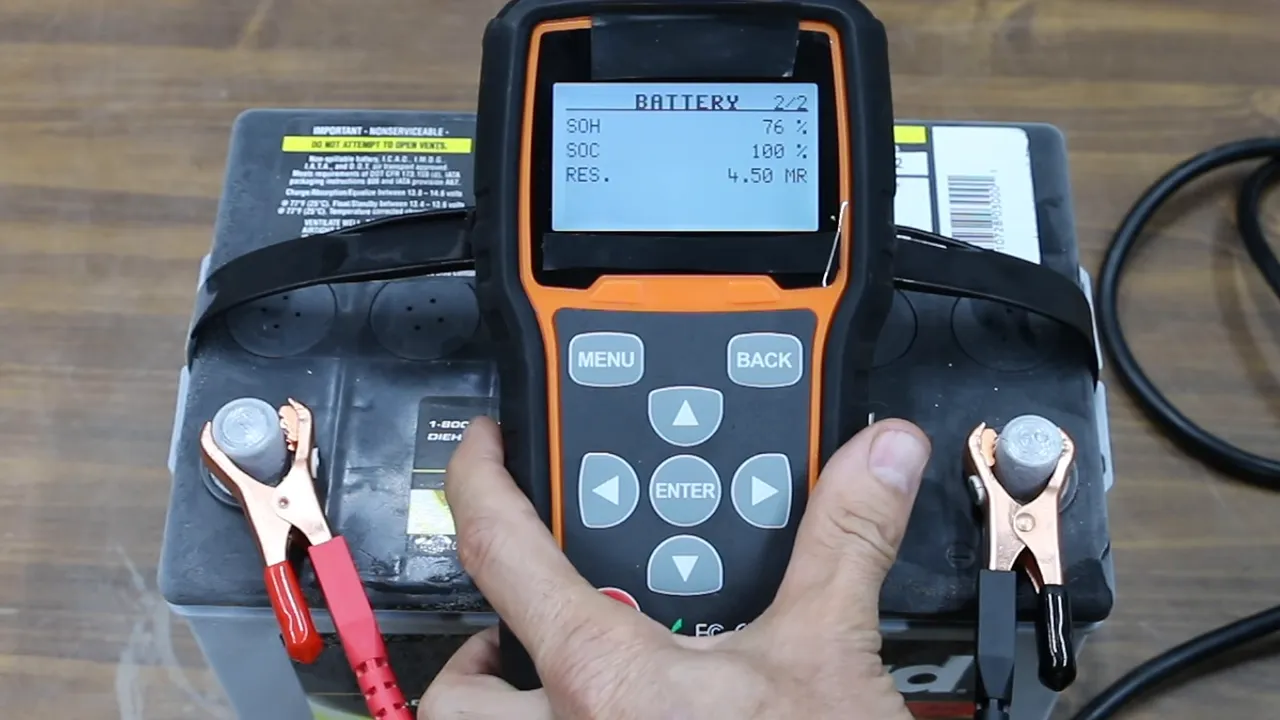
EverStart and Duralast tied for first, both in measured output and in the difference from their 810 CCA ratings. Each was 102 amps below its label rating. SuperStart finished third in output.
The Optima still had the lowest internal resistance, but that did not translate into the highest cranking-amp reading. The DieHard, which led at room temperature, finished last in both cold comparisons.
This was a tough test, but I expected the AGM batteries to do a little better. It is a good example of why one measurement, whether internal resistance or warm-weather cranking amps, does not tell the whole story.
Which Car Battery Would I Buy?
For a Vehicle That Uses a Flooded Lead-Acid Battery
I would stay with a flooded lead-acid battery and compare the lower-priced options first. The Walmart EverStart earned a strong recommendation from these results. It delivered good warm-weather performance, retained the highest voltage after the heavy drain, and led or tied for the lead in both freezer tests.
I would also price a Costco Interstate battery. The Interstate option identified during this comparison was made by Johnson Controls and was less expensive, but it was not tested here. It belongs on the shopping list, not on the list of proven test winners.
The SuperStart Premium also performed well, especially at room temperature and after the sustained load. The NAPA battery considered alongside it was also identified as an East Penn product, but cost more and carried a lower CCA rating. On those specifications and prices, the O’Reilly option looked more attractive. The NAPA battery was not tested.
Why pay another $40 to $60 simply for a different retail label? Compare the actual battery’s specifications, warranty, price, and performance rather than assuming the more expensive brand must be better.
For a Vehicle Factory-Equipped With an AGM Battery
If the vehicle came with an AGM battery, I would continue using an AGM. These batteries offer better vibration resistance, require no routine electrolyte maintenance, and handle deep discharges better, but they cost considerably more.
Between the two AGM batteries tested, my choice would depend on climate:
- For an area that stays above freezing: I preferred the DieHard Advanced Gold. It delivered the highest warm-weather cranking-amp reading, the lowest initial internal resistance, and the largest voltage increase during charging.
- For an area with freezing temperatures: The Optima RedTop was the better performer of these two AGMs. It delivered higher readings than the DieHard in both freezer tests.
The Bottom Line: More Money Did Not Mean More Performance
There was no single battery that won every test. DieHard led in warm-weather cranking amps and charging voltage increase. SuperStart performed strongly among the flooded batteries. Optima outperformed DieHard in the cold.
But for overall value in this group, the EverStart was hard to beat. It cost the least of the six batteries tested and still delivered some of the strongest results where they mattered.
I purchased all the batteries myself and accepted no sponsorship for the testing. I like finding opportunities to save money, and this comparison provided a good one: you do not always have to pay more to get more.


