A stripped screw or broken bolt can bring a project to a stop in a hurry. Add rust, and the job usually gets even more interesting. A good extractor ought to help, but do the inexpensive sets work as well as the premium brands?
I tested 11 extractor sets, ranging from $9.99 to $66.41, on damaged screws and Grade 5 bolts. That puts the most expensive set at more than six times the price of the cheapest. The testing measured how much torque each extractor could handle before losing its grip, breaking, or causing the fastener to fail. I also inspected the cutting ends and extractor flutes for wear.
The best choice depended heavily on the job. Grabit Pro was terrific on stripped screw heads. Larger spiral-flute extractors delivered the highest torque on bolts, with Drill Hog, Bosch, and Cleveland finishing at the top. And the inexpensive Irwin Hanson spiral-flute set made a very strong case for value.
Key Takeaways
- Grabit Pro combined the strongest screw-test result with effective drilling and practical stripped-screw removal.
- Drill Hog delivered the highest bolt torque, followed by Bosch and Cleveland.
- The inexpensive Irwin Hanson spiral-flute set offered excellent value for larger-fastener applications.
- Drill quality and pilot-hole size mattered alongside extractor grip and strength.
How I Tested the Extractors
Establishing a screw-removal baseline
Before testing the extractors, I installed three screws in a pressure-treated 4x4 to find out how much torque it took to begin backing them out:
- 4-inch drywall screw: 79 inch-pounds.
- 2 1/2-inch Tapcon: 49 inch-pounds.
- 2 1/2-inch exterior screw: 45 inch-pounds.
I used the drill press to maintain downward pressure while measuring removal torque. Removing its belt allowed the spindle to turn freely. These baseline numbers gave the extractor results some useful context: an extractor delivering 55 inch-pounds had enough torque for the two shorter screws in this setup, but not the 4-inch drywall screw.
For the damaged-screw strength tests, I stripped the drive recess, prepared the hole for the extractor being tested, and measured torque with the screw restrained. These were maximum-load tests, not simply attempts to back a freely turning screw out of wood.
A Mohs scratch tester indicated a hardness of about 5 for the screws. That is not a definitive steel-hardness measurement, but it provided some comparative information. Several extractors suffered substantial damage when trying to bite into the screw.
Preparing and using the extractors
The conventional extractor sets generally followed the same basic process:
- Apply cutting oil and mark the fastener with a center punch.
- Drill the hole specified for the selected extractor.
- Tap the extractor into the hole so its cutting edges engage.
- Turn counterclockwise with the appropriate wrench or tool.
The double-ended SpeedOut and Grabit Pro tools use a different arrangement: prepare the damaged recess with one end, flip the tool, and extract with the other. I used a powered drill and an inline peak-reading torque adapter for the SpeedOut load test, since that tool is designed for drill operation.
A peak torque result needs its failure mode alongside it. A broken screw does not establish the extractor’s ultimate capacity, and a drill that runs out of power can limit the result before the extractor gives up.
Damaged Screw Results: Grabit Pro Takes the Lead
The screw tests revealed big differences in grip, drilling performance, and durability. Just as important, several conventional extractors required drilling into the screw shaft, weakening the very fastener they needed to remove.
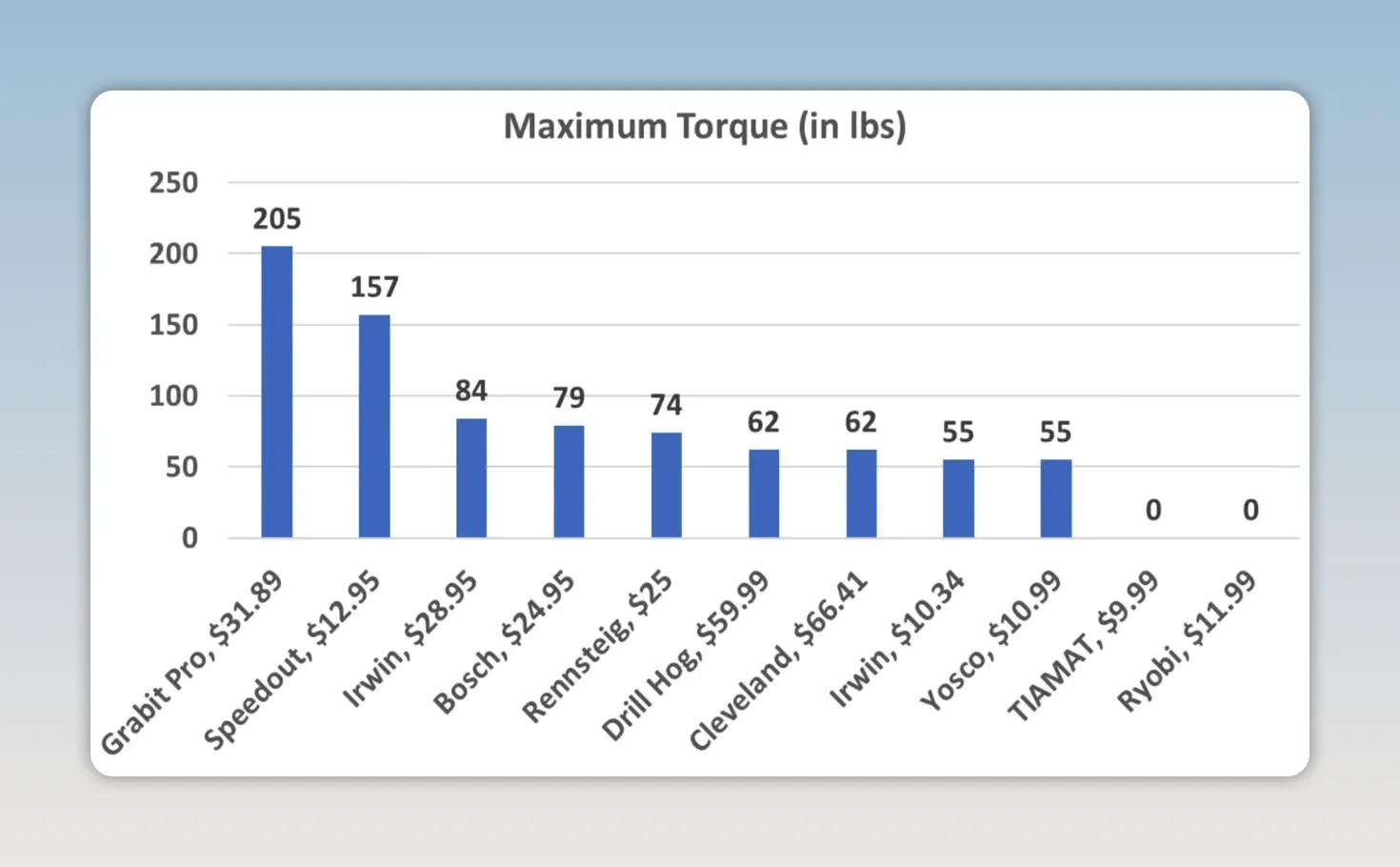
Grabit Pro: 205 inch-pounds, limited by the drill
At $31.89, Grabit Pro was the third most expensive set tested. It is sized for No. 4 through No. 24 screws and bolts from 3/16 to 3/8 inch, and its packaging identifies it as made in the USA.
Although Grabit Pro and SpeedOut look similar, they did not perform the same. Grabit Pro prepared the screw easily without excessive downward force, and its cutting end showed much less wear.
The extractor delivered 205 inch-pounds. It likely could have gone higher, but the drill was not up to the task. The extractor showed only minor wear after that load. That is an impressive result for a stripped-screw tool.
SpeedOut: 157 inch-pounds, but a weak cutting end
The $12.95 SpeedOut covers screw sizes from No. 4 through No. 24 and bolt sizes from about 5 mm to 3/8 inch. It was made in China. Its packaging promises stripped-screw removal in 10 seconds or less, but preparing a hard screw proved to be its weak point.
The cutting end was already chewed up after preparing the first screw. The extractor end was a different story: it reached 157 inch-pounds and showed no noticeable damage afterward.
That was nearly three times the torque of the 55 inch-pound results from two earlier sets. For the money, the extraction performance was very good. The drilling performance needed improvement.
Irwin Hanson multi-spline: 84 inch-pounds before the screw head sheared
The $28.49 Irwin Hanson multi-spline set contains 10 pieces, with sizes from 1/8 to 13/32 inch. It is made in the USA with global components.
Even the smallest extractor was really too large for this screw application. Preparing a 1/8-inch hole weakened the screw enough that its head sheared at about 84 inch-pounds. The extractor itself held up very well, showing only minor wear.
This was a fit problem as much as a strength test. A durable extractor is not much help if the hole it requires removes too much of a small screw.
Bosch: 79 inch-pounds before the extractor broke
The $24.95 Bosch 12-piece set, made in China, includes six black-oxide twist drills and six extractors.
The supplied drill cut into the screw very well, although inspection showed considerable wear. The extractor initially appeared to be gripping effectively, but it suddenly broke at 79 inch-pounds.
Rennsteig: 74 inch-pounds before breaking
The German-made Rennsteig three-piece set cost about $25 and covers fasteners from 3/16 to 1/2 inch. Its blade-style extractors are hammered into a drilled hole before being turned with a wrench or tap wrench.
The extractor seemed to be doing a good job until it broke at 74 inch-pounds.
Drill Hog and Cleveland: Both stopped by screw failure at 62 inch-pounds
The USA-made Drill Hog eight-piece set cost $59.98. The screw broke at 62 inch-pounds, and the extractor flutes suffered noticeable damage. The screw appeared to be considerably harder than the extractor’s working edges.
At $66.41, the USA-made Cleveland 12-piece set was the most expensive option. Its supplied twist drill made easy work of preparing the screw, though it showed some wear. The screw head sheared at 62 inch-pounds, while the extractor flutes showed only a very small amount of wear.
Neither number represents a confirmed maximum strength for the extractor, because the screw failed first.
Irwin Hanson spiral-flute: 55 inch-pounds with minor damage
The $10.34 Irwin Hanson five-piece spiral-flute set includes sizes EX-1 through EX-5 and lists a fastener range of 3/32 to 5/8 inch. It is made in the USA with global components.
It reached 55 inch-pounds, enough to exceed the removal torque of both shorter baseline screws. The screw head stayed intact, and the extractor showed only minor flute damage. It did not reach the 79 inch-pounds needed for the long drywall screw in the baseline test.
Yosco: 55 inch-pounds before the extractor broke
The $10.99 Yosco 18-piece kit, made in China, includes eight drills and eight extractors, plus accessories. Unlike a conventional clockwise-cutting twist drill, its drills operate counterclockwise.
The supplied drill cut very poorly. I ended up positioning the hand drill under the drill press and using its leverage to apply roughly 250 pounds of downward force to make the hole.
After all that preparation, the extractor broke at only 55 inch-pounds.
Tiamat and Ryobi: No measurable grip
The $9.99 Tiamat six-piece set was the least expensive option. Made in China, it lists a range of roughly 3 to 25 mm, or 1/8 to 1 inch. The plastic case was already broken before testing.
After drilling the required 7/32-inch hole and tapping the extractor into place, the Tiamat failed to establish measurable grip. Its working end suffered substantial damage.
The $11.99 Ryobi spiral screw extractor set, also made in China, covers No. 8 screws through 5/8-inch bolts. It likewise failed to produce a reading above zero inch-pounds in this screw test. The extractor suffered heavy damage, suggesting its working edges were softer than the screw.
A Practical Rematch: Removing Stripped Screws From Wood
Grabit Pro and SpeedOut were clearly ahead in the screw-load test, so I tried fresh tools from both sets on stripped exterior screws installed in wood.
The SpeedOut could not adequately prepare the hard exterior screw, even with well over 100 pounds of downward force. I switched to a twist drill from the Bosch set, which drilled it easily. With the hole prepared, the SpeedOut extractor did a terrific job removing the screw.
Grabit Pro did both jobs well. Its cutting end prepared the damaged screw effectively, and its extractor end backed the screw out without difficulty.
The distinction is important: SpeedOut could extract very well once the screw was prepared, while Grabit Pro handled the complete process more effectively.
Grade 5 Bolt Results: Larger Spiral-Flute Extractors Pull Ahead
For the larger-fastener test, I used 9/16-inch Grade 5 bolts. Each bolt was center-punched before drilling. Eight of the 11 bolts received a 19/64-inch hole. Yosco, SpeedOut, and Grabit Pro used their own substantially smaller drilling tools.
The bolts were secured to a piece of steel, with a wrench preventing rotation, so I could load each extractor and measure how much torque it transmitted.
Those size differences matter. The smaller tools were being compared with much larger extractors, so a lower torque result does not tell the whole story about their material quality or usefulness.
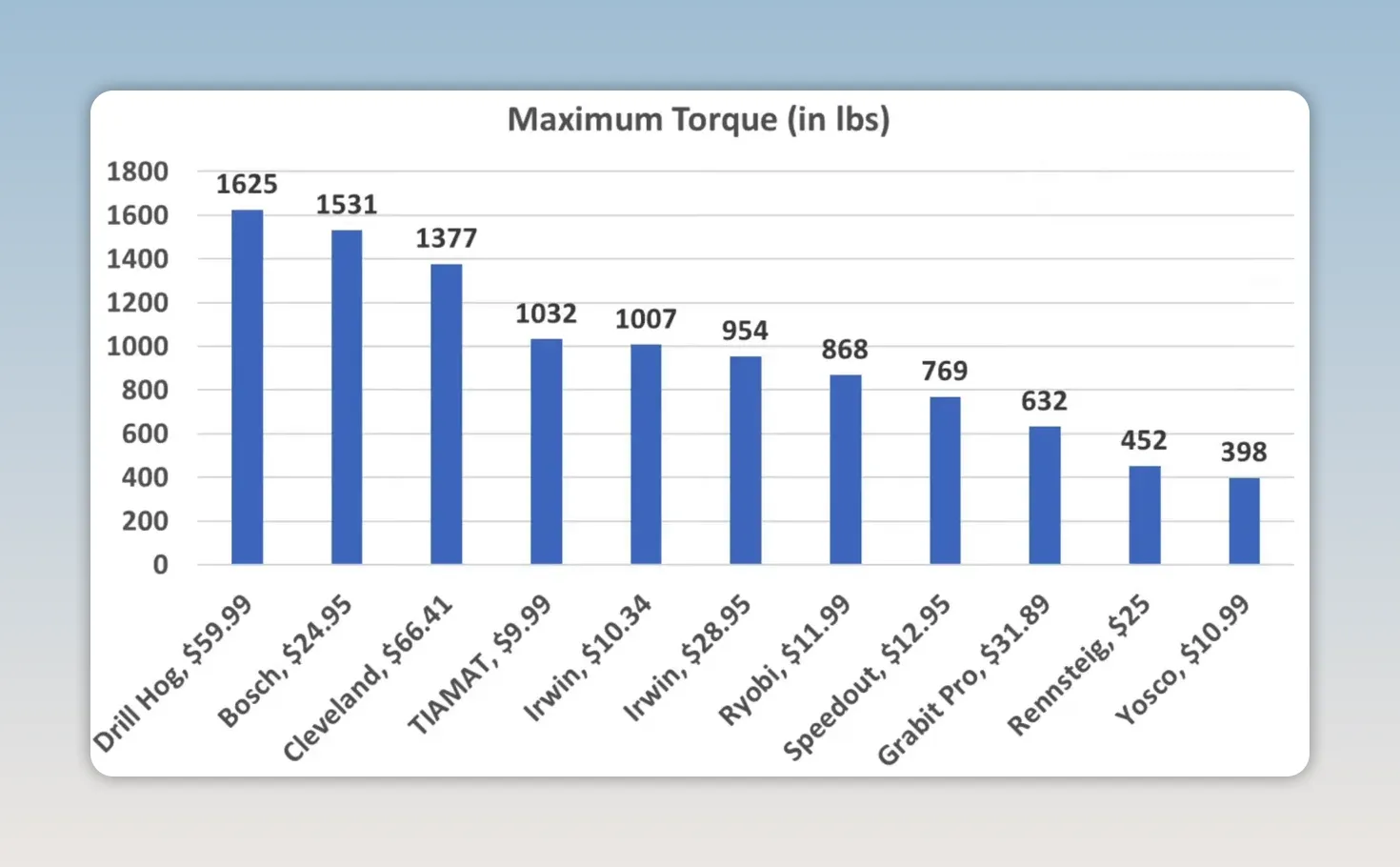
- Drill Hog: 1,625 inch-pounds. It delivered the highest measured torque before losing grip. The extractor showed considerable wear, but that was an impressive load.
- Bosch: 1,531 inch-pounds. The flutes showed very minor wear, especially considering how much torque the extractor transmitted.
- Cleveland: 1,377 inch-pounds. The test ended when the bolt split. The extractor showed very little flute wear, so the fastener limited this result.
- Tiamat: 1,036 inch-pounds. A much better showing than its screw-test performance, with only minor wear on the spiral cutting edges.
- Irwin Hanson spiral-flute: 1,007 inch-pounds. Nearly the same result as Tiamat, again with minor wear.
- Irwin Hanson multi-spline: 954 inch-pounds. It held up very well, with no visible damage after the test.
- Ryobi: 868 inch-pounds. Once it threaded into the bolt, it transmitted a substantial load and showed only a little wear.
- SpeedOut: 769 inch-pounds. A good torque result, but there was considerable extractor wear. Preparing the bolt took around 45 seconds, and the cutting end was essentially used up afterward.
- Grabit Pro: 632 inch-pounds. It drilled much faster than SpeedOut, though not as effectively as a high-quality twist drill. The extractor held up very well, with no visible wear.
- Rennsteig: 452 inch-pounds. It lost grip and showed considerable wear afterward.
- Yosco: 398 inch-pounds. Preparing the bolt took a couple of minutes because of the poor drill quality. The torque result was not bad considering the extractor’s much smaller size.
Drill Hog, Bosch, and Cleveland shared the same general spiral-flute design and occupied the top three positions. Tiamat, the Irwin spiral-flute set, and Ryobi were much more competitive here than they had been on the hard, small screw.
What the Results Mean for Choosing an Extractor
Choose the design for the fastener
The strongest bolt extractor was not the best stripped-screw extractor. Grabit Pro and SpeedOut excelled at engaging damaged screw heads. Larger spiral-flute tools transmitted much higher torque in the bolt test.
On small screws, drilling down into the shaft created a significant risk of shearing the head off. Several tests ended that way, leaving the extractor’s full capacity unknown and the screw in worse condition.
Do not overlook drill quality
The extractor cannot help much if its supplied cutting tool will not prepare the fastener. Yosco struggled badly in both applications. SpeedOut’s cutting end wore quickly and could not prepare the exterior screw in the practical test.
Grabit Pro was much better at preparing damaged screw heads. The conventional drills from Bosch and Cleveland also cut well, although they showed wear on the hard screws.
Price alone does not predict the outcome
The $66.41 Cleveland set performed very well on bolts, but the roughly $25 Bosch set delivered a higher measured torque result with very little extractor wear. Meanwhile, the $10.34 Irwin spiral-flute set exceeded 1,000 inch-pounds in the bolt test.
At the other end, Tiamat’s low price did not prevent a respectable bolt result, but its inability to grip the test screw shows why one good number is not enough to make a tool the best all-around choice.
Which Bolt and Screw Extractor Would I Choose?
- Best for stripped screws: Grabit Pro. It combined the highest screw-test torque with effective drilling and excellent practical extraction performance. It costs more than the budget options, but it did the complete job very well.
- Lower-cost stripped-screw option: SpeedOut. Its extractor end performed very well for $12.95. Its weak cutting end is the drawback, and the hard exterior screw required a separate twist drill.
- Highest measured bolt torque: Drill Hog. It reached 1,625 inch-pounds before losing grip, though the extractor showed substantial wear.
- Strong bolt performance around $25: Bosch. It finished close behind Drill Hog at 1,531 inch-pounds and showed very little flute wear.
- Best bargain for larger applications: Irwin Hanson spiral-flute. At about $11, its 1,007 inch-pound bolt result and modest wear make it very hard to beat for the money.
For stripped screw heads, I would reach for Grabit Pro. For larger fasteners, the spiral-flute design proved very effective, and the inexpensive Irwin Hanson set is a terrific value. Match the extractor to the application rather than assuming the most expensive set will be the best at everything.


