A vehicle is a major expense, and I want mine to last as long as possible. But protecting an engine does not necessarily mean buying the most expensive oil on the shelf.
At the time of this test, AmazonBasics full synthetic motor oil cost less than $20 for five quarts. That put it close to conventional oil pricing and well below some competing full synthetics, including Mobil 1. Pretty appealing, but only if the oil performs.
I compared AmazonBasics with Mobil 1 full synthetic and Valvoline conventional motor oil using wear, cold-flow, and high-temperature evaporation tests. AmazonBasics turned out to be a very strong competitor, although it did not win everything.
Key Takeaways
- Mobil 1 produced the smallest wear scar, with AmazonBasics finishing close behind.
- AmazonBasics flowed fastest in the cold, both before and after heat exposure.
- Both synthetic oils lost approximately 0.5% of their mass during the evaporation comparison.
- These workshop comparisons show specific performance differences, not standardized ratings or long-term engine-life results.
The Oils and the Testing Approach
All three oils tested were SAE 10W-30:
- AmazonBasics full synthetic motor oil
- Mobil 1 Advanced Full Synthetic motor oil
- Valvoline conventional motor oil
That last distinction is important. The Valvoline in this comparison was conventional oil, not synthetic. It provided a reference for comparing conventional oil with two full synthetics. These results should not be treated as a comparison against Valvoline synthetic products.
I bought the products with my own money. None of these companies sponsored the testing, and I had no Amazon affiliate account or financial interest in selling the products.
I also do not have a multimillion-dollar oil laboratory. These are independent workshop comparisons, not tests conducted to ASTM, SAE, or API procedures. They help show differences under the conditions tested, but they are not a complete evaluation of engine-oil performance or long-term engine life.
What the Oil Label Tells You
Before comparing results, it helps to understand two pieces of information in the American Petroleum Institute service symbol, often called the API donut: the viscosity grade and the service category.
Understanding 10W-30
Viscosity describes a fluid’s resistance to flow. In a 10W-30 oil, the two numbers describe viscosity requirements under different temperature conditions.
- 10W: The W stands for winter. This part of the grade concerns low-temperature performance. A lower winter number indicates better cold-temperature capability under the applicable grading requirements.
- 30: This identifies the oil’s viscosity range at 212°F.
Having the same viscosity grade does not mean every oil will flow identically in a side-by-side comparison. That is one reason I wanted to test all three at the same cold temperature.
API SN Versus SN Plus
The Mobil 1 and Valvoline bottles tested carried API SN ratings. AmazonBasics carried an API SN Plus rating.
API SN addresses performance areas including high-temperature piston deposit protection, sludge control, and seal compatibility. SN Plus adds protection aimed at low-speed pre-ignition, or LSPI, in turbocharged gasoline direct-injection engines.
LSPI occurs when the fuel-air mixture ignites before the intended spark timing at low engine speeds. It can lead to engine knock, damaged spark plugs, cracked pistons, and, in severe cases, engine failure. The added SN Plus protection is particularly relevant to that engine type. It is not, by itself, proof that one oil is better in every other respect.
Wear Test: Mobil 1 Takes First Place
All three products claimed anti-wear protection, so I ran each on the lubricity tester. I weighed the test bearings before and after each run and measured the resulting wear scars. The bearing race was sanded and cleaned between tests.
Each run lasted 10 minutes. Afterward, the difference between the conventional oil and the two synthetics was easy to see.
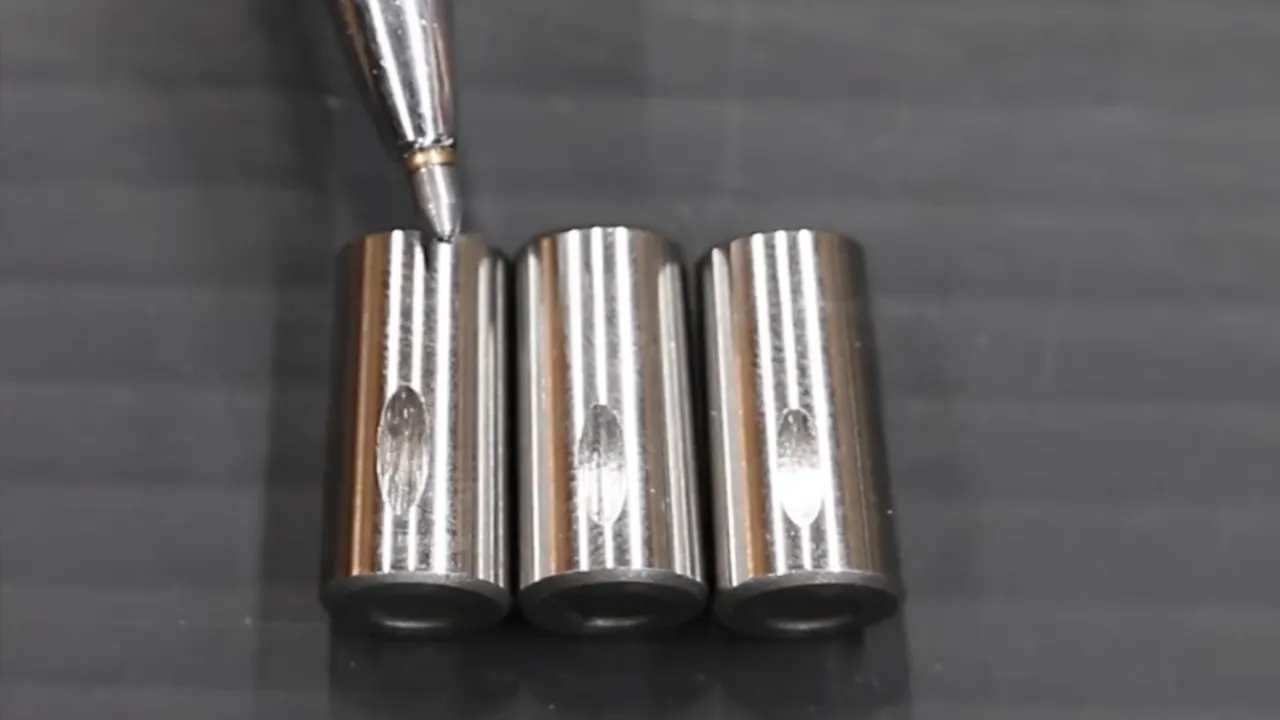
Mobil 1 produced the smallest scar, AmazonBasics finished close behind, and Valvoline conventional produced the largest.
Using an ellipse calculation to compare scar area:
- Mobil 1: Its scar measured approximately 12.4 square millimeters, nearly 26% smaller than Valvoline’s.
- AmazonBasics: Its scar was approximately 17% smaller than Valvoline’s.
- Mobil 1 versus AmazonBasics: Mobil 1’s scar was about 9% smaller.
The bearing weight measurements provided another useful comparison. Valvoline’s bearing lost approximately 0.24% of its weight, while both AmazonBasics and Mobil 1 lost approximately 0.12%.
Mobil 1 won the wear-scar comparison. Under this tester’s conditions, it appeared to provide better film strength. But AmazonBasics was not far behind, especially considering its price. Both full synthetics performed substantially better than the conventional oil in this particular test.
Cold-Flow Test: AmazonBasics Pulls Ahead
When an engine starts in cold weather, you want oil reaching the parts that need lubrication as quickly as possible. To compare cold flow, I placed samples of all three oils in a freezer at 15°F below zero for 24 hours.
The chilled samples were then released onto separate lanes of the same slide arrangement.
I was surprised to see AmazonBasics reach the slide first. Mobil 1 is a very capable product, but AmazonBasics maintained its advantage and finished roughly two inches ahead. Both synthetics substantially outpaced Valvoline conventional, with a gap of about six inches reported in the comparison.
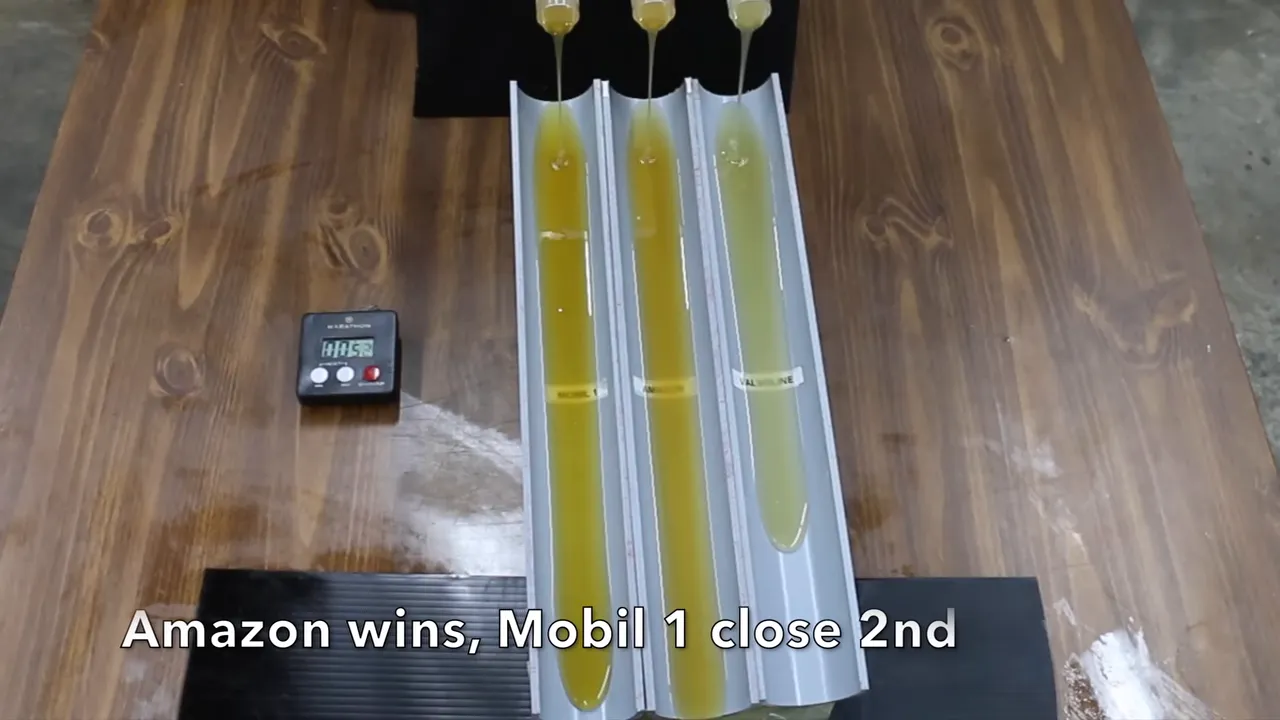
That gave AmazonBasics its first win. It also demonstrated a clear difference between oils sharing the same 10W-30 grade. This was a gravity-flow comparison, however, not a standardized engine cranking or oil-pump test.
High-Temperature Evaporation: The Synthetics Tie
An oil that evaporates readily is not what I want in an engine. The next comparison measured how much mass each sample lost after prolonged exposure to heat.
How the Heat Test Worked
The standardized Noack volatility test heats oil to 482°F for one hour with controlled airflow. I did not have that equipment, so I used a different procedure: approximately 400°F for two hours in glass coffee pots on an electric griddle.
This comparison was inspired by volatility testing, but the results are not standardized Noack values.
I weighed each empty container, added approximately 200 grams of its assigned oil, and weighed the container and oil together. During heating, I rotated the pots every five minutes to reduce the influence of any hotter or cooler areas on the griddle.
The purpose was to compare oil loss under sustained heat and air exposure, conditions relevant to hot areas around an engine’s upper piston rings. Valvoline appeared to give off the most vapor during the test.
How Much Oil Was Lost?
After the samples cooled, I weighed them again:
- Valvoline conventional: The container and oil dropped from 442 grams to 439 grams, a loss of 3 grams.
- AmazonBasics full synthetic: The total dropped from 407 grams to 406 grams, a loss of 1 gram.
- Mobil 1 full synthetic: The total dropped from 431 grams to 430 grams, also a loss of 1 gram.
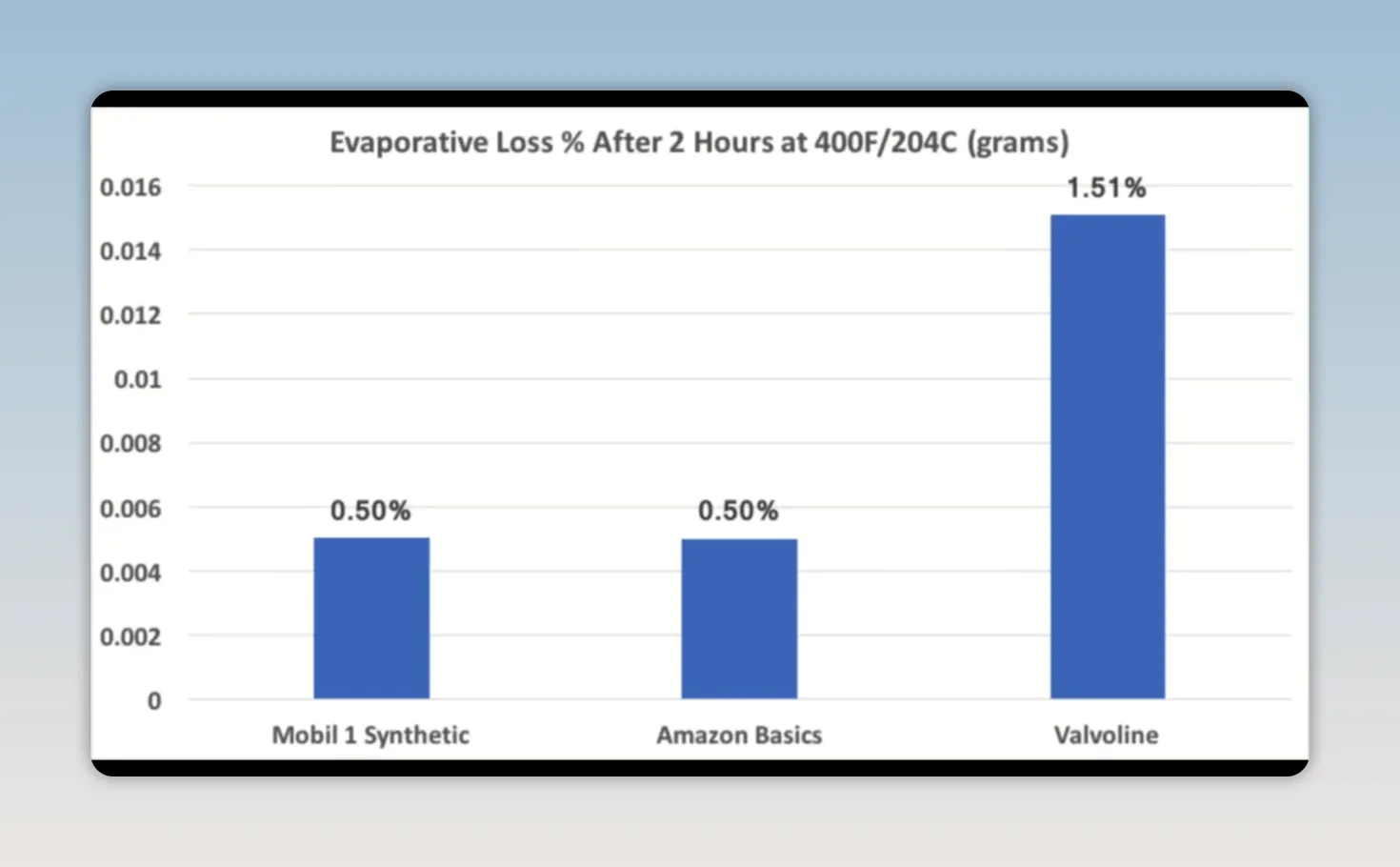
Relative to the starting oil mass, both synthetics lost approximately 0.5%, compared with about 1.5% for Valvoline conventional.
AmazonBasics and Mobil 1 tied at the scale’s measurement resolution. The conventional oil lost about three times as much mass under these conditions.
Cold Flow After Heating: Can AmazonBasics Keep Its Advantage?
Fresh-oil performance is useful, but I also wanted to see how the samples would flow after two hours of heat exposure.
I transferred the heated oils back into the test tubes, returned them to the freezer, and repeated the cold-flow comparison.
AmazonBasics won again. Mobil 1 followed, while Valvoline conventional remained the slowest. AmazonBasics’ cold-flow advantage was still present after the high-temperature test.
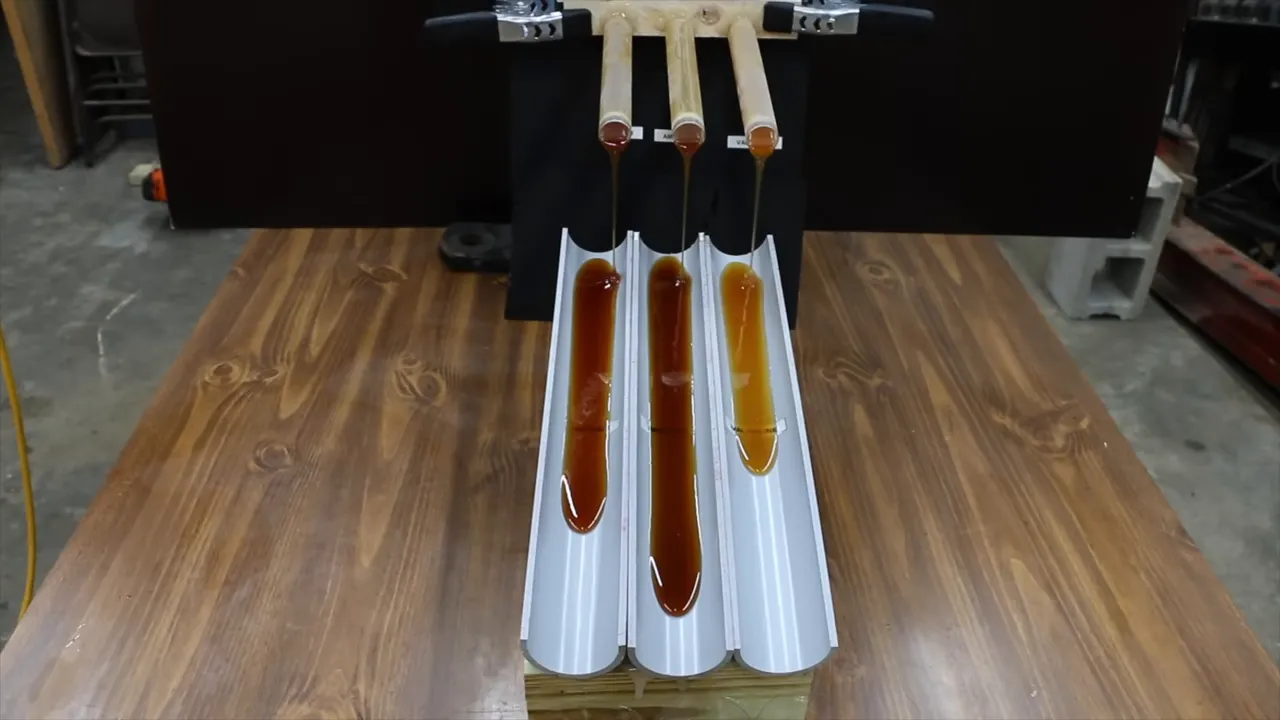
That was impressive performance from the lower-priced synthetic. It does not replicate a full oil-change interval, but it does answer the narrower question: the heat exposure used here did not eliminate AmazonBasics’ lead.
The Verdict: Better Value, but Not a Clean Sweep
Is AmazonBasics full synthetic motor oil better than Mobil 1? It depends on which result matters.
- Wear-scar performance: Mobil 1 won, with AmazonBasics close behind.
- Fresh-oil cold flow: AmazonBasics won.
- Evaporative loss: AmazonBasics and Mobil 1 tied.
- Cold flow after heat exposure: AmazonBasics won again.
Both full synthetics outperformed the Valvoline conventional oil in these comparisons. That is a result for these particular products and methods, not a verdict on every oil sold under those brand names.
Would I use the AmazonBasics oil tested here in a vehicle? Absolutely. Its combination of low price, competitive wear protection, low evaporative loss, and excellent cold flow made a strong impression.
I had also noticed less oil use than normal in one of my vehicles near the end of an oil-change interval, compared with its previous use of a synthetic blend. Lower evaporation is a possible explanation consistent with this comparison, but that observation alone does not establish the cause.
Mobil 1 earned its wear-test win. AmazonBasics earned respect by staying close in that test and leading both cold-flow comparisons. At the price paid for this test, the less expensive oil proved to be a serious competitor.


